Guadagnino Returns to Venice With After the Hunt
VENICE, AUGUST 2025
By Burcu Beaufort
A frequent visitor to Venice and the winner of the Silver Lion for Best Director for Bones and All (2022), Luca Guadagnino returns with After the Hunt, marking the Italian director’s seventh film to premiere at the Venice Film Festival. The movie features a strong ensemble cast, including Julia Roberts, Andrew Garfield, Chloë Sevigny, and Michael Stuhlbarg, whom he previously worked with on Call Me by Your Name (2017).
There is little doubt that Guadagnino loves returning to Venice, yet what he seems to love even more is sharing his passion for art, literature, and philosophy on screen, weaving in countless references to intellectual outlets, some intended to provoke thought, others serving more as suggestions. Even before the first scene unfolds, he unsettles us with an extended tick-tock, a sound that evokes the tension of a time bomb but ultimately leads to neither a figurative nor an actual explosion, nor a plot twist. What follows is a surprising nod to Woody Allen through the opening credits fonts, a bold “let’s talk” gesture, if not outright provocation given the movie is about a layered sexual harassment story at Yale .
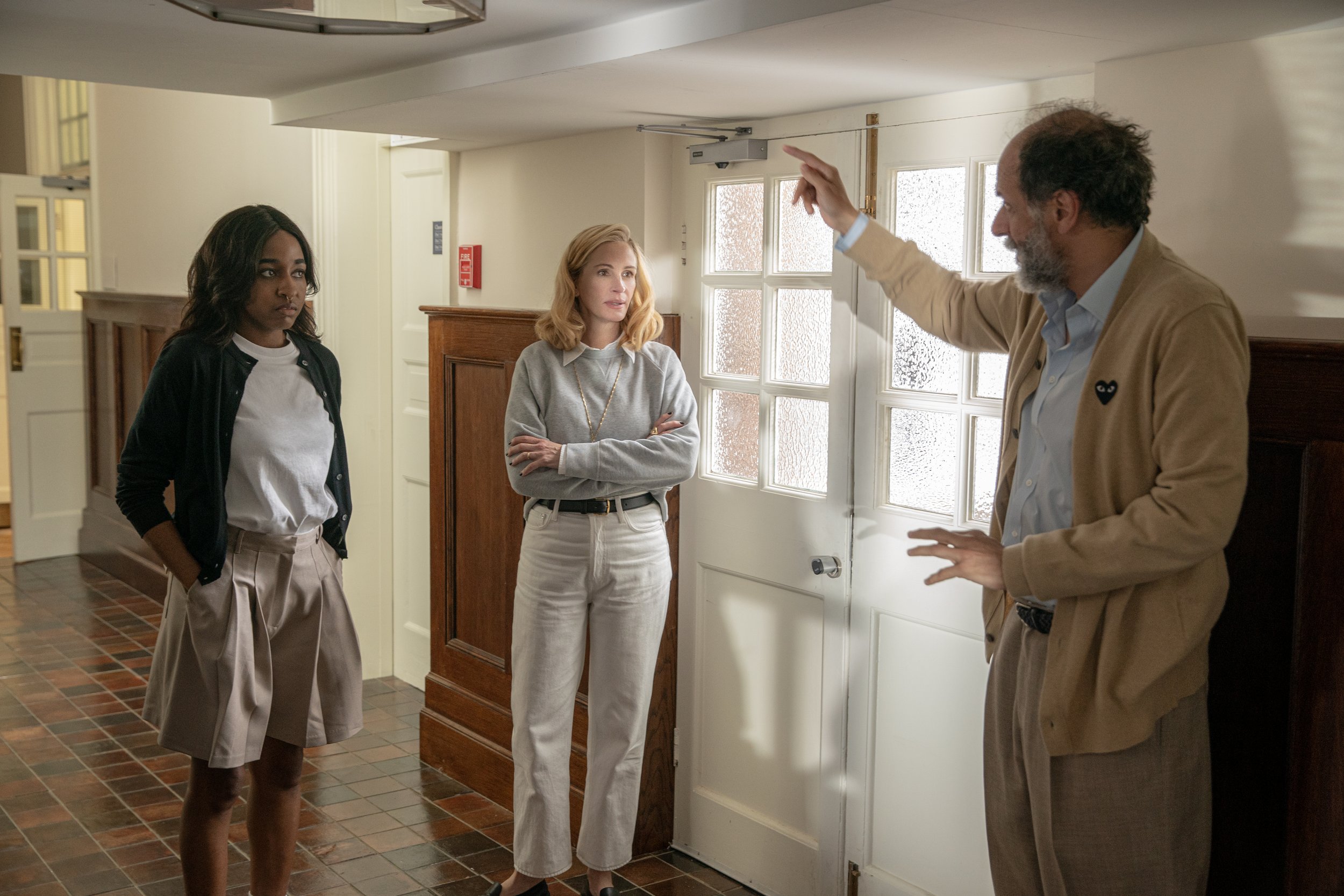
Image by Yannis Drakoulidi
Julia Roberts stars as Alma Imhoff, an uber-stylish philosophy professor at Yale with German roots—she even slips effortlessly into German at one point, and her bedtime reading is Thomas Mann’s Buddenbrooks. She lives with her psychoanalyst husband, Frederik Imhoff (Michael Stuhlbarg), in a spacious, high-ceilinged apartment where the couple throws house parties for colleagues and students. Alma’s relationship with her students seems unusually personal, but even more ambiguous is her dynamic with fellow professor Henrik “Hank” Gibson, very close and flirtatious yet competitive, as both are up for tenure.
During one of the house parties, Alma’s student Maggie (Ayo Edebiri) sniffs around the bathroom and finds an envelope containing secret stuff from Alma’s past, including one newspaper article. She is hesitant but in the end slips the article into her pocket, taking an unpermitted glimpse into Alma’s past. After the party, Maggie walks home with Hank, and the next day returns to Alma’s apartment to tell her about Hank’s sexual assault and there the unraveling begins. A good deal of ambiguity surrounds whom to believe, conveniently fueled by the #MeToo debate, with Hank, the white man, presumed guilty and cast as villain by default. Making “finding the truth” even more complicated, Maggie is Black and gay, and Alma is a pristine, privileged white woman. We are given many hints not to trust Maggie, not only because she has long fingers and no sensibility about the privacy of others, but also she has a sinister smile while her accusations against Hank pulls her into the spotlight in the campus and on social media.
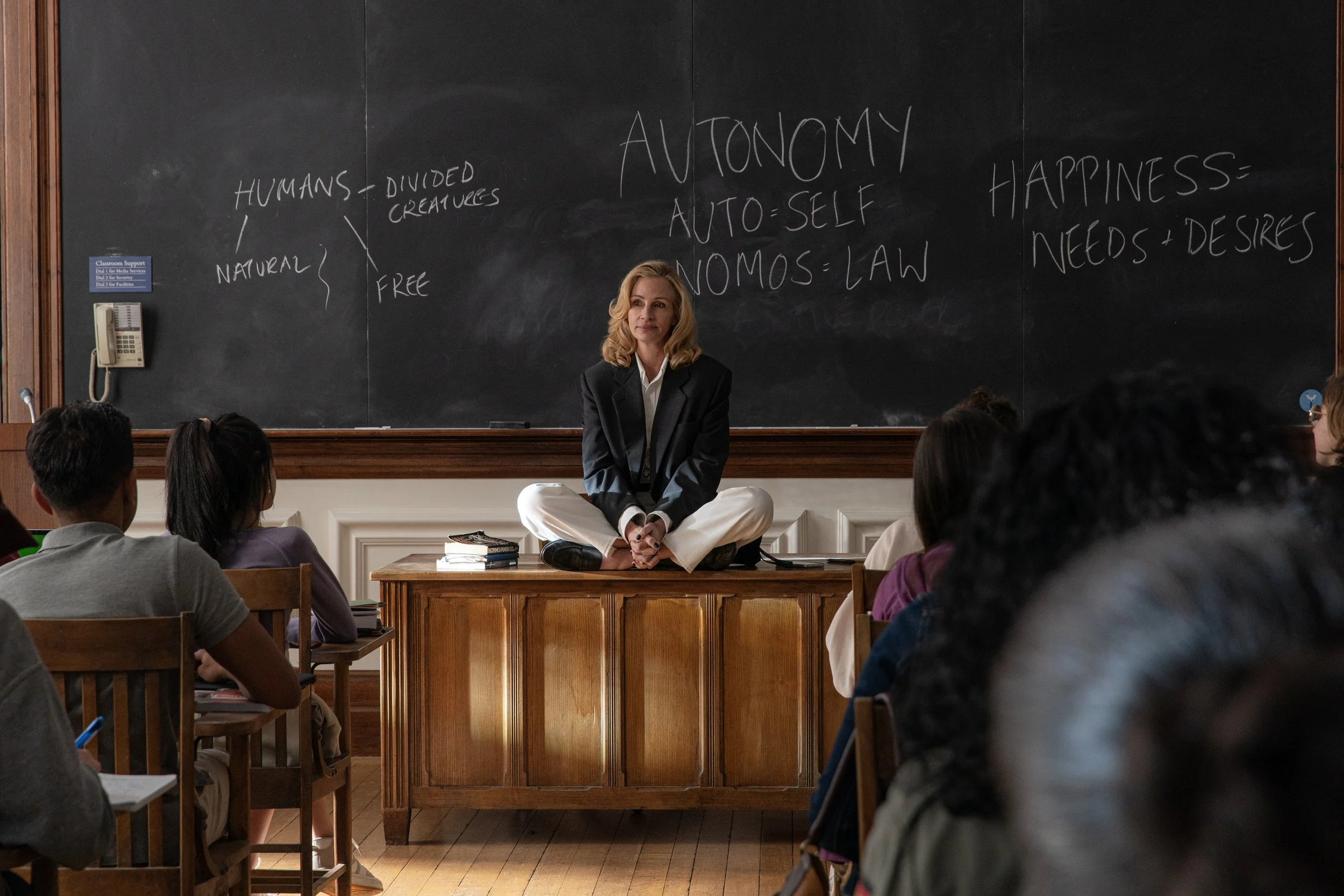

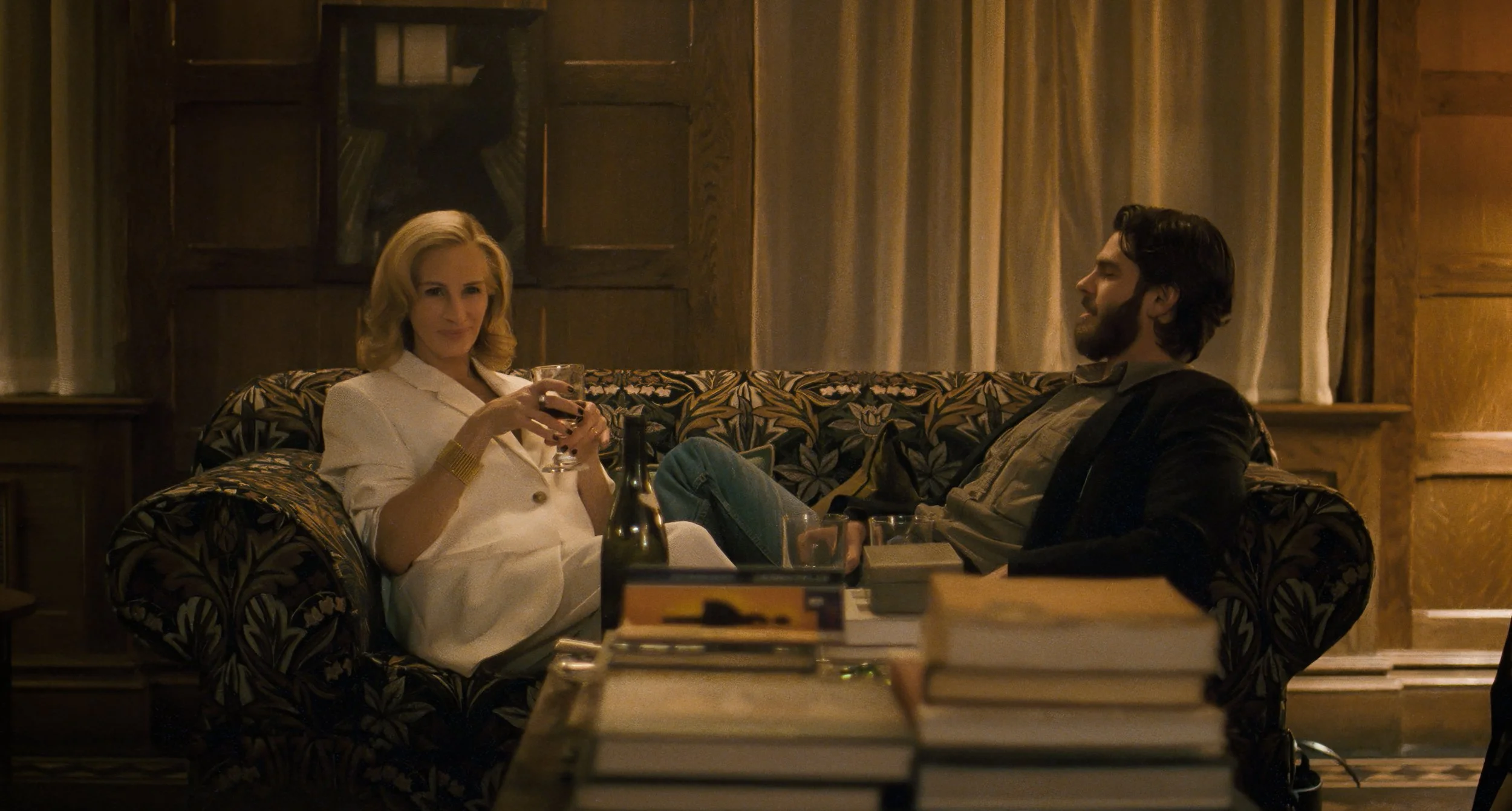

Images by Yannis Drakoulidi
Noah Garret, the screenwriter, manages to highlight the pitfalls of cancel culture, yet her critique simply lacks depth. Two fleeting scenes are just not enough to grapple with well-known flash-in-the-pan arguments surrounding sensitive topics. The film’s satire of inflated victimhood through the baloney usage of sensitive words is well-placed, but the point gets buried as the narrative scatters across too many ideas without fully committing to any of them. References to Foucault, Arno, Arendt, and James Joyce surface briefly, yet instead of enriching the discussion, they feel more like a smug “Have you ever read Foucault?” than an attempt at intellectual engagement. What remains is a film brimming with references but thin on substance.
The film is handsomely shot on film by American cinematographer Malik Hassan Sayeed, with locations spanning London, Cambridge, and even select scenes at Yale. While the cinematography successfully rounds out the film’s aesthetic, the soundtrack feels more like a playlist than a carefully composed score. After The Hunt is ultimately a good watch to spark discussion, though it offers no real answers. The film will be released internationally in October 2025.