Whose Fatherland?
CANNES, May 2026
By Burcu Beaufort
Premiered at the Festival de Cannes, Fatherland (2026) by Paweł Pawlikowski is less a historical drama concerned with precise facts and more a reflection on exile, neglect, and cultural identity. It is the summer of 1949 in post-war Germany, which is divided into four military zones. After a decade in California, Thomas Mann (Hans Zischler) visits his Fatherland in order to receive one of the most prestigious literary awards, the Goethe Prize — first in the US military zone Frankfurt am Main, then in Soviet Weimar.
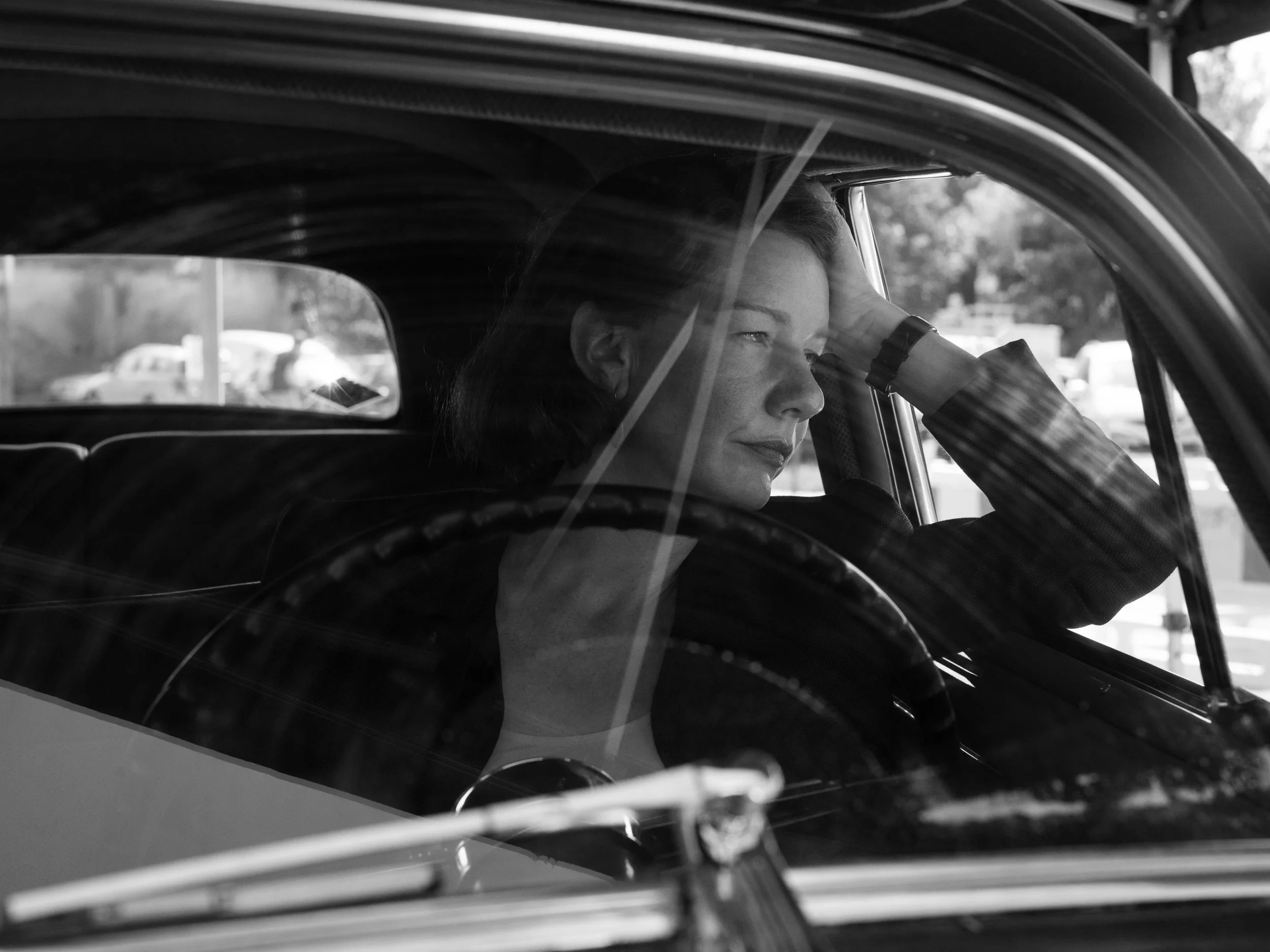
In the movie, the great German writer is accompanied and chauffeured by his daughter Erika Mann (Sandra Hüller), although he actually was travelling with his wife Katia Mann and not with their daughter Erika*. The scenario still works quite well, as this is not a movie about historical accuracy, but rather a reconstruction of Mann’s voyage, allowing the film to transcend the chain of events and become a journey through European art, literature, and philosophy.
We see Thomas Mann arriving in the US military zone Frankfurt am Main, in late July 1949 with his daughter Erika. Thomas Mann’s next station is Weimar, a Soviet military zone, which is already causing some speculation.
To Mann, these cities are more than merely occupied military zones. These are part of a great literary history, cities in which Goethe was born, lived and created. To him, both of the cities are part of his Vaterland. In his original speech, which he held both in Frankfurt and Weimar almost identically, he uses the term Vaterland for his Homeland (Heimat), and he sees Germany as one and not divided into zones. He declares, “Ich kenne keine Zonen” (“I recognize no zones”).**
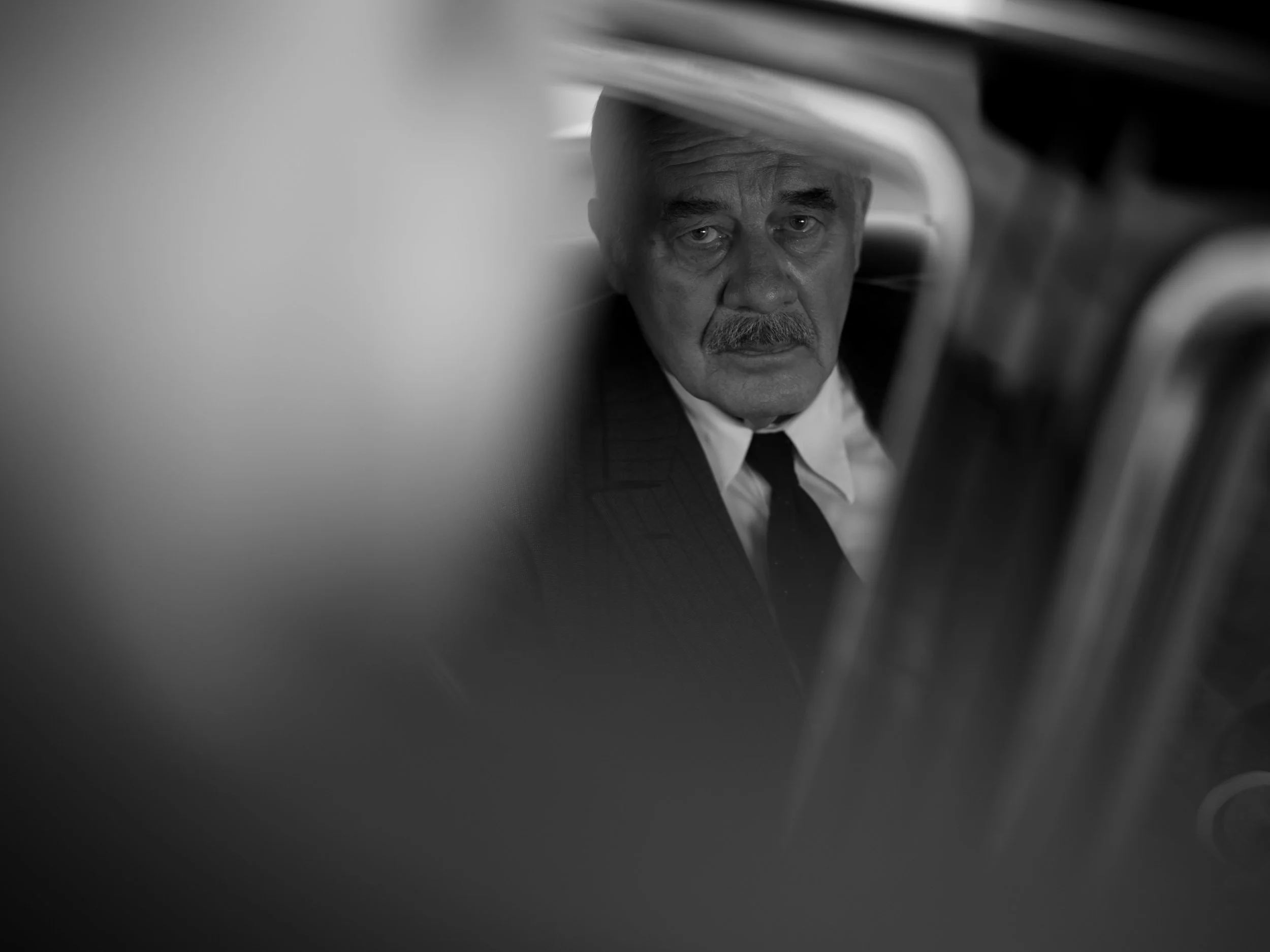
Vaterland is a difficult term in today’s Germany, as it is almost entirely associated with far-right ideology after WWII. Exactly here lies the importance of Pawlikowski's work. It shows Thomas Mann, whose work was banned by the Nazi regime, reclaiming Germany as his Vaterland while emphasizing its European roots and contributions to philosophy and art.
While the movie smartly provokes thought around Germany and Europe, it does not miss the chance to show how ignorant and how neglecting the whole political debate was towards fragile, artist souls. At this point, Klaus Mann comes into play, and the historical spectacle transforms into something more accusatory, almost a condemnation of all political and cultural forces surrounding him. Klaus Mann was his eldest son, he was a writer and anti-fascist, celebrated for early queer literature like Mephisto. His graveyard is in Cannes.
Pawlikowski must have been aware of the fact that Klaus Mann had committed suicide in May 1949, months before Thomas Mann’s visit to Frankfurt and Weimar. However the director and the writer chooses tell about his death during Thomas Manns road trip and it actually works brilliantly.
August Diehl appears as a devastated Klaus Mann, delivering an incredibly strong and heartbreaking performance that makes the whole film feel even heavier through his absence and Erika Mann’s grief. What begins as a road trip and, at first glance, a political debate around Vaterland gradually reveals a saddening truth about the ongoing disregard for vulnerable and creative outsiders, embodied here by Klaus Mann.
The film was widely praised by critics in Cannes and quickly became a strong contender for the Palme d’Or. Shot in striking black and white by Łukasz Żal, it is defined by great precision in framing and composition. It stands out as one of the key releases of this year. Theatrical release is planned for September.
*A historical fact I was made aware of by Peter Paul Huth in Interfilm.
** From Thomas Mann’s original speech (Ansprache in Goethejahr):
Ich kenne keine Zonen. Meine erste Wiederkehr nach Deutschland, mein Wiedersehen mit ihm, das mich so tief bewegt, gilt dem alten Vaterland als Ganzem und ich hätte es als unschön , ja als eine Treulosigkeit Empfunden, wenn ich auf dieser Reise mich um die deutsche Bevölkerung der sogenannten Ostzone (wenn man im Falle Weimars von „Osten“ sprechen darf) nicht bekümmert, sondern, sie, sozusagen, links hätte liegenlassen. Ich hätte es als eine Unvollständigkeit meiner Deutschlandfahrt empfunden, wenn ich nur eine der beiden geweihten Goethestätten nur die Geburtsstadt des Helden besucht hätte und nicht auch die Stadt, in der er von jungen Jahren an sein gewaltiges Leben verbracht hat.”