Silver Bear Winner Lance Hammer
BERLINALE, FEBRUARY 2026
By Burcu Beaufort
Upon the premiere of Queen At Sea (2026), I spoke with the director Lance Hammer in Berlin to talk about the film’s production, ethical dilemmas, and the strokes of fate and luck that shaped the shoot.
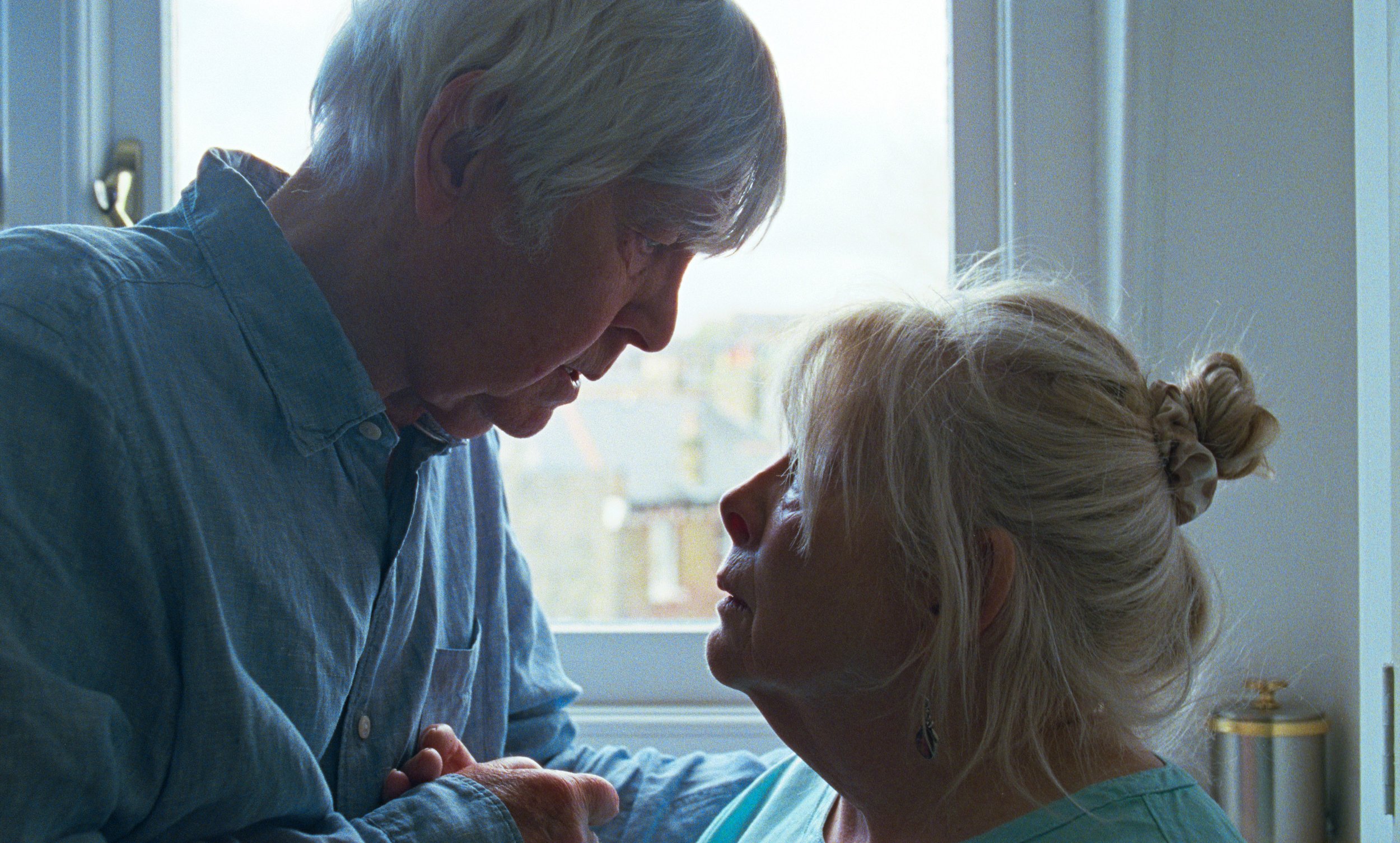
The story of three generations is set in London, shaped by dementia, the fragile question of consent, and coming-of-age. Amanda (Juliette Binoche), the emotional center of it all, is a recently divorced academic from Newcastle. She is on a sabbatical in London with her daughter Sara (Florence Hunt), so they can remain close to Amanda’s mother Leslie (Anna Calder-Marshall), who is suffering from dementia, and to Leslie’s husband Martin (Tom Courtenay), Amanda’s stepfather and her mother’s devoted caregiver over the years.
Frustrated by the discovery of ongoing intimacy between Leslie and Martin, Amanda turns to the authorities, setting off a chain of events that raises unsettling questions with no certain answer, only a moral dilemma.
Highly aware of similar real-life experiences, the director and writer Lance Hammer approaches the subject with a quiet yet deeply earnest sensibility. Together with an ensemble cast all delivering heartbreakingly beautiful performances, Hammer creates a movie that stays with you long after watching. Queen At Sea (2026) is the most awarded film at this year’s Berlinale, winning the Silver Bear Jury Prize and Best Performance in a Supporting Role shared by Tom Courtenay and Anna Calder-Marshall.
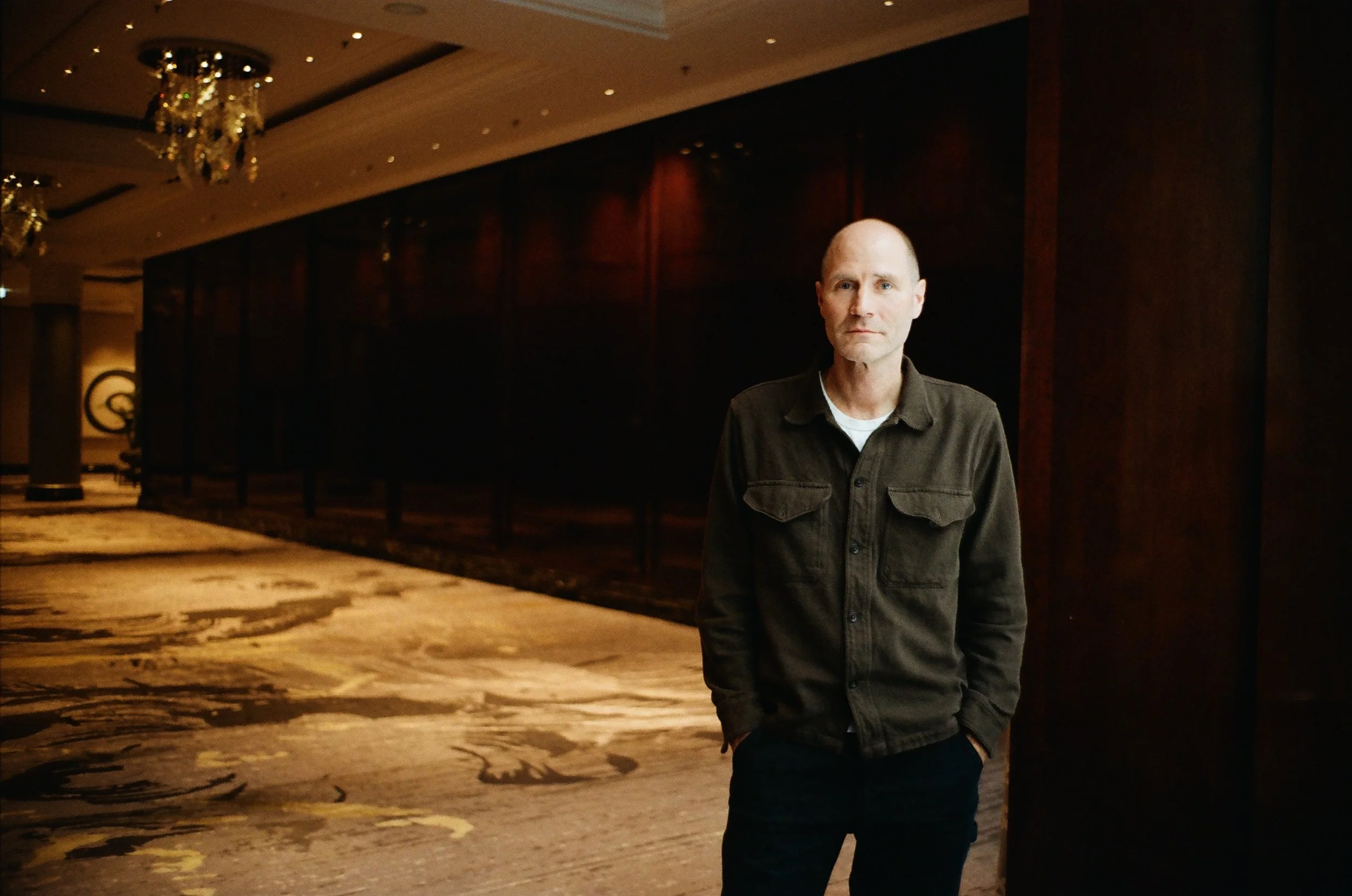
Portrait of Lance Hammer at Berlinale © Burcu Beaufort
All other images/film stills © Seafaring LLC
Since this is your first picture film since Ballast (2008), which was a great success at the Sun Dance Film Festival that year, what made you think you should come back making movies?
Lance Hammer: I've been writing a lot. But it didn't feel like there was anything I could make or a story that I was really engaged with that I could actually get money to make. Like, these films are very difficult to make in the United States. We don't have state funding. So they have to be home run genre things. That's just the reality, and that's okay.
What happened was, I started to feel like I really just wanted to make a really inexpensive, simple film, just because I wanted to do it again. Around the same time, the universe was putting out into the field around me all these stories about dementia, and I was really hit hard by that moral dilemma.
One day, I had some ideas, so I sat down at my kitchen table and outlined most of the film. I mean, in simple terms, the big points. But I outlined the whole arc of the film in an afternoon, which is very unusual for me. I'm super slow. So I thought, “Huh, should I just write this?” Then I thought, I don't want to make a film about elderly people with Alzheimer's. But it just kept sticking with me. So I had a script, and I thought, I might as well try to make it and see if I can. That's how it happened.
Initially, there was a really great response to the film. I got the financing right away, but I wasn't ready with the script, and it fell apart. It then became a very long process.
Have you ever thought about Michael Haneke’s Amour (2012) during the making of Queen at Sea (2026)?
LH: It crossed my mind, yeah. So, there's a number of stories in the news, and from personal accounts that I heard about. I started to hear all these stories all at once, and it felt like the universe was saying something to me that I should pay attention to. I started outlining the story, and then I thought that I have to be really careful because of the movie Amour, which handles a story about a stroke. But dementia and a stroke are very different, although I realized that the world would see them as the same. So, I was and had to be always conscious of that film, to be honest,so that I didn't make that film and didn't think about it in terms of creative moves. If I thought this was getting too close to Amour, I would take the opposite tack.
Can I ask about your ethical considerations and any ethical questions you had to tackle with this topic while telling stories about people with Alzheimer's?
LH: I didn't want to make this film. As the idea started happening, I thought, “What am I doing? This is the worst possible subject I can make a film about for my career.” The subject is pretty grim. But the moral dilemma at the center of it was riveting to me. It came to me because I'd read several articles with a similar premise, of a man still having sex with his wife and a child trying to stop it. When I read those accounts — there were a couple of different ones — I caught myself feeling a little bit ashamed. Like, I was very uncertain what I felt about the positions. It was a Scylla and Charybdis dilemma. I was actually thinking of the child in those real-world accounts, and the incredibly difficult choice they'd have to make. Any choice they make is gonna cause harm to somebody. Because dementia happens so gradually, it's often unnoticed, and it's like boiling a frog, right? He's so close to it, he doesn't know how far she's declined. He may be in some denial himself, because he doesn't want to accept the brutal truth of it. I can see how he can live in a blind spot and truly think that she's giving consent and is still able to give consent. I have some empathy for that. I personally believe he should not have sex with her, but it's easy for me to say that because I'm not in that family. If there's any chance at all that he could be causing her harm, then it simply has to stop. And so the daughter in the movie, Amanda, is right in that regard. That's my opinion, and I always felt that way, however, I realized how difficult it is for a family to experience this. So, I wanted to make a film that talked about the incredible nuance and irresolvability of that dilemma. I tried to stay neutral, even though I had an opinion, you know? But I realized my opinion is an easy one to have, because I'm not in this situation.


How did you decide to shoot in London?
LH: I wrote the script in a way that would allow us to shoot in any major city, as I felt I might want to try to shoot it outside of the United States, having Juliette Binoche in mind. But you have to write and provide the story with a city at some point. So I started with New York in my script, and I thought about it as a New York story.
The people involved earlier in the production process, not The Bureau or Alluvial Film Company, really wanted to have an A-list American actress, and financing depended on attaching an A-list American actress. But I wasn't seeing the people that they wanted in the role. I wanted Juliette to play the part, but she's French. So I finally said, “You know what, I need to see if Juliette will read this and if she's interested. Then we’ll see what happens. Maybe we won't get financing, but maybe we'll have to really cut the budget in half, and I think it's important to go with the right people.”
We approached Juliette, and she immediately said yes. I was so excited and relieved. But then we had this big problem, like, “She's French, and it's harder to get financing now.”
Then the same thing happened with Tom Courtenay as Martin. Having Juliette on board, we were still thinking it could be shot in the US with an American male lead. But I kept thinking of Tom, whom I’ve always loved. I said, okay, I'm gonna do the same thing. I'm gonna send him the script and see if he says yes. Then we'll figure out what to do. And I was already realizing that if he said yes, we couldn't shoot it in the US. So it made sense to shoot it in London. We could cast the whole film with British actors. And Juliette can be, you know, the child of a British mother and a French father.
In a way, Tom dictated the location. I was really happy to shoot in London, especially nowadays, it's nice to just kind of get out of there.
What about the title?
LH: That's another thing I don't know how to answer. So I remember when it happened, as I thought of the title. I was in my kitchen making some eggs. I was thinking, I don't know what to call this story, and I never do. In English, “at sea” means lost. Sometimes it refers to dementia. Mainly it's just like somebody who's lost and confused.
And “Queen at Sea,” I had this image of a queen of a country, like the Queen of England in 1700, on a ship, on a warship. And I thought, when the queen is on board the warship, your country's in trouble. I did read stories of queens who did go to war on ships, and I think that's just because they loved the experience. But I also thought it meant that the queen, the matriarch of the family, is in peril. I'm not referring to any one specific character. Maybe it's an archetype of all three generations, the three phases of life of the matriarch of the family. And maybe it's Annie. It's probably Annie. I don't know.

What kind of medical research did you guys do for the script?
LH: We did extensive research. It started in the United States, having set the story in New York. But relocating it to London, it turned out that the procedures for a sexual assault case wouldn't be the same in the UK, where there are more specialized units in the hospitals called SARC (Sexual Assault Referral Centre) and SOEs (Sexual Offences Examiners). So we had to bring in new consultants.
By then, I was already casting and also rewriting the script in the workshopping process with the new consultants. I was also thinking that I might try to cast some of them if I could. Michelle Jeram, a great actress who plays the SOE in the film, first came on as an advisor, as she was a former SOE. We really rewrote the script with her. She walked us through the way every scenario could go.
Michelle actually introduced us to Marie-Elle Vooijs, who is a real SARC doctor. Marie-Elle did exactly the same thing. We went through every possible scenario step by step. The script had to change again so that it was truthful.
The social worker, Gene Pemberton, is a real social worker, and like Marie-Elle, she also had no acting experience. During our interviews on Zoom calls, I knew they could do those parts. And then I offered them the roles. They were reluctant at first, but then they did it amazingly. So that was another piece of real luck.
Did you think about people with Alzheimer's watching your film?
LH: Yeah, I did, I have very unresolved feelings about that. I think my first responsibility is to make the best art that's possible I can without harming people. But there are some fine lines. So… My dilemma is that I don't want families to watch this film that are struggling with it, because it could be painful. And so, I know it's been put out into the world now, and I'm unresolved about that. I feel like I probably did the right thing, as that was the artistic impulse. Other people can watch this and maybe get something from it that's valuable that isn't enmeshed in the experience.
How was it to work with your actors? How was your relationship with your actors on set?
LH: It was very special. We did a month of workshopping, and in that process, it was usually just the three actors, Juliet (Binoche), Tom (Courtenay), and Annie (Anna Calder-Marshall), together with me and Gabrielle de Cevins from the production team. We just sat every day and went through the scenes verbally. We had the script, but we tried to not look at it in the workshops and tried to bring spontaneous improvisational things to the table. We talked everything through, everybody was bringing their own language, and I'd record it all on film around my phone, and go back at night and kind of alter the script, transcribing what the rehearsals were, the new language. And so in that process, everybody became very, very close. So there's two things that happened: One, we did that workshopping for a long time and it caused us to become very close to each other. But there was just some natural lucky chemistry of those people that we chose. Tom and Annie had an existing relationship for many years back, they did Hamlet together on the stage, they were dear friends that had kind of not been in communication for a while. And Juliette kind of got accepted into that family. They truly became a family which was especially important because I think that shows up in the film. It was a lucky bit of fate.
The camera work feels quite different in the two main spaces. In Amanda’s parents’ house, it’s almost always fixed and steady, moving very little within the narrow rooms. But in Amanda’s house, and in the scenes with Sarah, Amanda’s daughter, and her teenage friends, the camera becomes more dynamic, handheld. What was your thinking behind such a strong contrast?
LH: That is a result of Adolpho Veloso’s art, our cinematographer. We wanted to show the difference in dynamics between the worlds in a subtle way. There's a real kind of inertia that occurs at the end of life because of physical immobility. In the scenes with Tom and Annie, we wanted to show something very still. With Sarah, we wanted to show more chaotic, joyful energy. It would be very simplistic to say, “well, maybe a handheld camera would help do that.” It was actually much more of a practical consideration because the teenager scenes were entirely improvised. We had to just follow them. We couldn't set up a shot and have the actors respond to our compositions. We had the reverse. We had to respond to what they were doing and be able to follow them.
There are some handheld scenes with Tom and Annie too. We wanted to show a little more anxiety, but subtly. It just felt like it was right to respond with the camera to that kind of action by following it, rather than setting it up and staying back far. It would feel less dynamic, less realistic, I think.

(Following part includes spoiler)
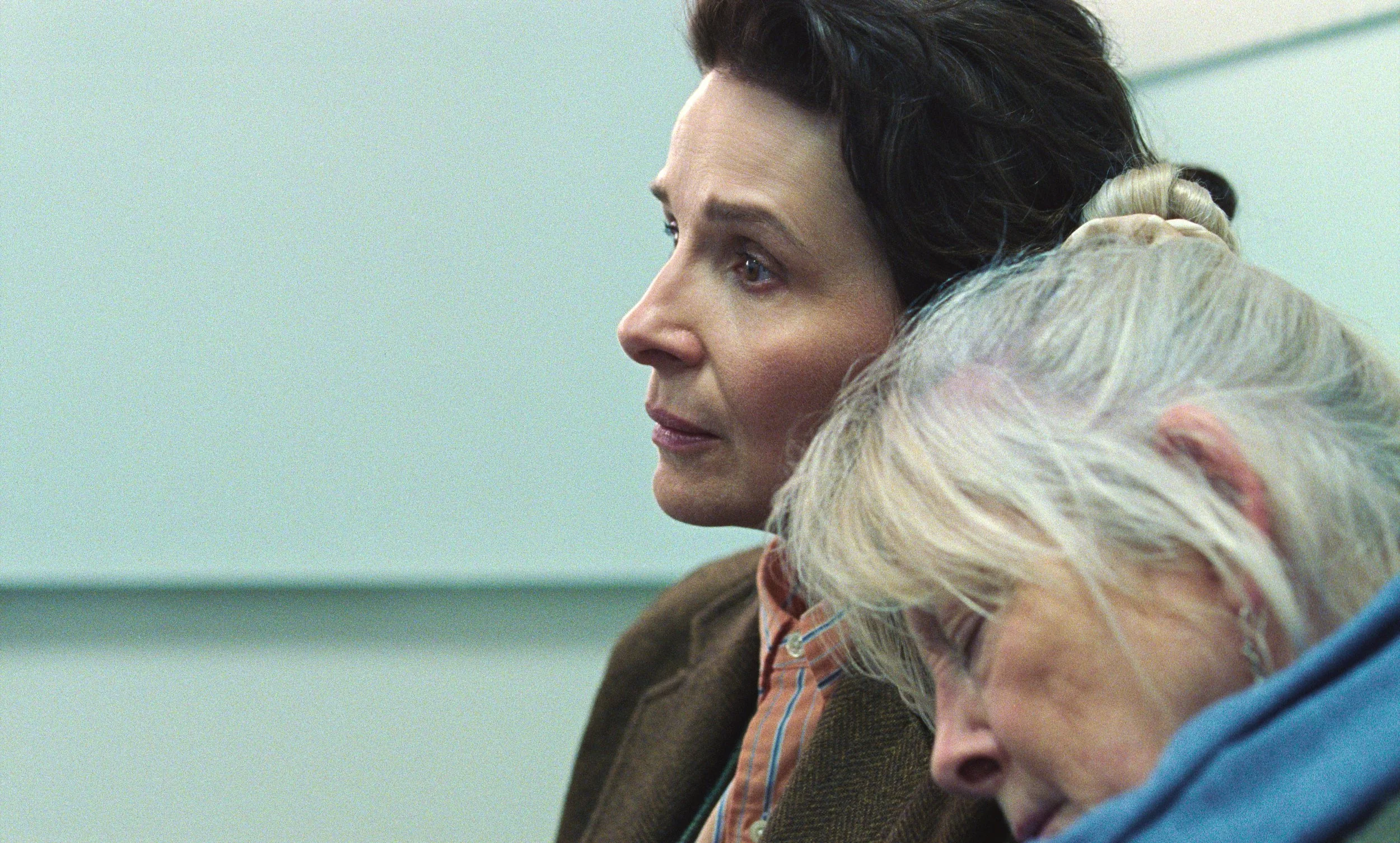
There is one scene in the film that really stayed with me. It’s the moment when the father speaks to his daughter and tries to explain the kind of black hole he falls into when he faces the idea that his spouse is getting worse. During that speech, the camera stays only on Juliet’s face, and we just watch her reaction to what she’s hearing. For me, it’s one of the most painful parts of the film. I was amazed by how Juliette Binoche shows this very subtle, gradual emotional shift without saying anything, not just in that scene but in many others. Are there scenes that still touch you deeply every time you watch the film?
LH: Well, that's one. Juliette's expression without words... She communicates so much. Like you said, it's gradual, and she gives you the range of the swelling of her emotion., without words, just subtle. It had to be in close up, so that you can see these very subtle expressions changing. I mean, she's the master, right? All you gotta do is put a camera on her, give her the story, and let her interpret it her own way. Just be sure you hit the record. I mean, I can't believe I got to work with her alongside amazing actors like Tom, Annie, and Flo. It was my dream casting situation, my top choices, and they said yes.
I was struggling a bit… At first, from the very first scene, I understood the daughter's reaction. But by the middle of the film, you start to realize that the parents truly love each other and that the mother might even want it. When the social worker comes in and they talk, we see Leslie and Martin are inseparable. In the night, Leslie reaches out to Martin while they’re lying in bed together. It makes me wonder: Could it be that, over the years, he understood something Amanda didn’t, because she simply wasn’t there with her parents for so long?
LH: These are the questions I don't know the answers to, and that's what I wanted somebody to take away. It's complicated. I do still believe that he shouldn't be having sex with her because he can't know with certainty what she's feeling. But everything you just said may also be true. You know, it's very easy to misinterpret Annie's own initiation of the sex act as real informed consent. But in fact, it could be just simple disinhibition that comes with the loss of cognitive function. There are primal reactions that are maybe harmful for her, even if she's initiating it. There are also geriatric psychiatrists having different opinions. But we can't know because the patients can't communicate how they feel in a truly sane way. That line is very blurry. Still there's a certain point where you can't trust the person suffering dementia with their own critical choices. The point of the story is, where is that line and who determines it? How do you behave when everything's very confusing? Maybe she's giving you signals that you would interpret one way, but in fact, it could be harmful for her, even though she's initiating it. These are very difficult questions that I don't have answers to. I just wanted to kind of present the way I feel about it, which is, I don't know a lot of this.
Can I ask about the ending? Why did you decide to end the story for them like that?
LH: I'm not sure I know. It was just an intuition, and I didn't question it. I kind of remember some of what I was thinking then. It was a dark time in my life. You know, I'm frustrated with stories about dementia that I've seen previously. They try to first of all take the point of view of the person suffering dementia. But how can you know? So how can you presume to make a film from their point of view?
What I hadn't seen were films that keep them opaque, where you see it from the point of view of the people around them — what they're experiencing, how they're trying to penetrate the opacity of their loved one, and how they fail.
There's a lot of dementia in my life personally. Not with my family, but with friends. My father is of that age, and he has many friends going through this. So I'm deeply steeped in the grief and anxiety of that experience. Even right now, there's one really important thing happening with one of my dad's best friends. It's bleak, and that's the truth.
So I wanted to show that truthfully, rather than having it seem redemptive, because it’s false to say that there can be so much beauty in the experience. Maybe there are moments of beauty, but it's one of the most difficult things that people will have to experience in their lives, and that's just a fact. So I wanted to present it that way.
It was a way to solve the story, to terminate the story. But it's also the most common way that people over 65 die, which is by falling in the bathroom. In fact, I originally had a different ending for how he died. But then I thought, let's research this. What's the most banal and simple thing? What's the most common way somebody would die at that age? And that was it.