With James Price
BERLIN, JANUARY 2026
By Burcu Beaufort
If you are watching Yorgos Lanthimos’ brilliant Poor Things (2023) or Bugonia (2025) and feel genuinely pulled into their universe, you may want to look up the production designers, a title still not widely understood outside the film industry.
I met James Price in Berlin, co-winner of the Academy Award for Best Production Design for Poor Things in order to discuss his craft, his beginnings, and how his career has changes since achieving international recognition.
Price’s most recent work reunites him with Lanthimos on Bugonia (2025), a delightfully bizarre sci-fi black comedy in which he and his team created both earthly and not-so-earthly environments.
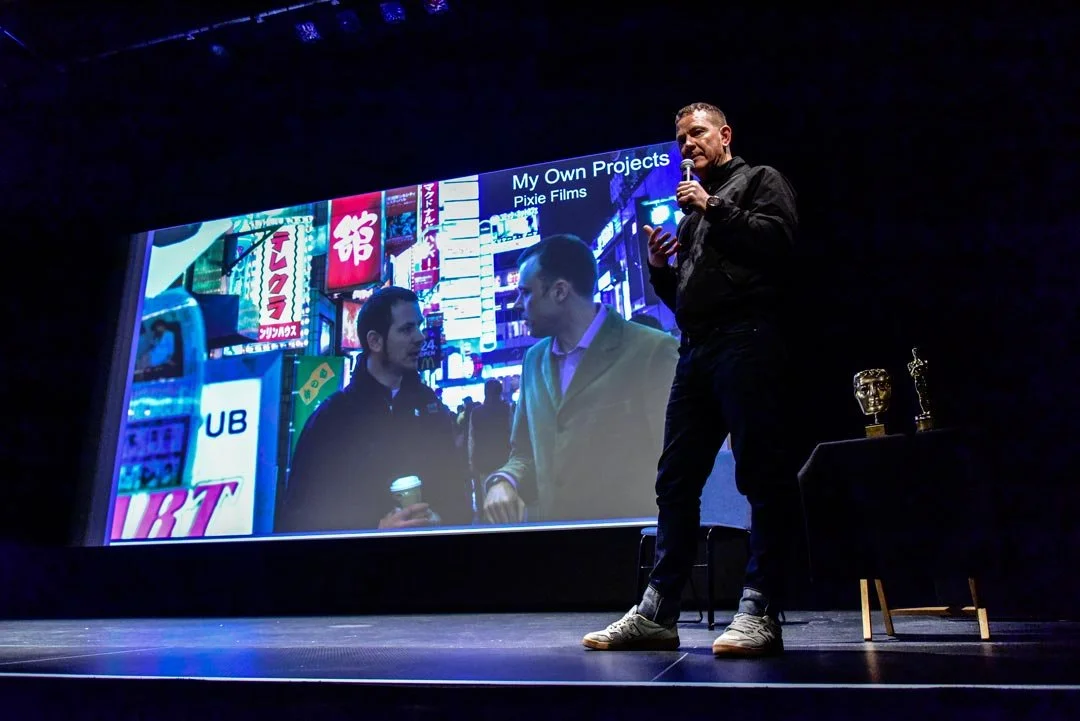
James Price during Borderlines Film Festival 2025
© Christopher Preece, Borderlines Film Festival 2025
Burcu Beaufort: “Production design” sounds a little bit abstract to many people who are not in the industry. How do you define it?
James Price: It's something we've been talking about as designers quite a lot. Because in advertising, they still have the old title of “art director”. This role, production designer, came about because of William Cameron Menzies during the production of Gone With The Wind (1939) and it took a long time for this role of production designer to get absorbed. It was only recently, in 2012, that the Academy changed the category from Best Art Direction to Best Production Design.
If you say to someone that you're the cinematographer, they understand that, everyone can understand it. You're the costume designer. They can understand. When it comes to production design, some may think of set design; it's fine. But we're not doing the sets. We're creating the environment. Well, my one-line answer for what production design is is that it's literally everything you see on screen other than the actor and what the actor is wearing. It may sound a little arrogant or cheeky, but it’s also quite accurate.
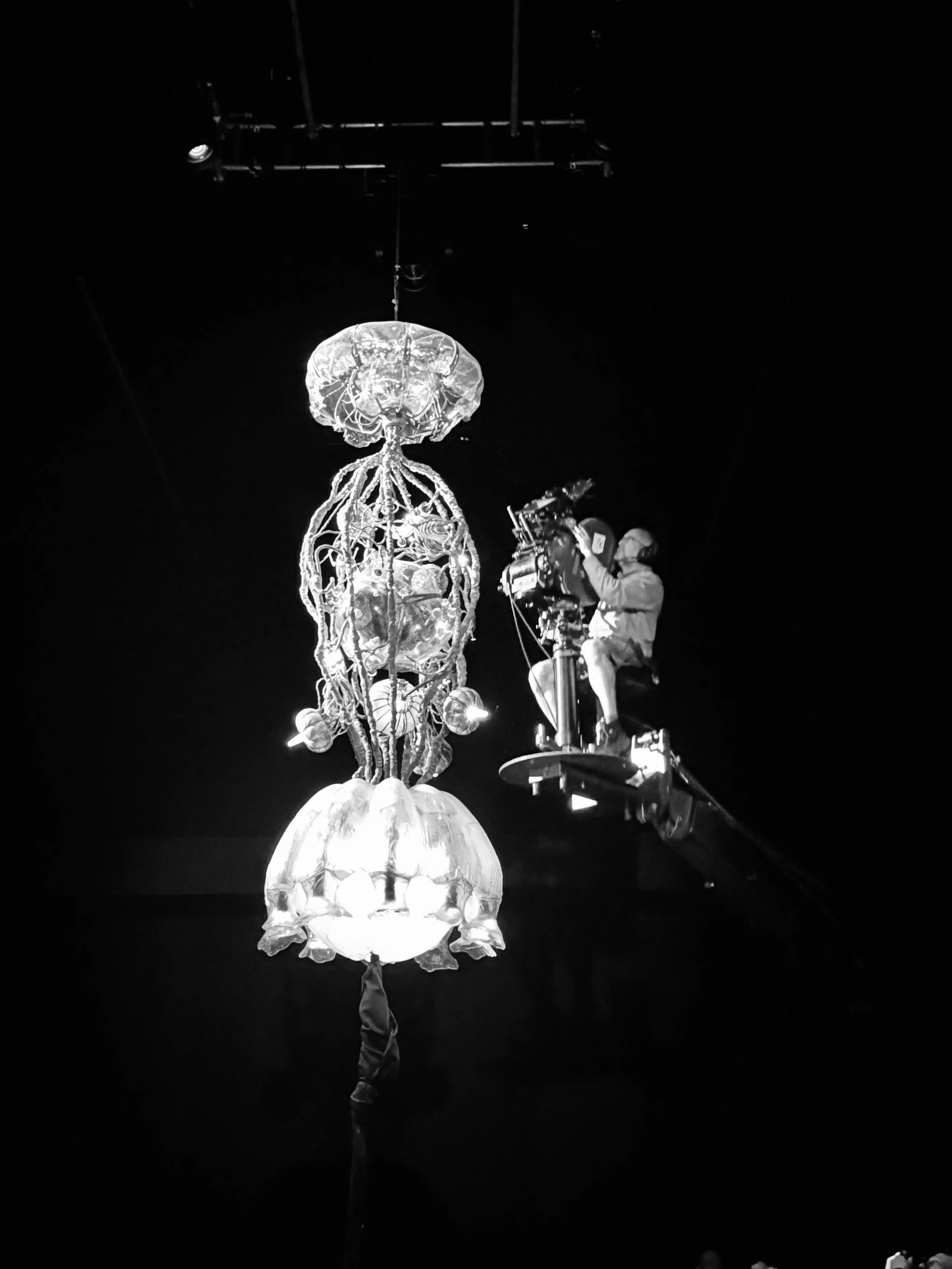
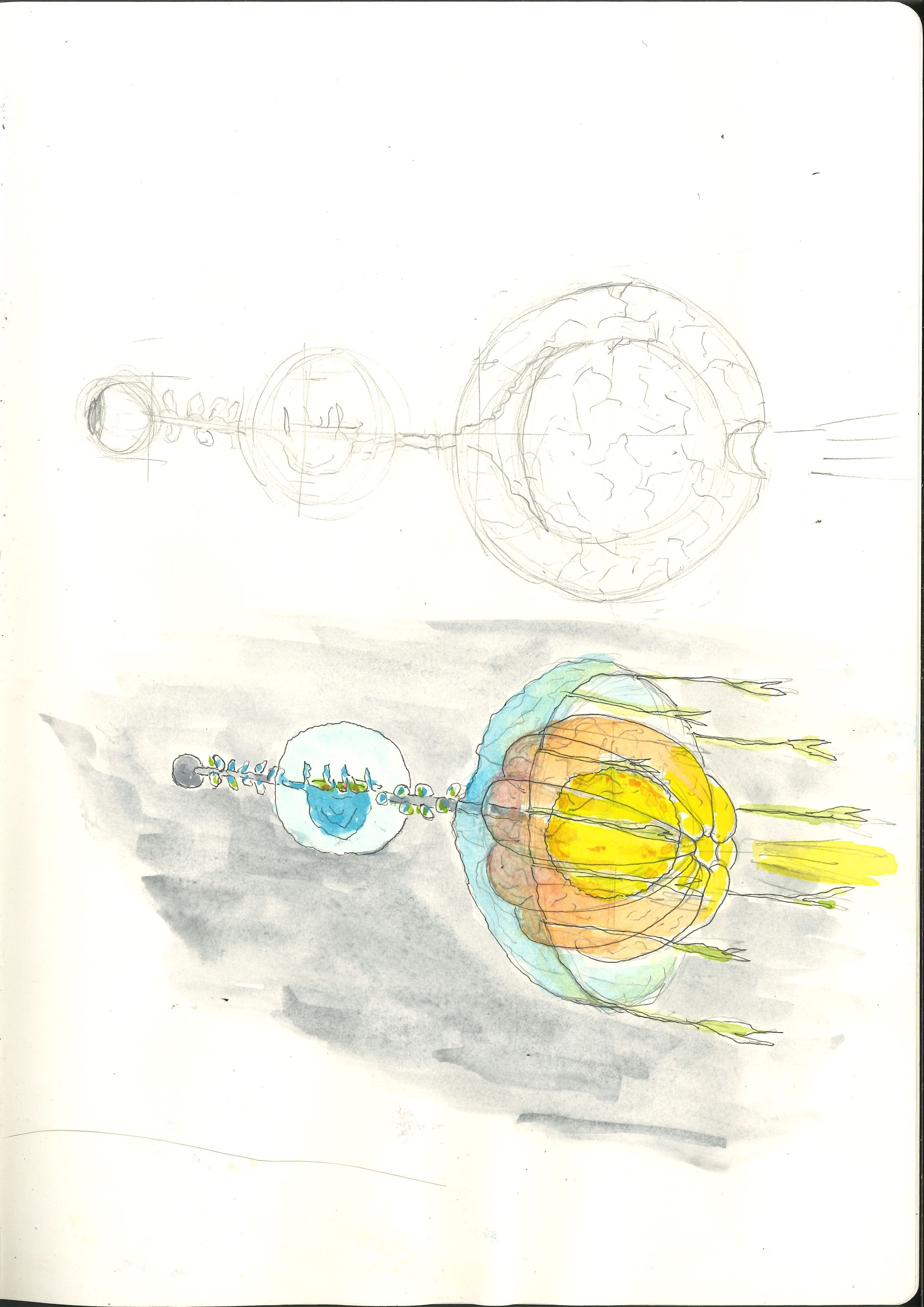
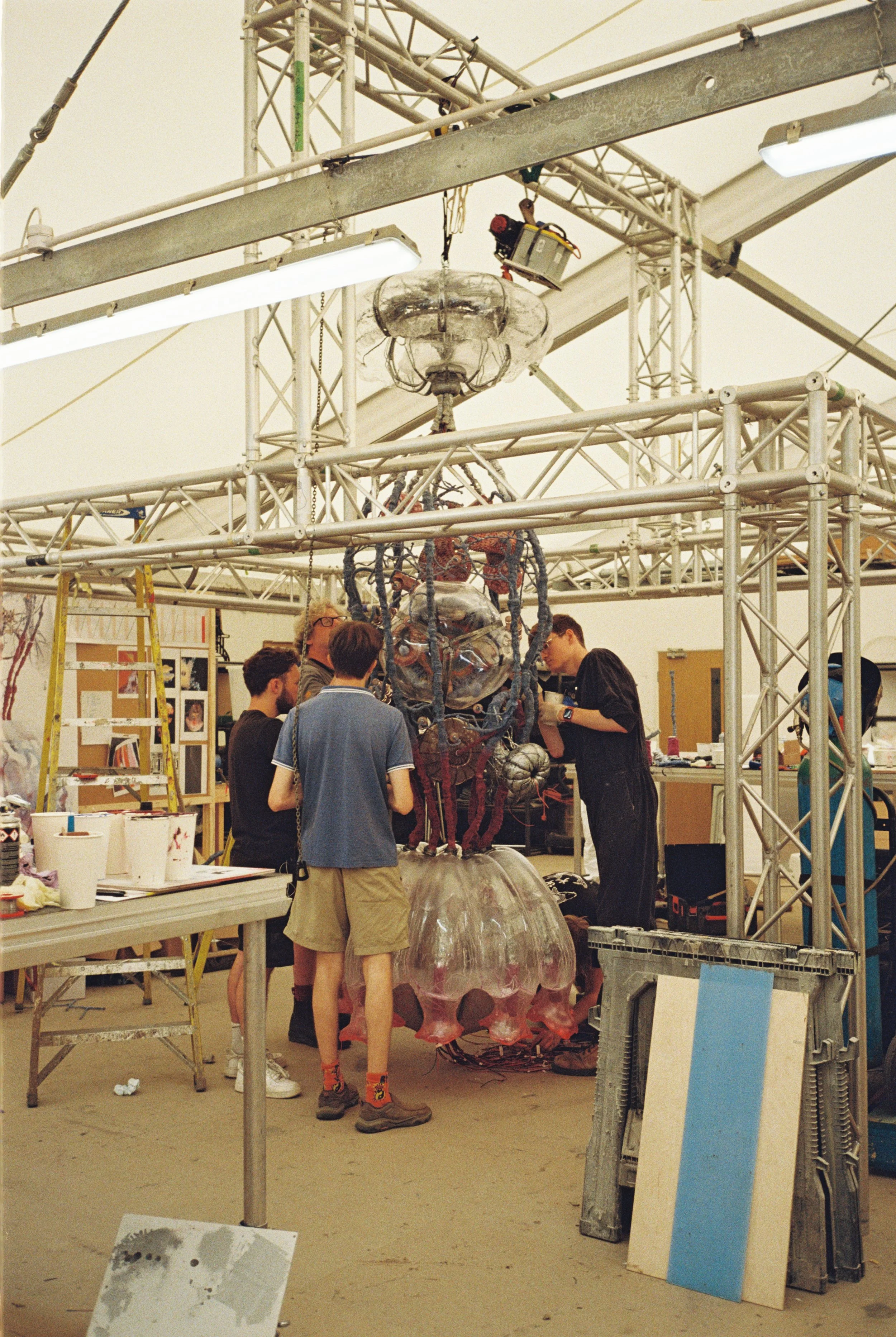
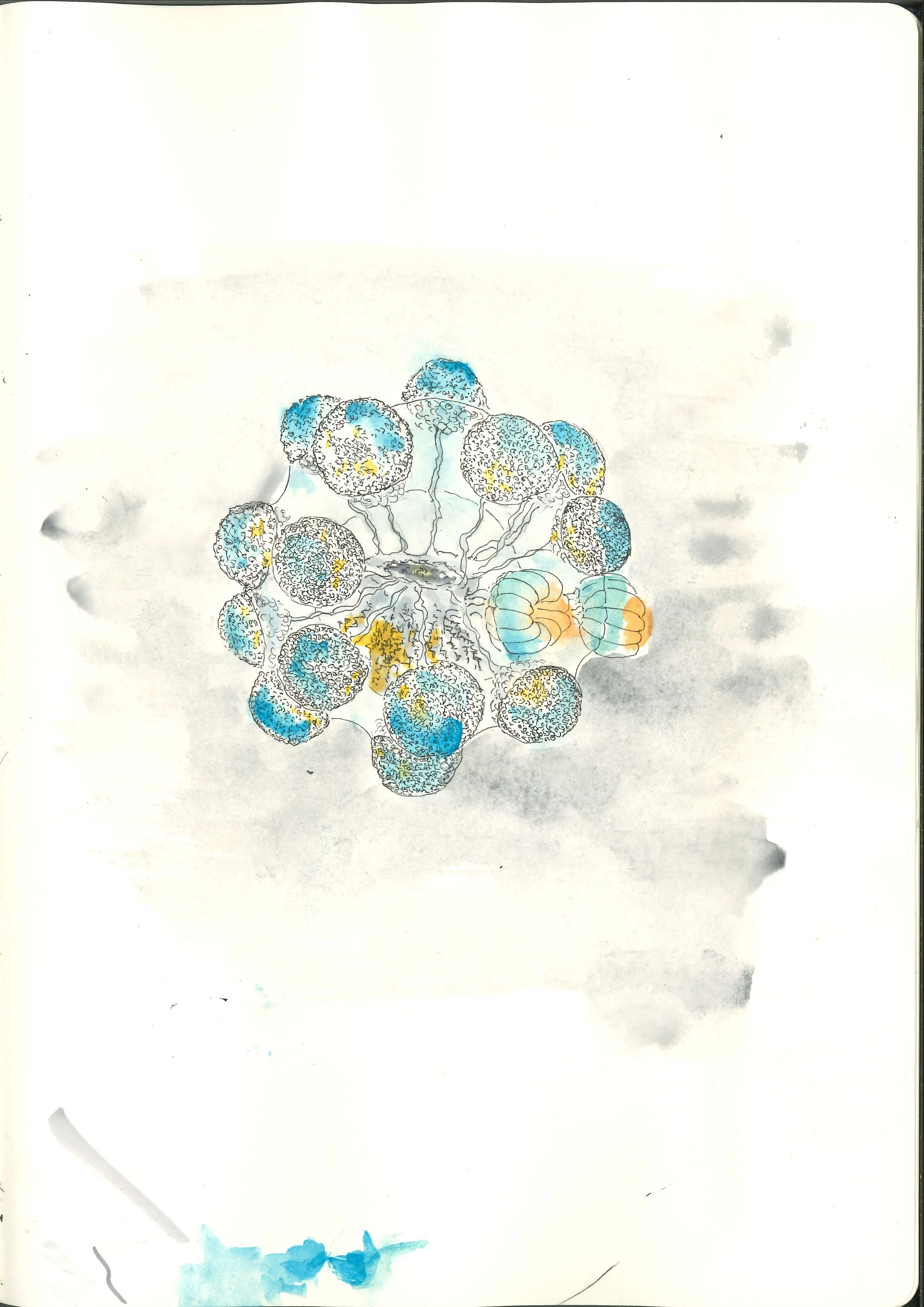
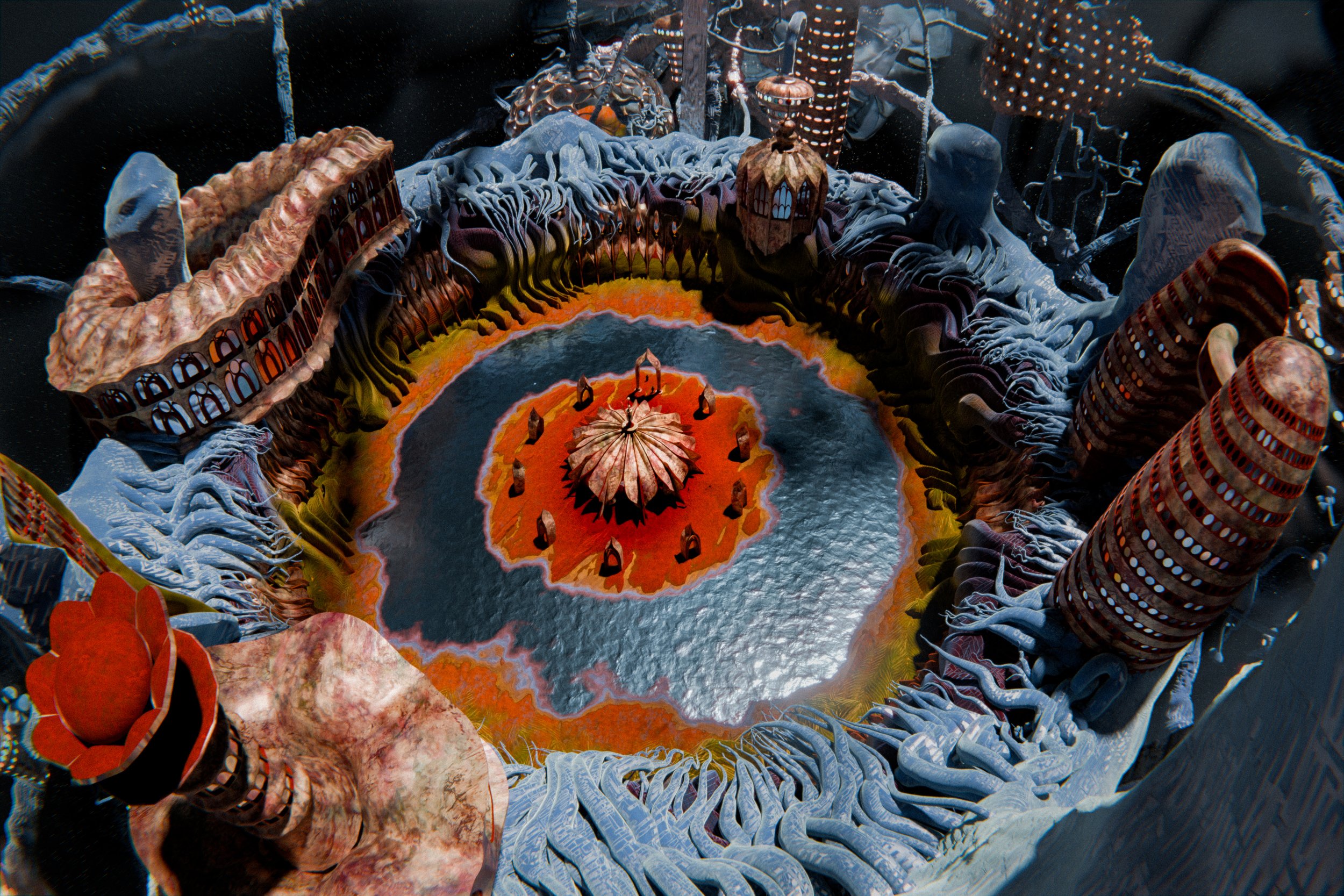
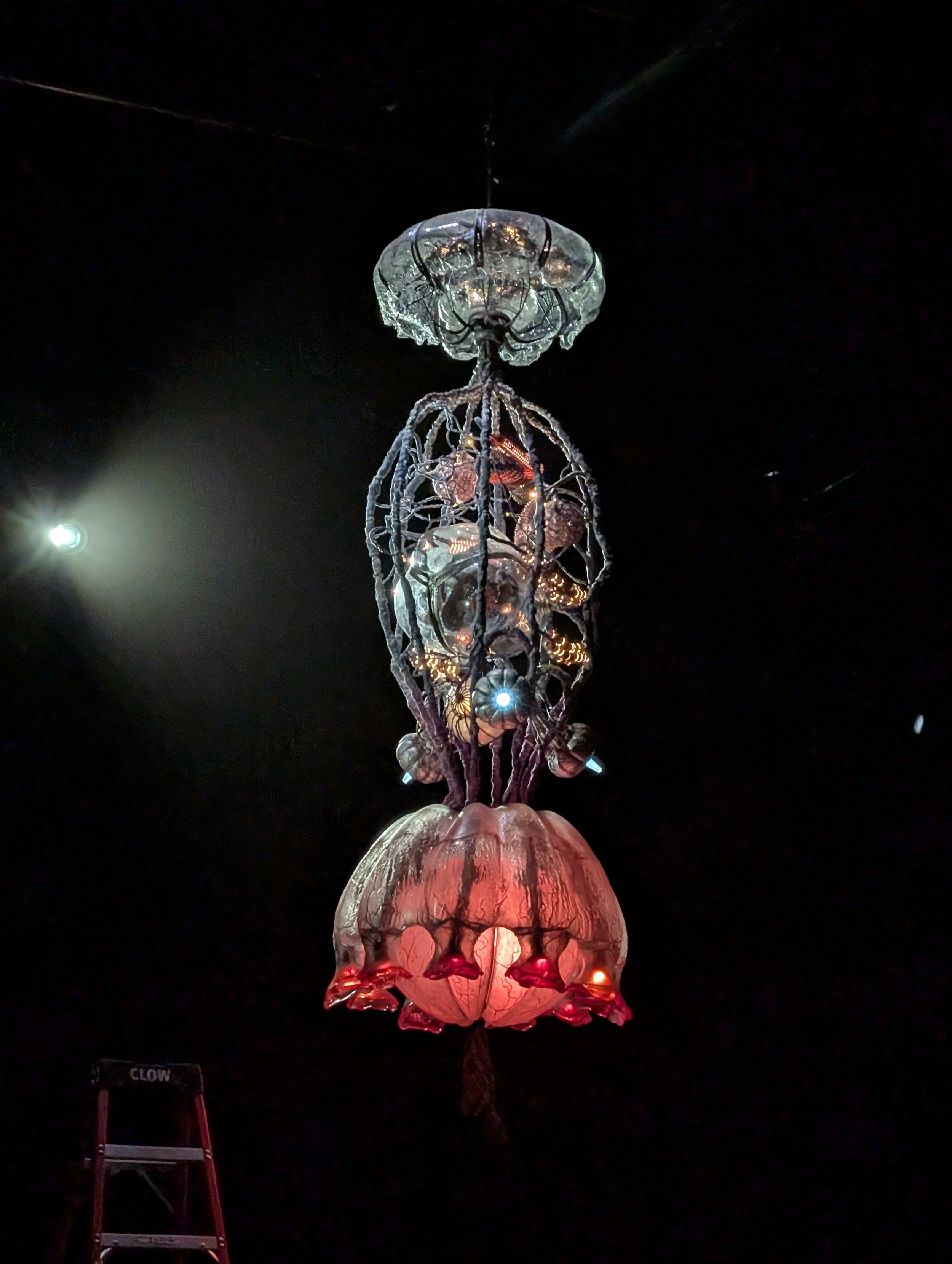
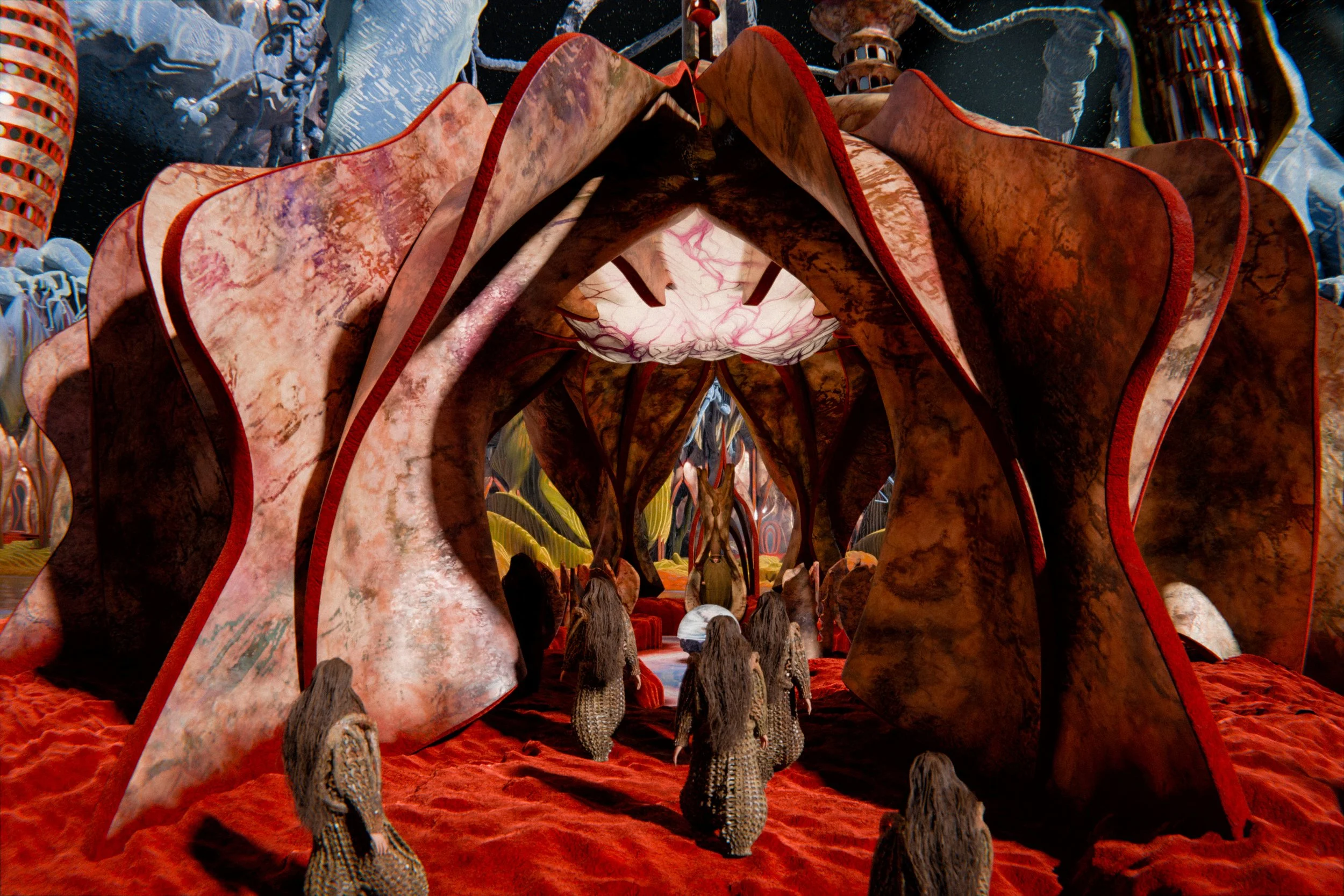
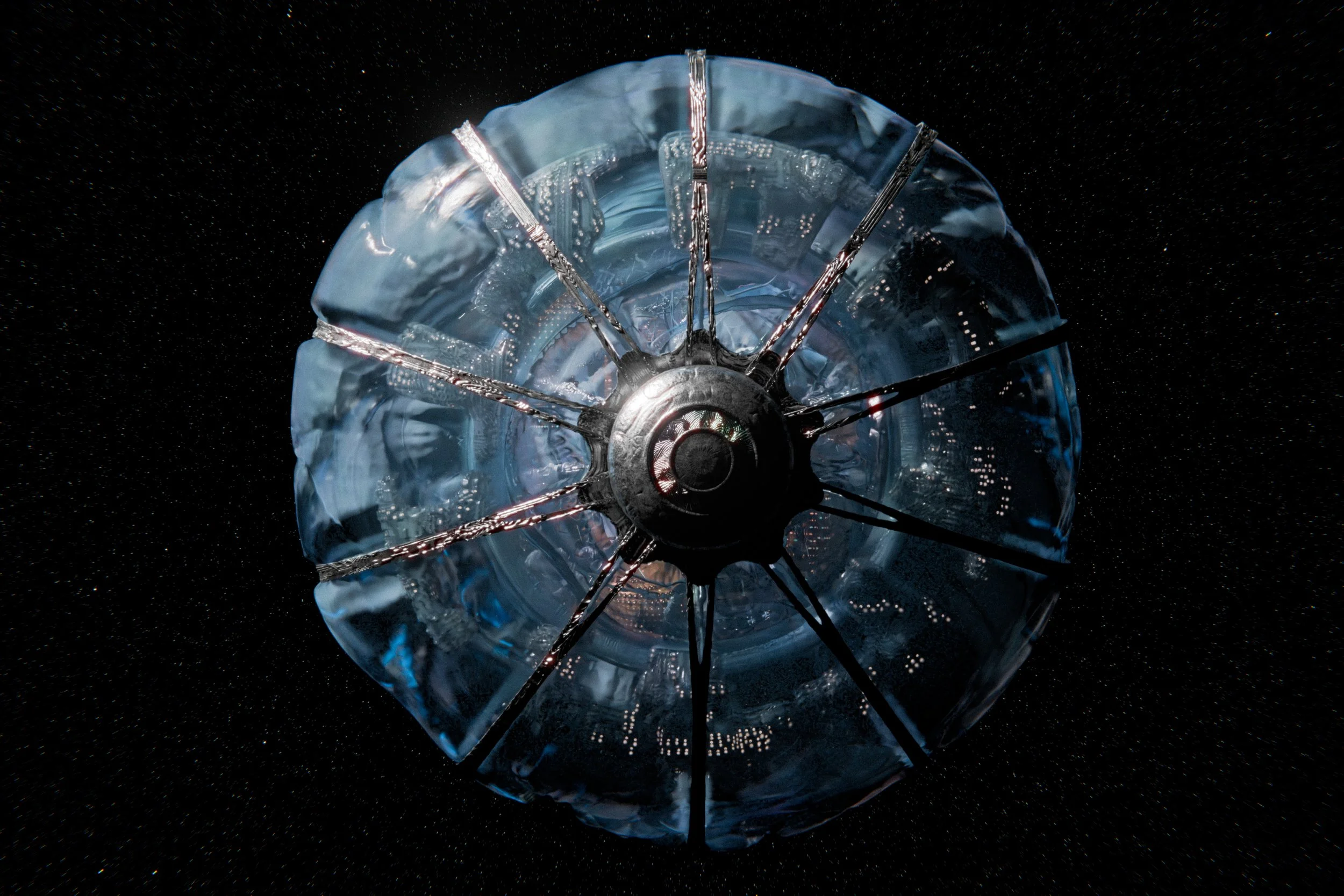
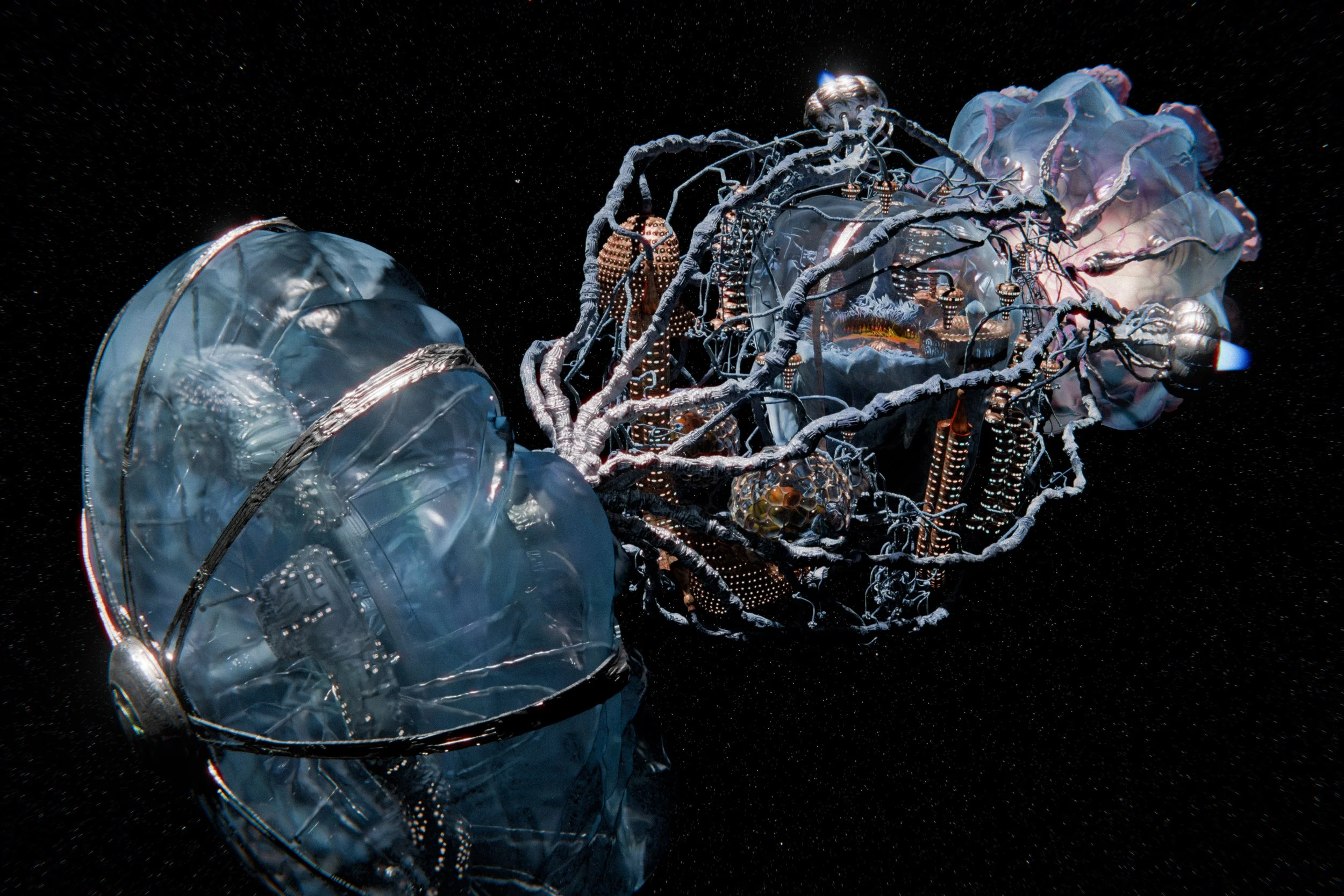
Concepts for the Throne Room and the Andromedan Spaceship in Bugonia (2025) by Jonas Bethge and James Price.
For the full credits on Art Direction, Construction and Graphic Design please refer to film credits.
Image courtesy of James Price
Burcu Beaufort: How is production design related to cinematography? How important is your collaboration with the cinematographer?
James Price: For me, it's the most important collaboration. I won't agree to a project until I know who the cinematographer is. There are certain things I look for to see if I think they can light. If I feel that they can light, and their work holds up, then I'll go for it. Because we live and die by one another. I've done sets, not so much as a production designer, but as an art director, where I was like “my god, this set looks terrible in the flesh”. Then the cinematographers come along and like, “wow, they saved our a***. It looks amazing.” But also I've done sets I'm super proud of, and I am like “why does it look so bad?”
Cinematography is like painting with lights. I always thought, “oh, that's quite a pretentious thing to say”. Actually, no, I'm saying it the more I get into it. There are many different styles of cinematography. There are people who like very naturalistic lighting, or some who use a lot of more old-school Hollywood kind of lighting. Once I know how the director wants to shoot, I sit with the cinematographer to understand their style of lighting, then I adapt. Certain directors and cinematographers work best on location. So you might go for locations, even though there might be money to build a set. I always like to look at it holistically, what is the right decision for the film? Because the script is a series of problems you creatively solve in order to have the most amazing looking film. That's all that matters: What is going to serve the story of the film and how the director wants to approach this.
We are all divided up into our own little art forms within it. The production design, the cinematography, the costume, we all come together. Filmmaking is the highest form of collaboration, there are so many other art forms within it which is cool.
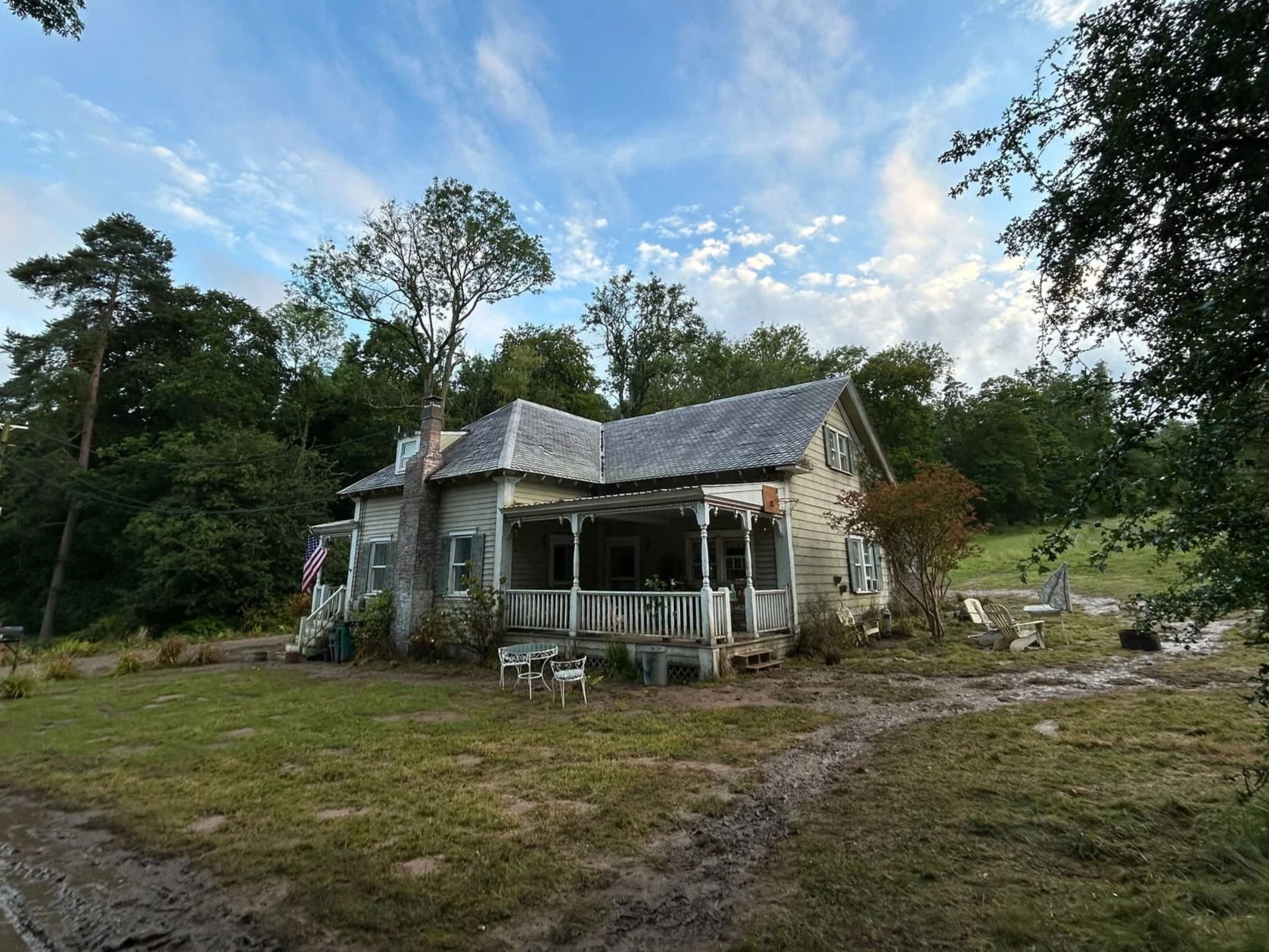
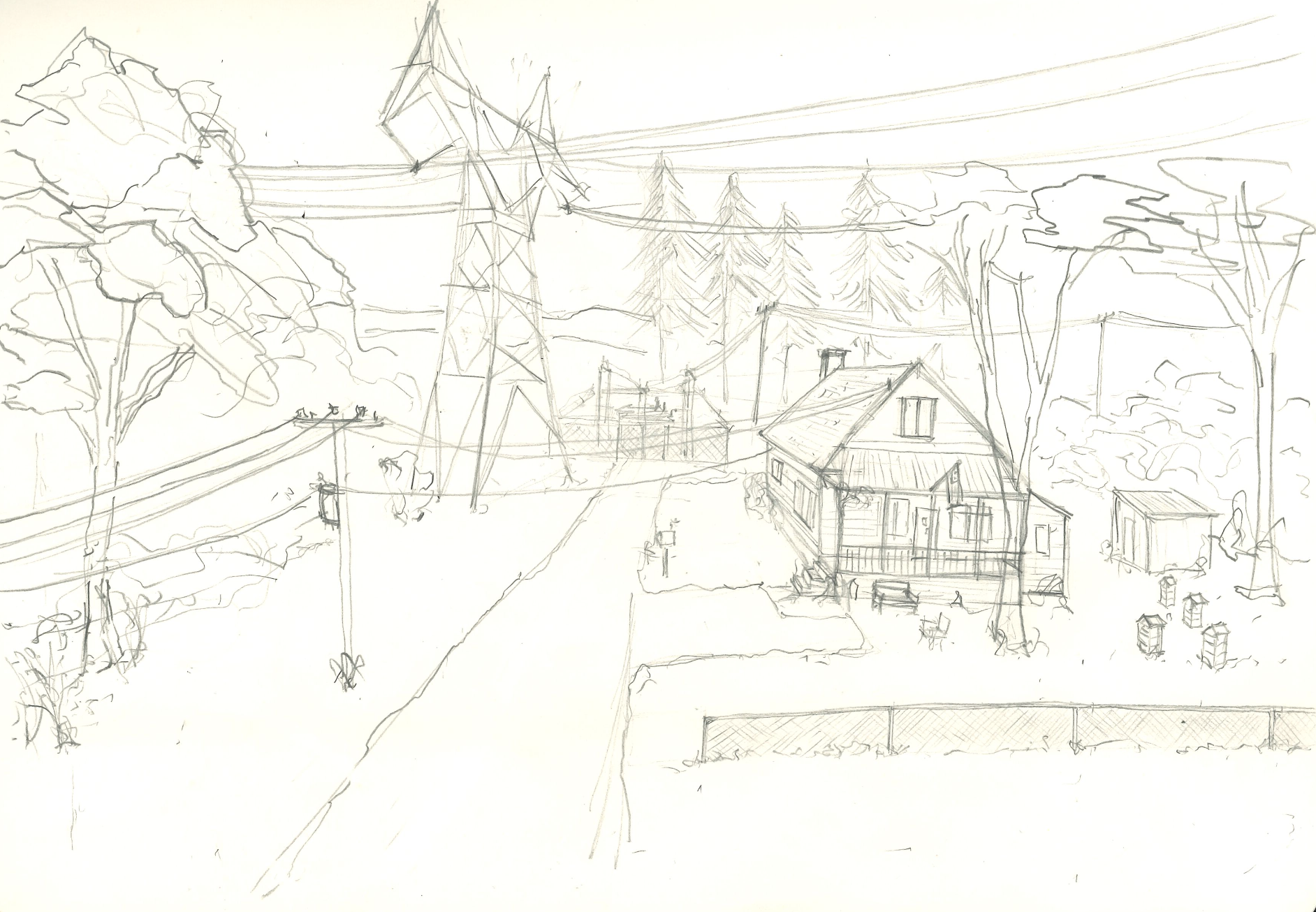
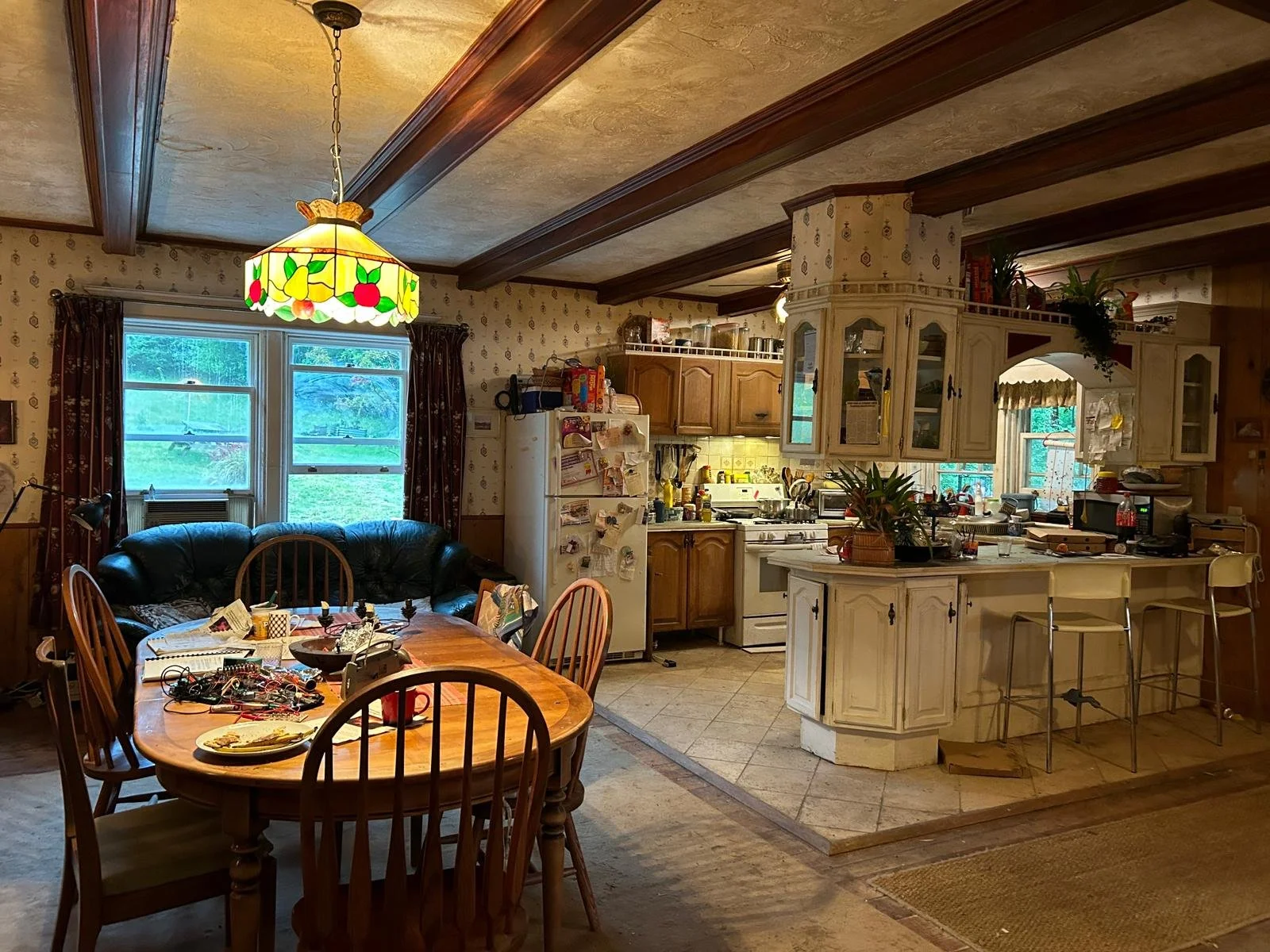
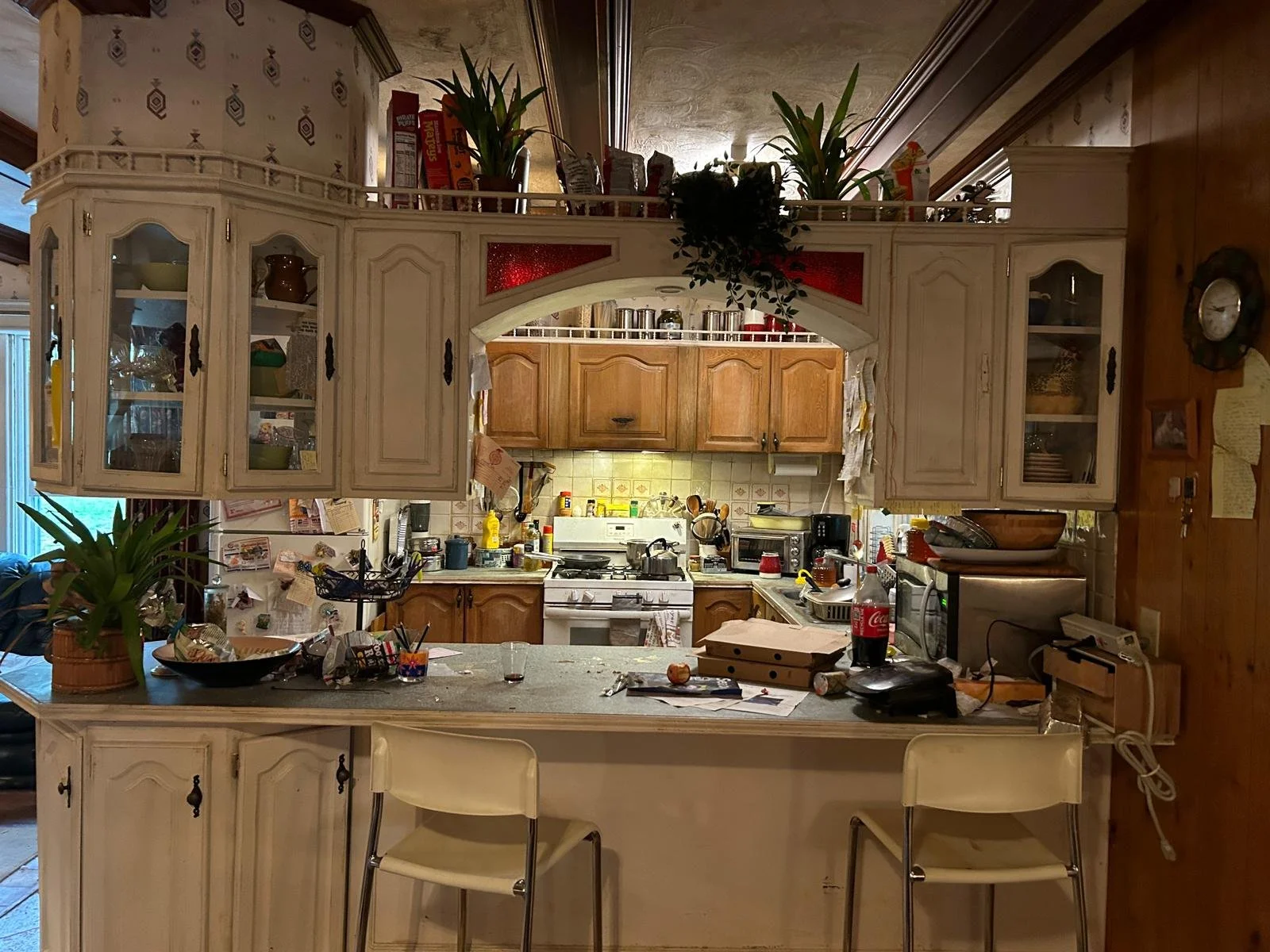
Concepts for Teddy’s House in Bugonia (2025)
For the full credits on Art Direction, Construction and Graphic Design please refer to film credits.
Image courtesy of James Price
Burcu Beaufort: Do you have a favorite cinematographer?
James Price: There are two who I am closest with. One of them is Mátyás Erdély who has shot The Nest (2020), and Iron Claw (2023) both by the director Sean Durkin. I basically was their little one, even though I'm in between them in age. As Sean asked me to design for him for The Nest, these two amazing guys were creatively just on another planet to me. I think I've upped my game since then. Sean and Matyas changed my life. And then, of course my relationship with Robbie Ryan. They're both incredible cinematographers. I really like those two guys, they're also the ones that I've worked with most.
I also want to mention Tim Maurice-Jones, who shot Lock, Stock and Two Smoking Barrels (1998), Snatch (2000). I think his stuff on film is really beautiful. I would always want to shoot on film, which is weird. The first thing I ask is “can we shoot on film?” This is maybe not normal for a production designer, but it's so important to me. The film gives you the final kind of varnish over everything, right? It just brings all of the sets, the actors, the costume, the makeup altogether. You know, your work is analog, you love it.
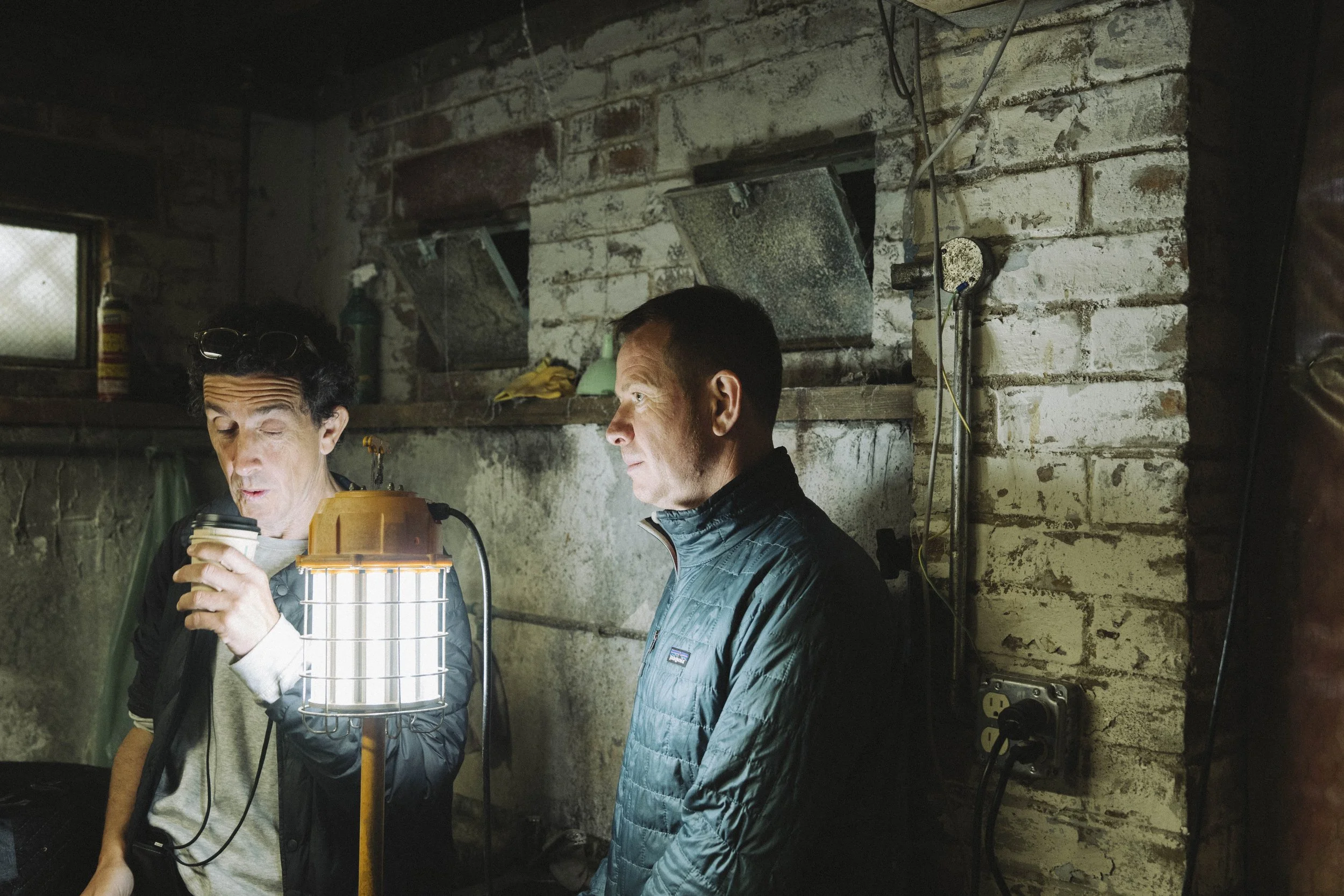
James Price and Robbie Ryan (Cinematographer) on the set of Bugonia.
© Atsushi Nishijima
Burcu Beaufort: With film, you work with grain which gives the image more depth, through the chemical process. It's completely different from digital.
James Price: I like painted backdrops as opposed to printed ones, the old school. There's a tangibleness when you spray onto, add paint onto. I think it's similar to shooting on film. Staying as analog as possible, which is the way I like to approach production design, too.
Burcu Beaufort: I think there's this human touch we intuitively feel. It's charming somehow, I feel more connected.
How did you know that you wanted to be a production designer?
James Price: I grew up on a small family farm on the Welsh borders, and I had a conventional family. No one in my family was an artist, but some were artistic. I remember speaking to my uncle and he said, “I was told when I was at school I should have gone to art college.” So I said to him, “Why did you not do it then?” He looked at me and laughed. He said, “Can you imagine what I'd say to my dad that I want to go to art college?” In the 40s or 50s, it was not a thing. You couldn't, it was not a thing we would do.
So, I was really badly dyslexic as a kid, and I was never really interested in farming, but then at the age of 12, I was made to work on it. I ended up resenting it because I used to work on a farm every holiday. I used to want to go to school to just have a break.
When I was at school, I did some work experience at a cathedral as a stonemason. They were showing me how to do stuff, and after 2 days, they were like, man, “You're doing stuff that it takes people months to learn. Do you want an apprenticeship?” And I was like, “Yeah, that sounds cool. I could be a stonemason.” At 16, I left school and was going to start an apprenticeship in Bath. But all of a sudden, before I was supposed to start, it fell through, and there was suddenly no apprenticeship available. They had no money. So I was like, “What am I gonna do?” Where I grew up in Herefordshire, there is an independent art college, it still exists. It's one of the only truly independent art colleges in the UK. It's not affiliated with anyone else. They do these things called BTEC courses in general Art and Design which are 2 years. Well, I started on this course in 1993. All higher education was free in the UK. It was an amazing time. Anyway, I went on this course. It was such an amazing course. We did everything from printmaking to films. But film wasn't really anything that was on the radar. I was very good at 3D. After those two years, I did a degree in applied arts, which was made famous by the Bauhaus. When I did this degree, the filmmaking started happening.
I grew up loving films. On the weekends, we watched films, in the evenings, we watched films. That was our escapism: Watching films. I was an insatiable film watcher and my work revolved around film, but I didn't realize it was an option. And then Four Weddings and a Funeral (1994), Shallow Grave (1994), and Trainspotting (1996) happened. I remember being at uni. We all skived off and got a taxi to go watch Trainspotting.
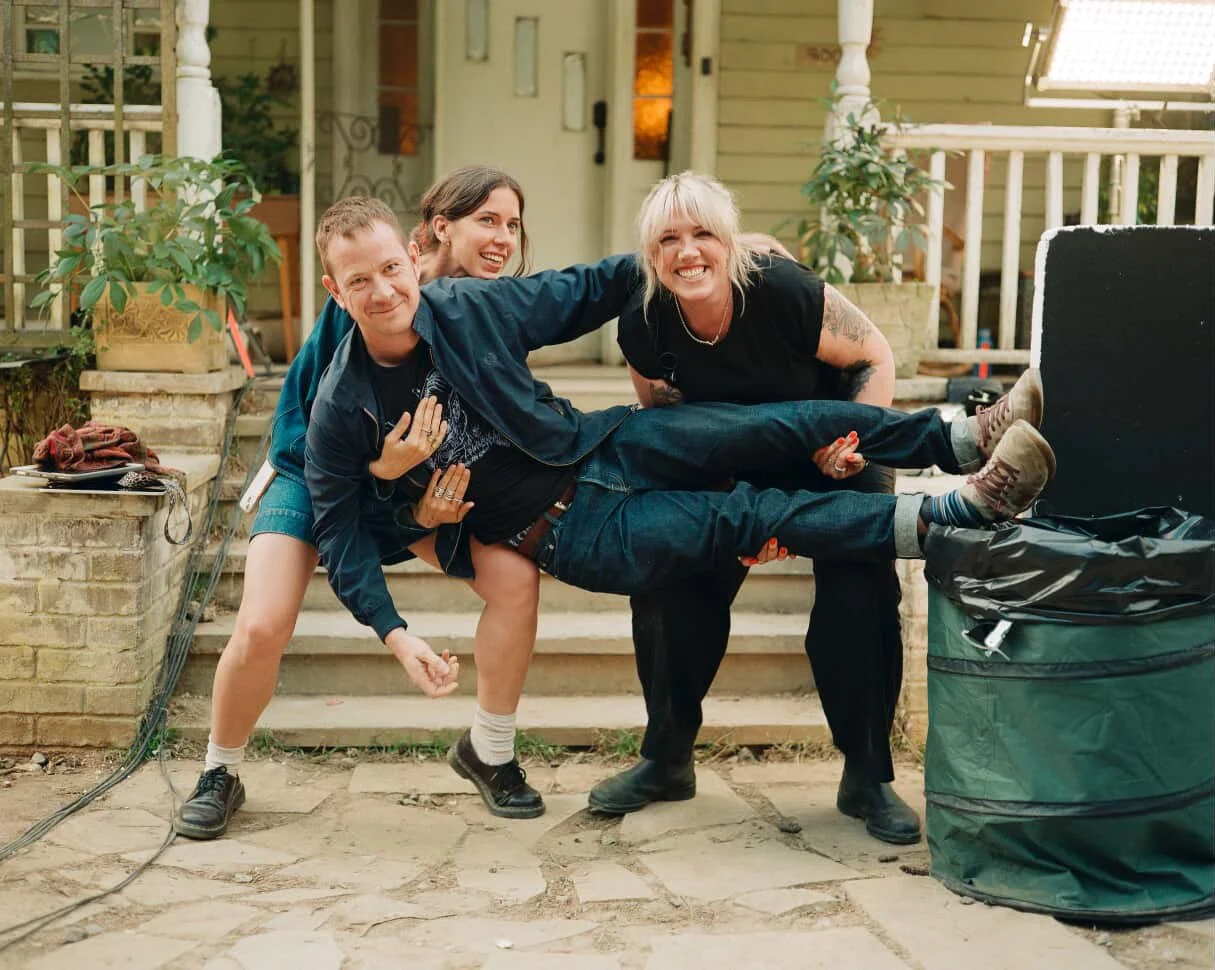
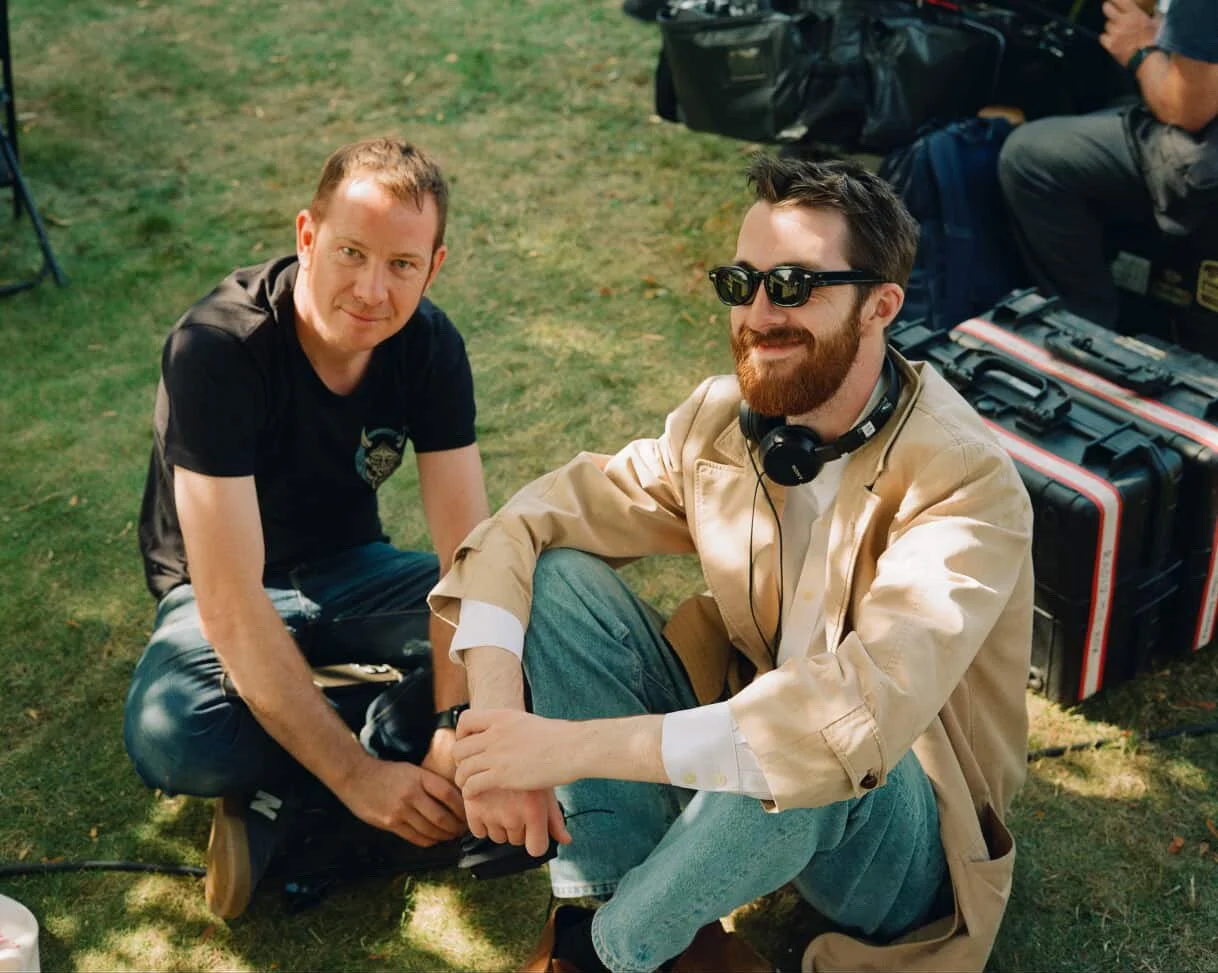
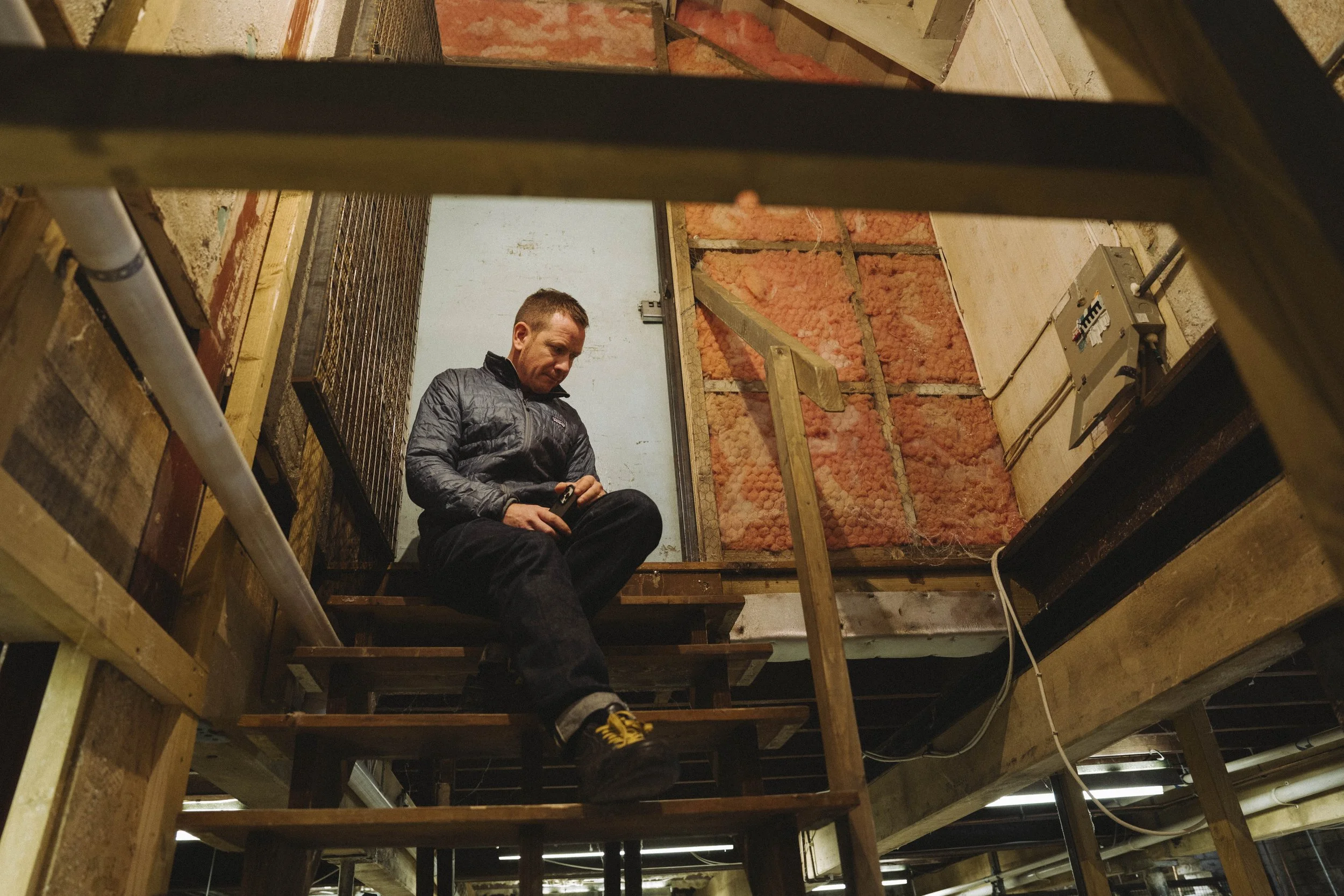
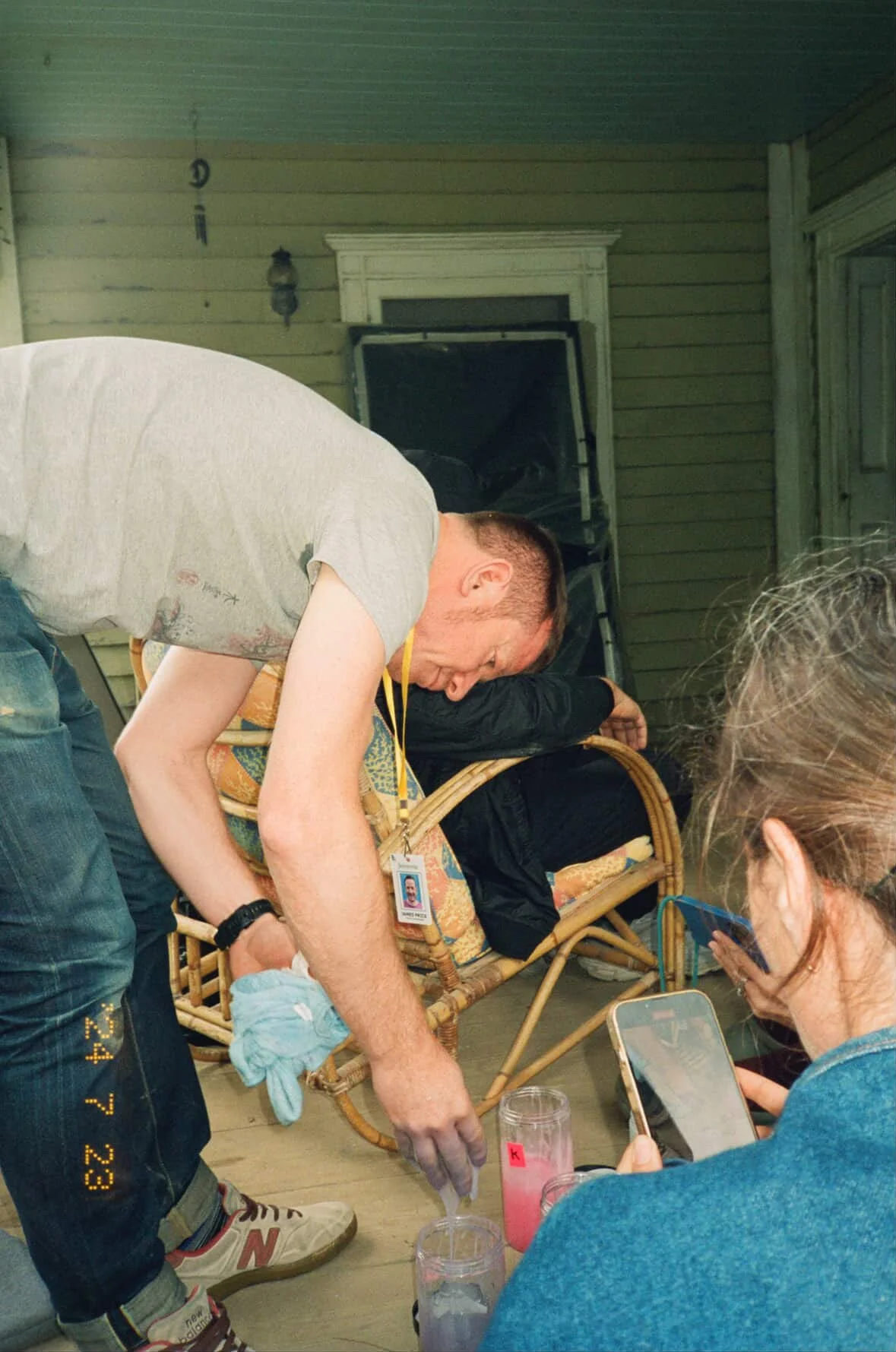
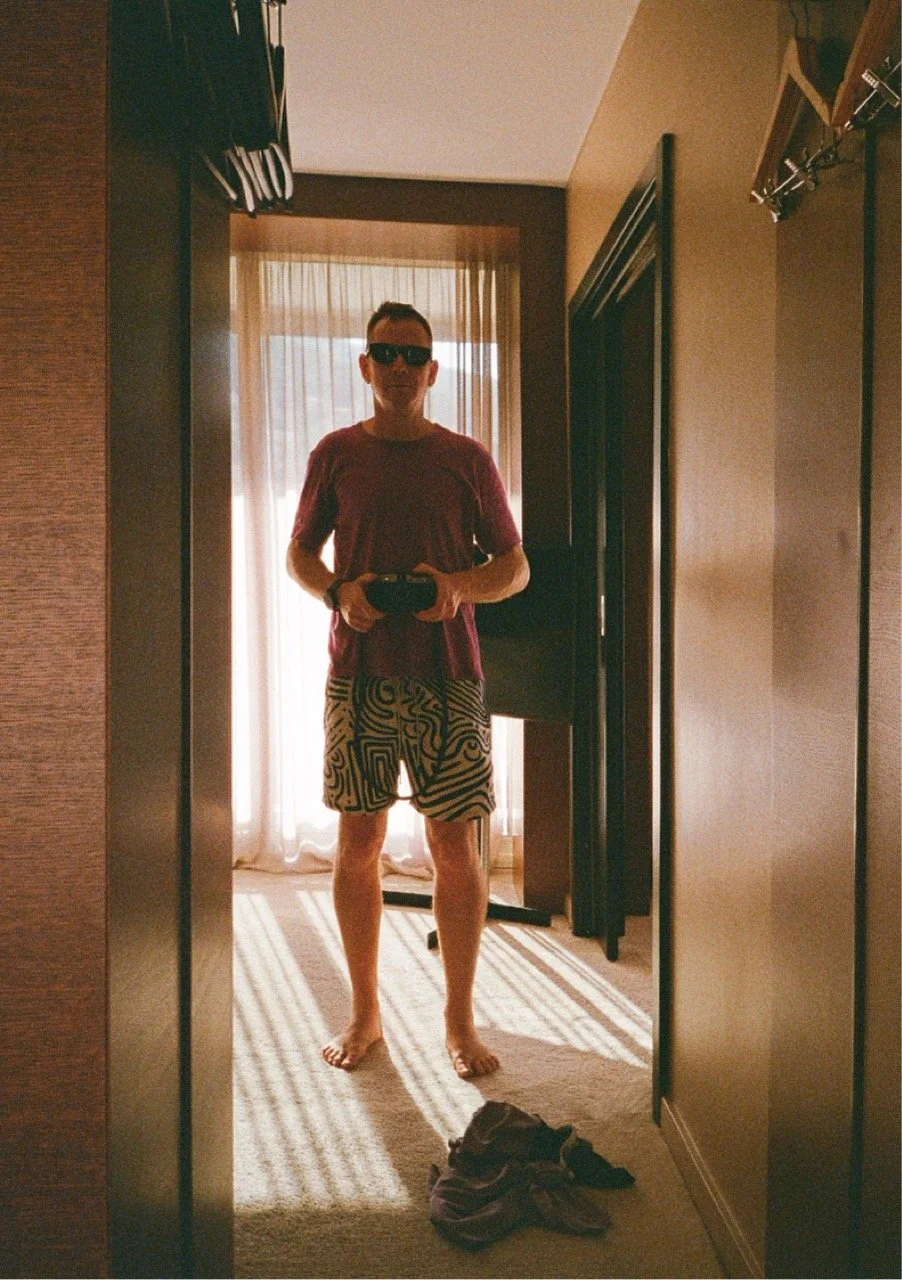
Selfie on film by James Price
All other Photographs © Atsushi Nishijima on the set of Bugonia. Price together with Lili Lea Abraham (art Director), Abaigael Snape (Standby Art Director), Jerskin Fendrix (Composer)
James Price: When I finished the degree, I realised that I didn't want to set up a business. TV production design sort of started to happen, and I went back to one of these companies that I'd done some work experience with. They introduced me to this designer who designed EastEnders. I showed him my work. He laughed at me and said, “I can't give you a job. You have no skills that I can relate to.” He said that there is this course called “Production Design for TV and Film” in Kingston, it's a master's degree. So I applied for that course and got on it. By this stage, the holy grail was to get a creative job. It was very pragmatic. It seemed very blue collar to me that you could do a day's work in film and get paid for it. That was all that mattered. I wasn't thinking any more long term than that.
During the course, I met a designer, Melanie Allen, who came in to talk to us. After we finished the course, I gave her a ring. She needed somebody who was based in Wales, and I said “I'm from Wales”. I wasn't from Wales. I was on the Welsh borders, and I lied and I got this job. It was only for two weeks, so I thought I could borrow a car and I can find somewhere to crash. After two days, she offered me a job for 16 weeks. So then I was like, “f—!” My stepdad got me a car for 500 quid. I couldn't afford to pay. I didn't have a computer. I ended up crashing at my mate's girlfriend's house, who was a student in Cardiff for the summer. After a few weeks, the designer obviously knew that I lied to get the job, but I made it work.
This is what I always say to people who want to get in. People say, “Oh, it's harder now.” and I'm like, “It is not, it was hard back then, if you didn't know anyone.” I think in some ways it's still easier now. You just have to make it happen. You don't need to be a pain in the ass for anyone else. You just have to go, “Yeah, I can do that”. And I didn't really know that I could do it, but I believed I could.
After 10 weeks, towards the end of the job, I had nowhere to live. I literally had to come clean to the design and say to Melanie, “I've been here for 10 weeks. I know there's another 6 weeks, but I’ve got nowhere to live.” I was only getting paid 250 quid a week. I couldn't afford to rent somewhere properly. She had a spare room in her apartment, so I went and stayed there. From then on she trained me up as an art director. I worked with her for 10 years, mostly on and off. I'd learned all about art direction, budgeting, and all of that stuff, and became an art director. Eventually I started art directing on bigger things.
Burcu Beaufort: Do you also think about making your own film?
James Price: I would love to do that. I did write something last year. I am constantly thinking about writing and directing. I really want to do some old school animation. Maybe a short film or something like that. I'm really interested in the sense of spirit and afterlife, and everything that revolves around the human condition. Not as in “Is there an afterlife?” but rather this idea that maybe souls are connected through time and are passed down through time.
I also want to do a film about a love story which is set to the backdrop of dance music, kind of a journey through dance music. There are lots of things that I would like to do. If you can hear any noise, there's a nice big studio being built, which will have some workstations, and maybe some of the guys can come and work here for some of the time. I still want to do production design, but there are also other kinds of facets.
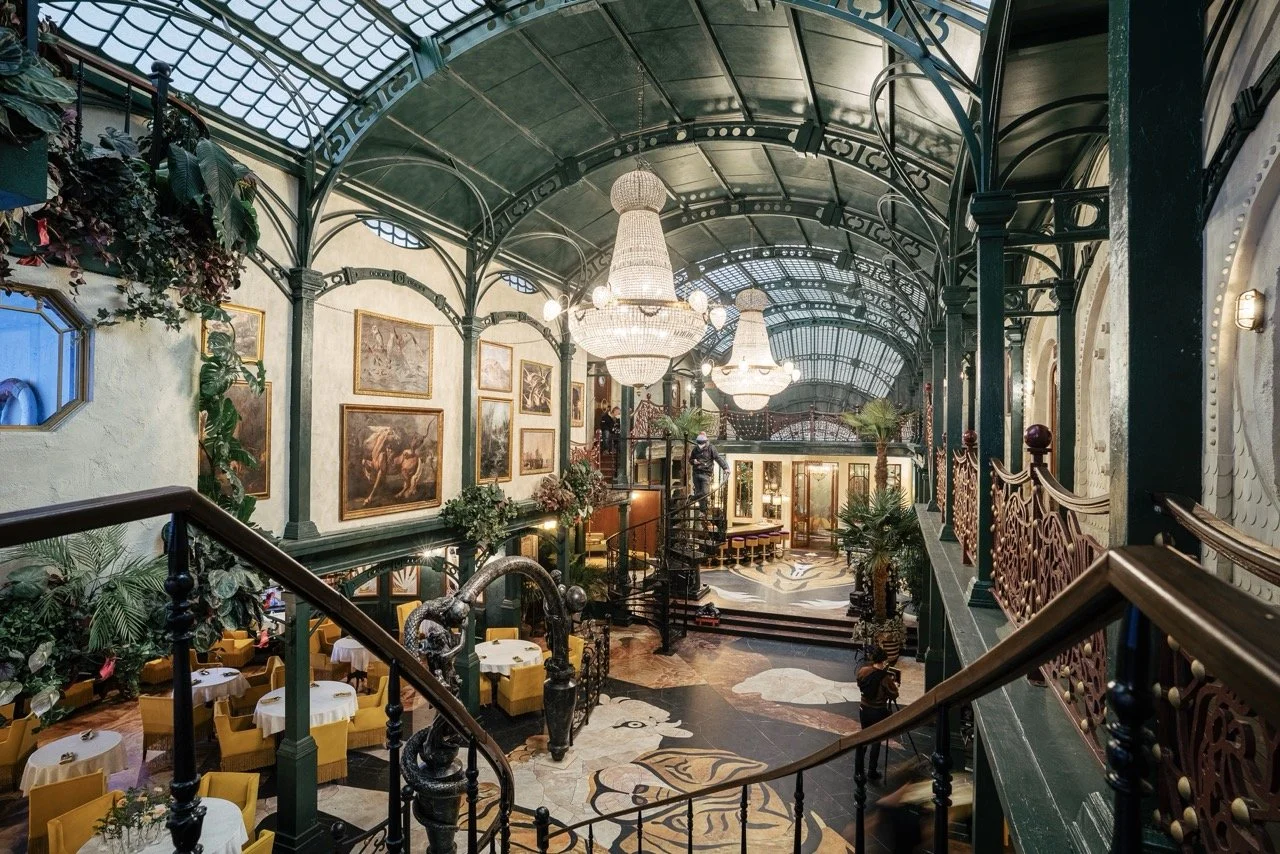
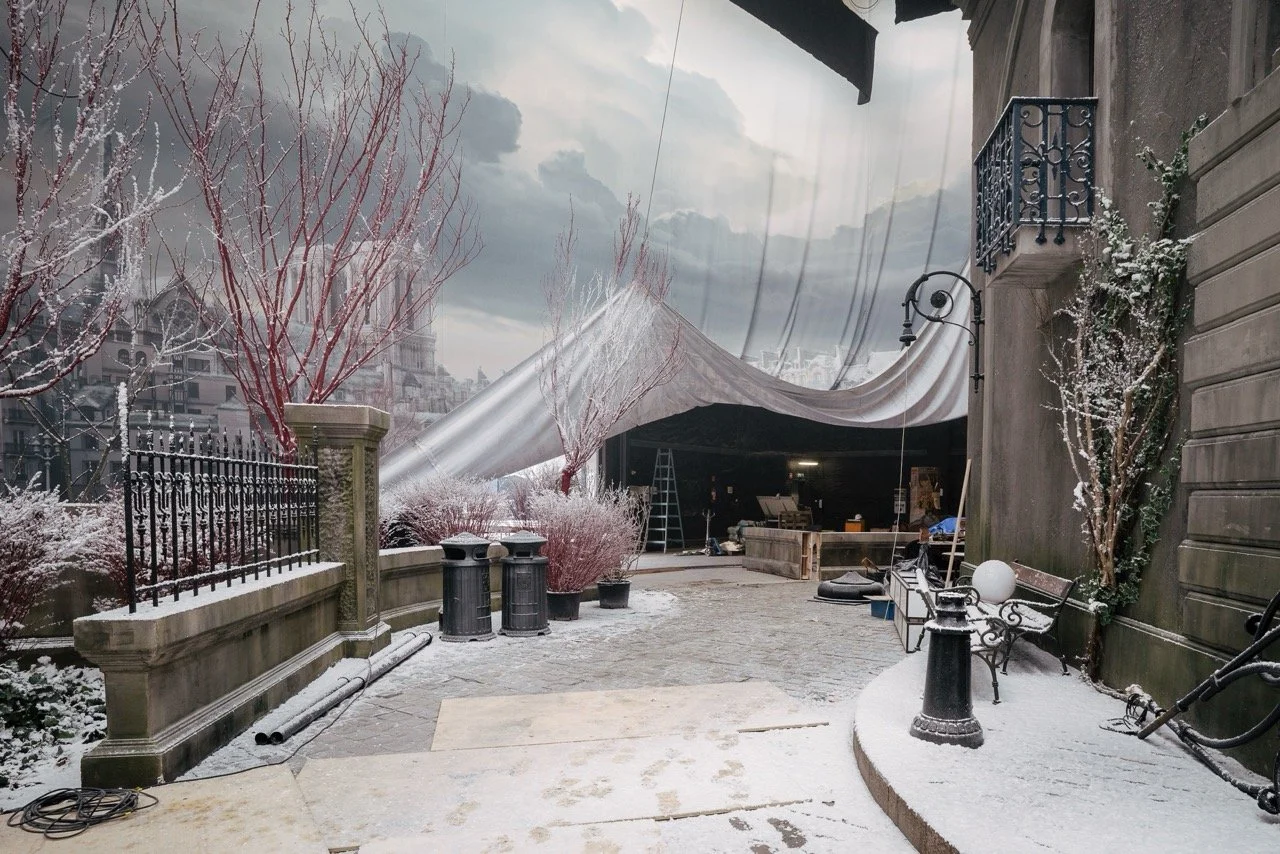
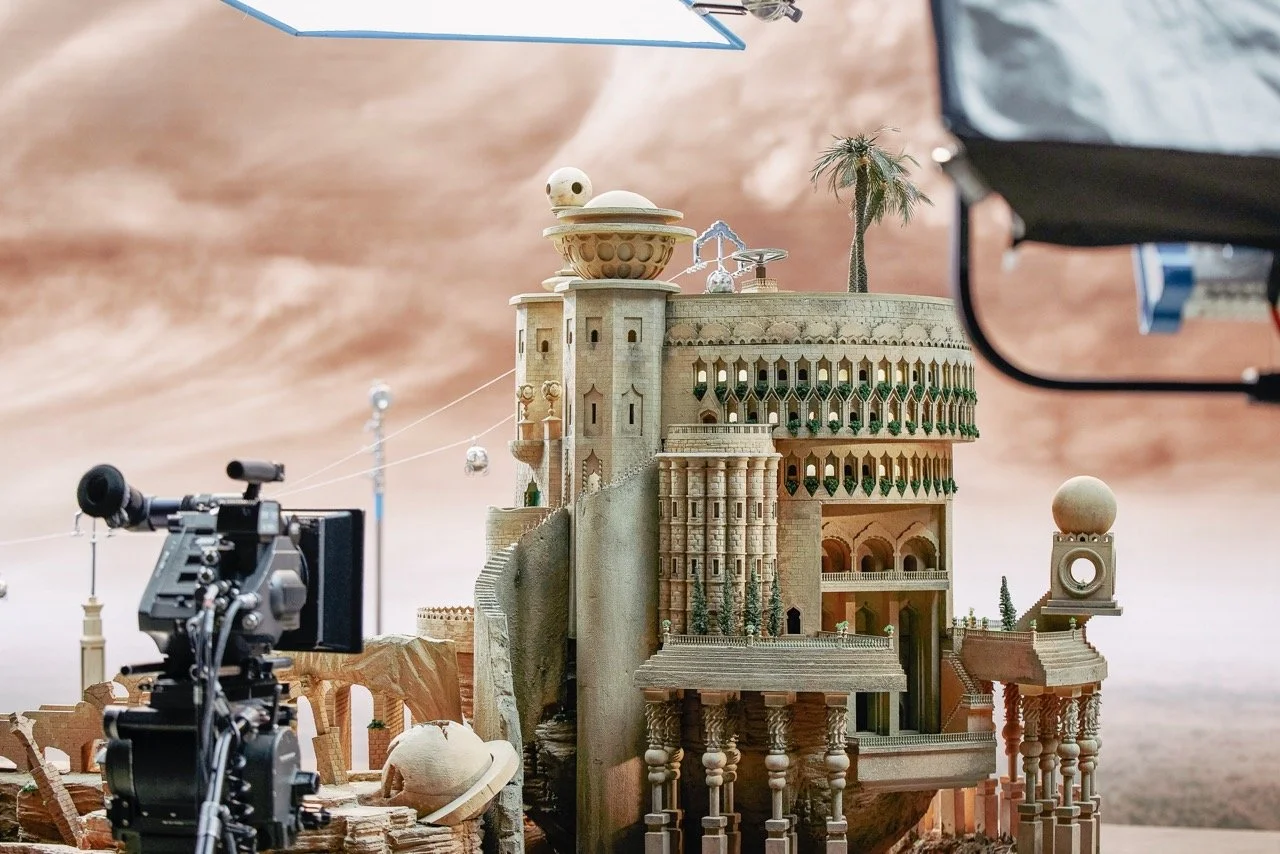
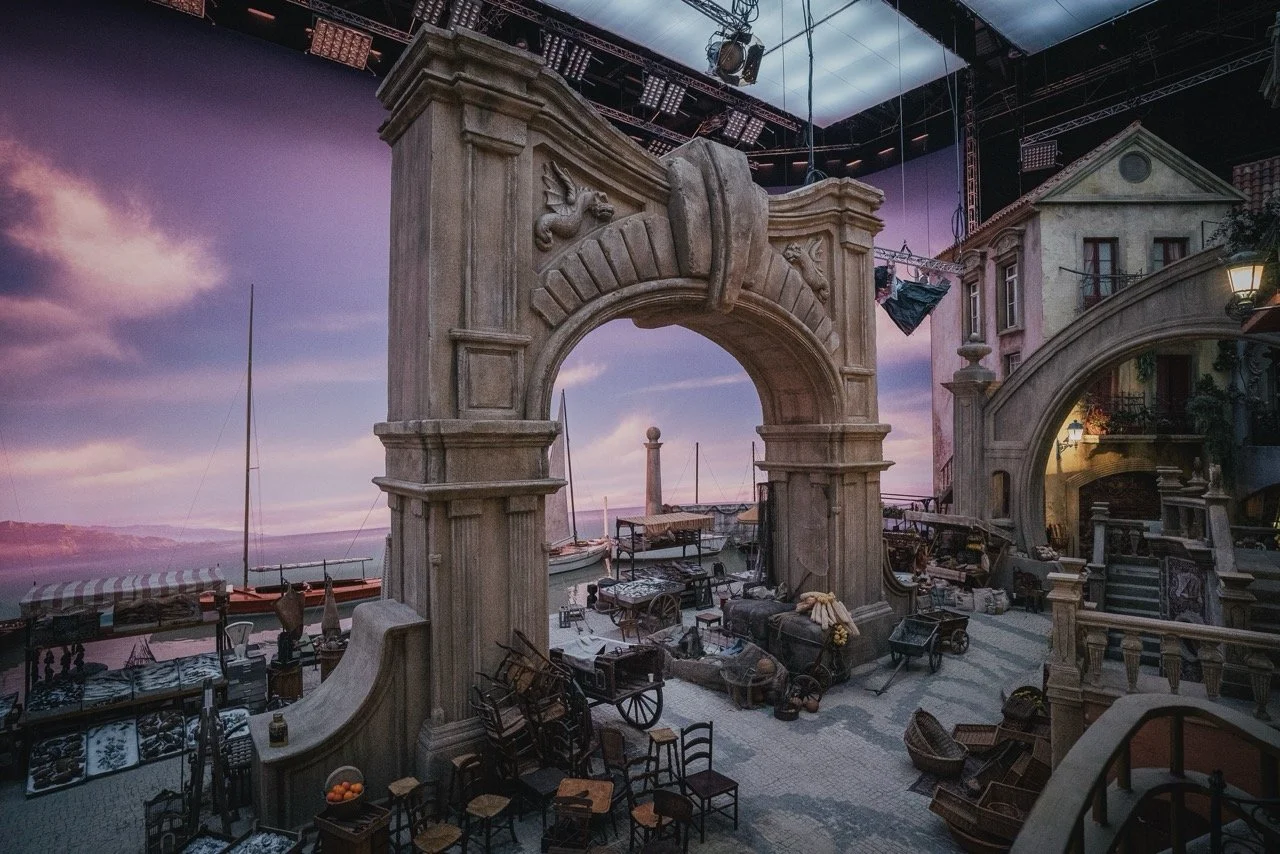
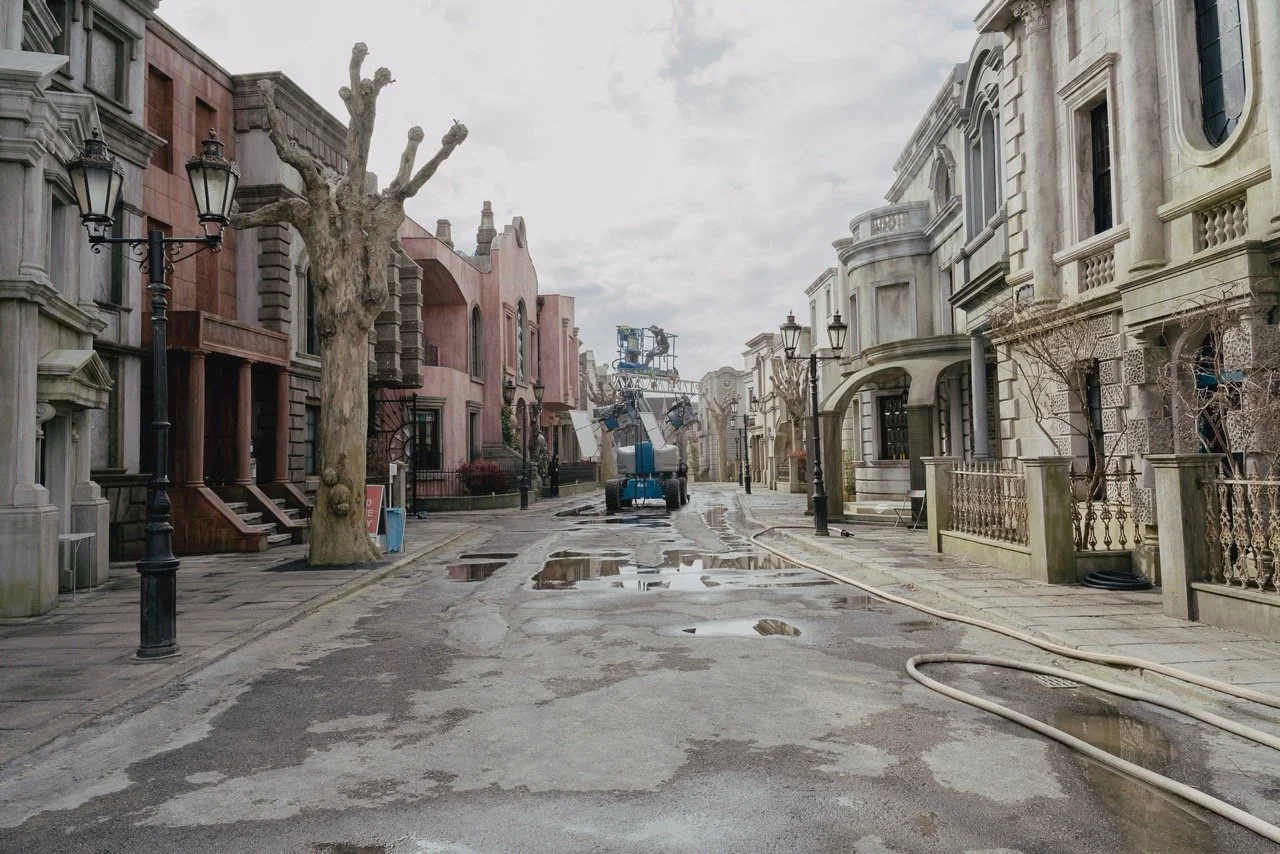
Poor Things (2023) set photographs © Enikő Hodosy - Production Design by Shona Heath, James Price, and Zsuzsa Mihalek
For the full credits on Art Direction, Construction and Graphic Design please refer to film credits.
Image courtesy of James Price
Burcu Beaufort: How did things change for you after receiving an Oscar for Production Design for Poor Things?
James Price: It does change you, not immediately over the night; it's incremental. Incredible things happen, you meet so many people. Last Summer, I was invited to the Mediterrane Film Festival in Malta as part of the jury, alongside Rick Carter, a hero of mine. He is this legendary production designer who did Jurassic Park, Forrest Gump, Back to the Future, Avatar… It was kind of a very defining moment and probably the most exciting and influential thing that has happened to me since we won the Oscar.
I've always been somebody who mentors a lot of people, and I've always had people who have mentored me. I had not worked for or knew anyone that had won an Oscar, even been nominated for an Oscar, so that was a big deal. After receiving it, I was like, “I guess I’ve got to figure out the rest myself.” Rick Carter, who's so worldly, has helped me understand a bit what has happened to me. He said, “You have to get to that level and be on your own for a while to get to the next level.” I suddenly felt like I had a mentor again, who can help me navigate all these thoughts. His mentor had been Richard Sylbert who was the production designer in Chinatown (1974), Carlito’s Way (1993) and everything.
(Pulls a book from the shelf behind, called “Screencraft: Production Design & Art Direction”.) This is a collection of books that were done in the '90s. It is a collection of interviews. Here, Richard Sylbert was interviewed. This came out when I was studying production design. I read it at the time, but it didn't really relate to me too much, because I was starting off. Then I reread it when I started doing The Nest (2020). Richard Sylbert's comments really stuck with me. I feel like he really influenced me when I was trying to figure out what a production designer is. Meeting Rick, knowing that his mentor was Robert Sylbert, was just like, “Wow, this is meant to be.”
We've spent a lot of time together over those 10 days. The questions he's asking me about my work and I'm asking very direct questions like whether production design is a blue collar job, etc. He, like all great mentors, wouldn't give the answer straight away. He answers a question with a question and lets the person go away and think about it.
So, the Oscar opens up a world where you meet other people that you would never have met before.
Burcu Beaufort: Do you consider yourself an artist?
James Price: I've always dreamed of being an artist, but I've always been reluctant to call myself an artist, never seen myself as one. Rick Carter has sort of helped me come to terms with that. If we'd have been having this conversation this time last year, I wouldn't have referred to being an artist at all.
Burcu Beaufort: Why?
James Price: That's because it's a battle inside you, right? I'm the person who organizes stuff, and then I have the creative side. So there are these two sides of me battling against one another. As a production designer, I'm delivering on a script, and it's a technical process rather than a creative one. Making a movie sometimes involves convincing a lot of business people. We are spending millions of dollars to do something that's got to make many more millions back. It's a big scene. You don't want to be seen as this out-of-control artist who’s just gonna spunk all the money. There's responsibility there to deliver something in real terms.
That's what's great about working with Yorgos (Lanthimos). For many years, I'd come to think that filmmaking isn't an artistic endeavor. It is basically a business, disguised as an artistic endeavor. But then, working with people like Yorgos, and Sean (Durkin), I realized that it is both. If you're clever, you can bring both sides together. Artists have always needed patrons, right?
Burcu Beaufort: I mean, look at Rembrandt. He did the same. He had patrons and a business, well, until he didn’t anymore. But for sure there’s always the money side.
How challenging was Poor Things? It must have been immense. I remember watching it in Paris with a friend who is a set designer. He was quite suspicious about the use of AI. Somehow, I was sure that there wasn’t any AI used.
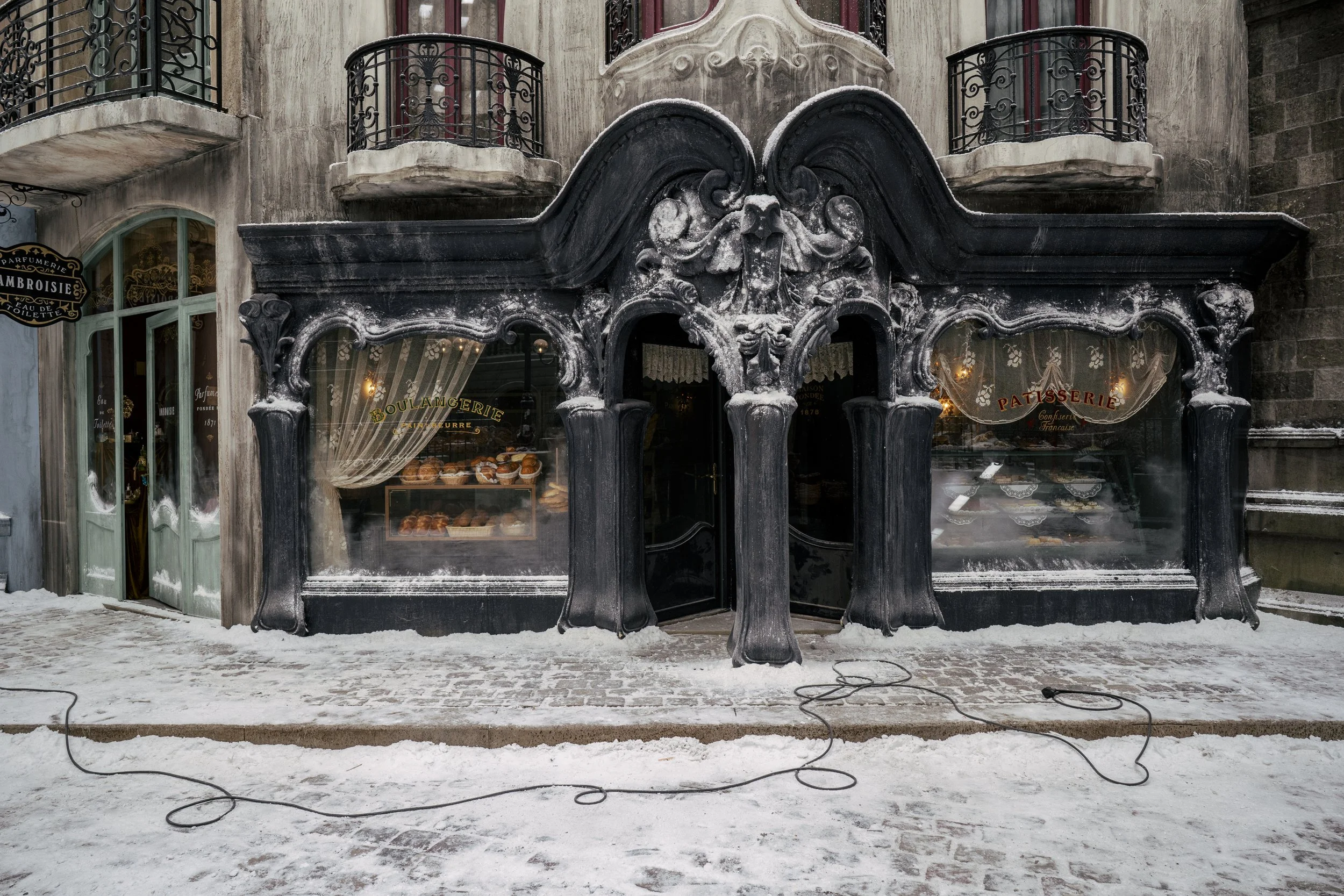
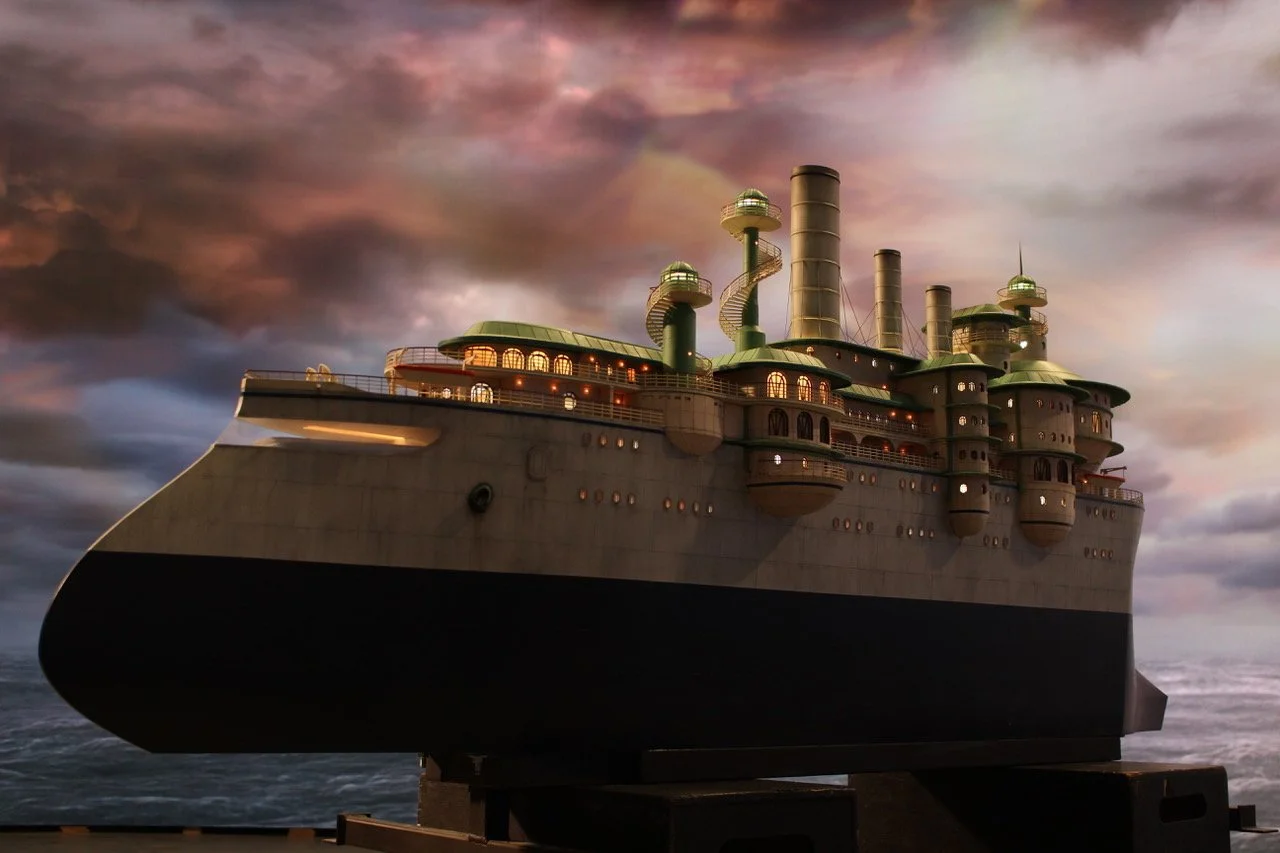
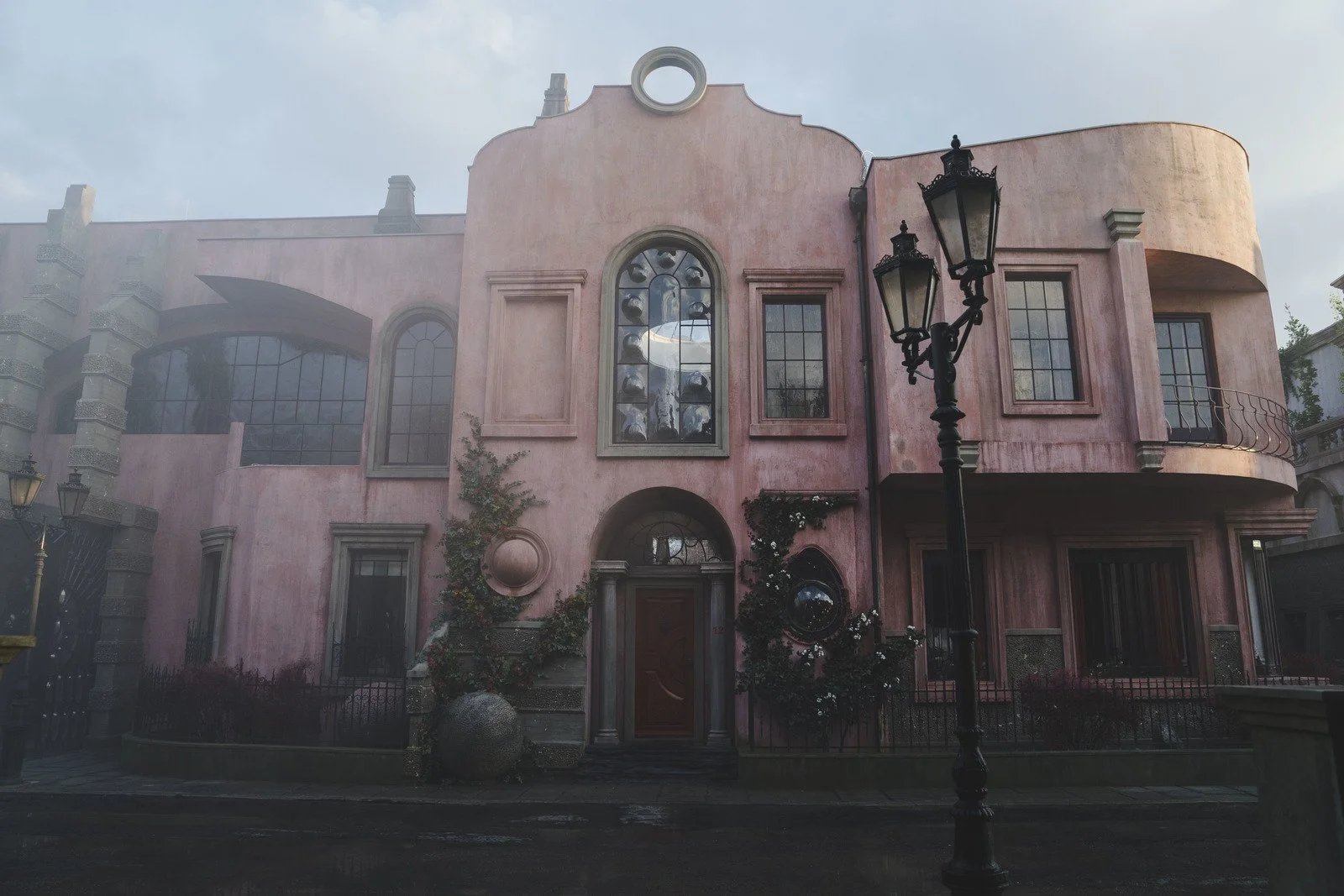
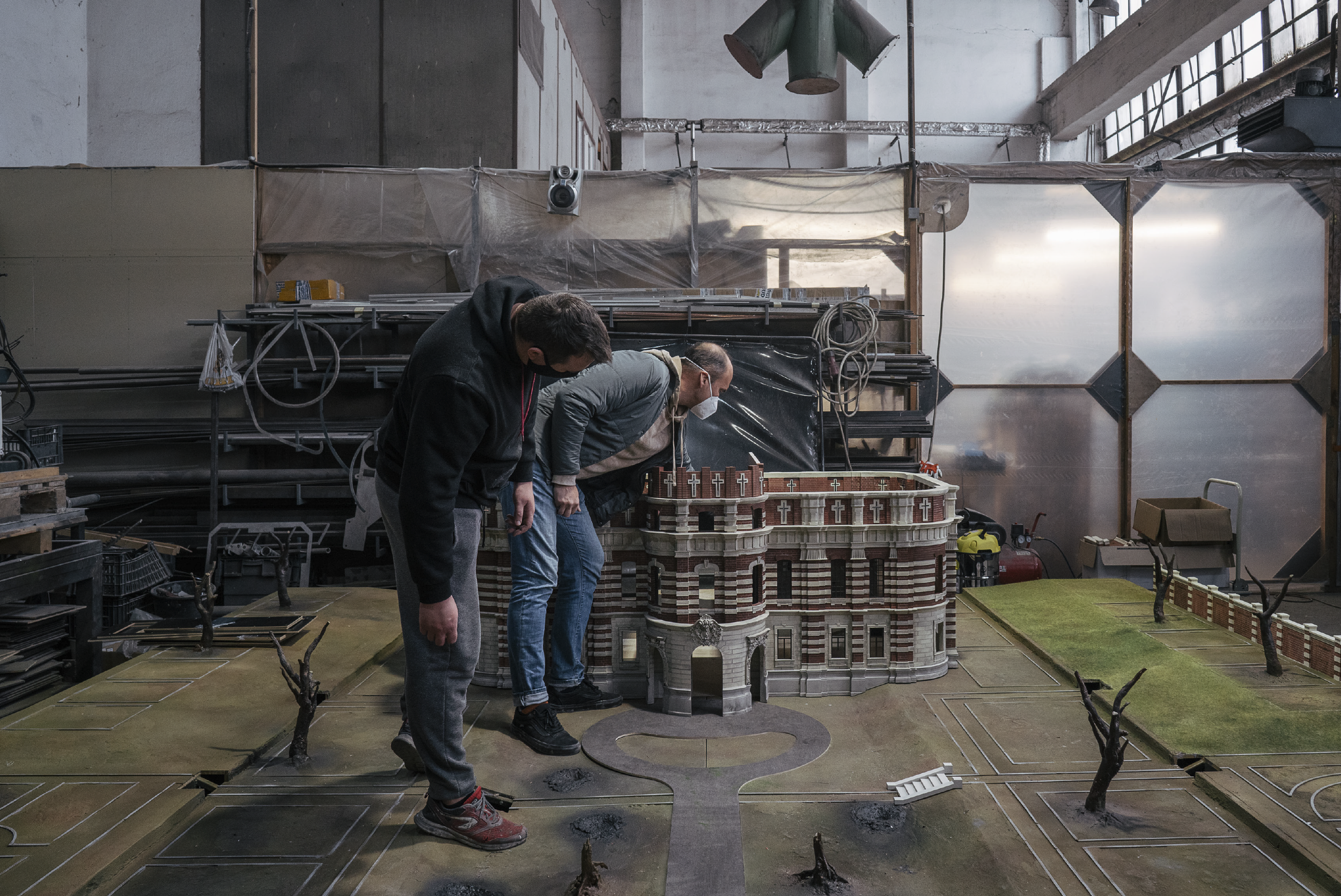
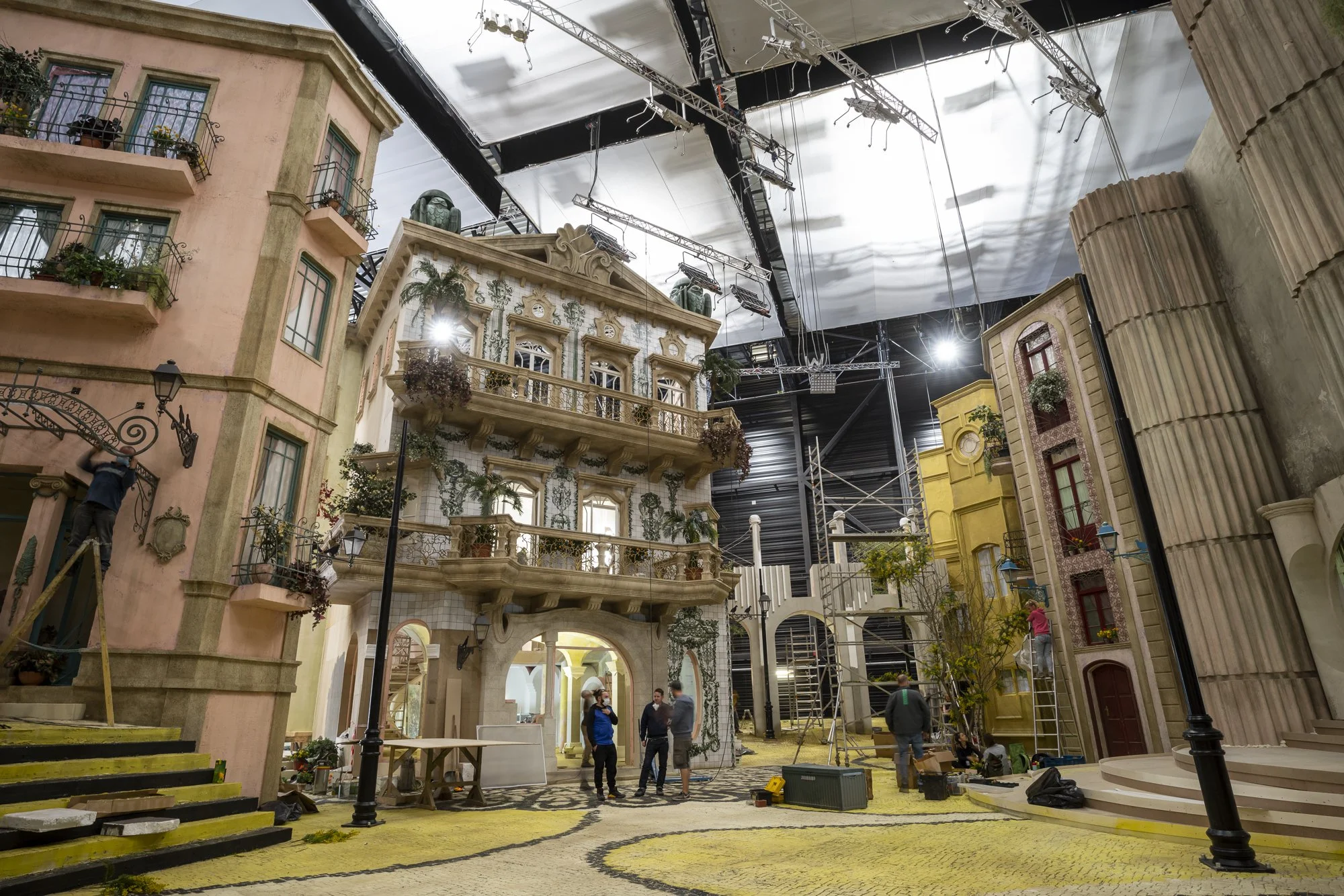
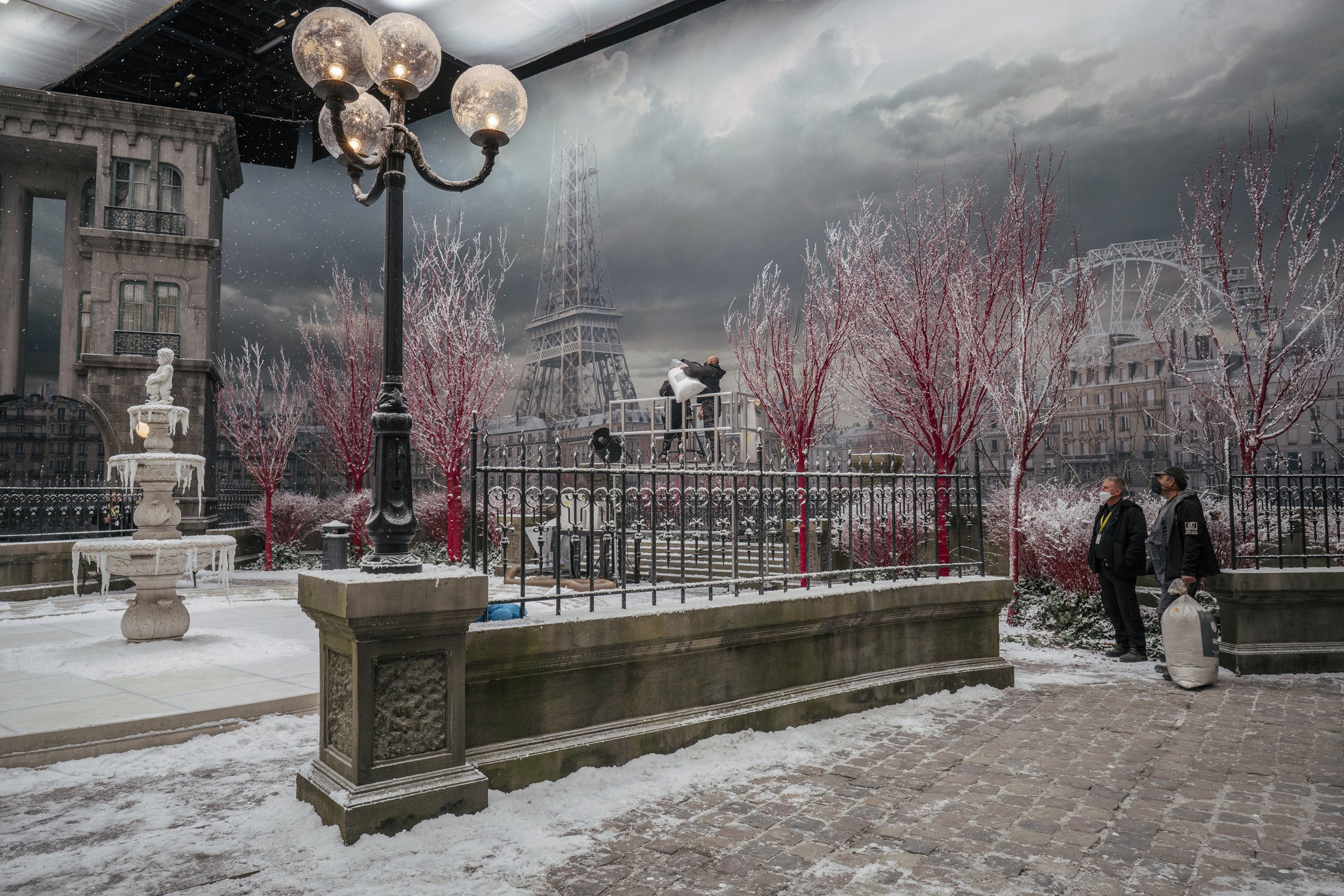
Poor Things (2023) set photographs © Enikő Hodosy - Production Design by Shona Heath, James Price, and Zsuzsa Mihalek
For the full credits on Art Direction, Construction and Graphic Design please refer to film credits.
Image courtesy of James Price
James Price: It was so vast, and no AI was used. We were conceptualizing the film before AI was a thing. And interestingly, my daughter read someone online writing that there is no way that Poor Things could have been designed by a human and that no human can think like that. Well, just because someone can’t think like that doesn’t mean other people can’t.
I don't use AI and I don't want to use AI as part of my process. If a director comes to me wanting me to make a film, they haven’t come for me to put some prompts into AI. They’ve come for this, right? (showing his head) And I owe it to them to use this the best that I can, and to push forward with what I'm doing, and to try to think of a different way of doing things. That's why analog is so important. People are getting back to analog. I presumed it was my generation who were buying more vinyl records. But actually, it's the 20-somethings who are buying more vinyl records than our generation, because it's a tangible thing that they've never had; it sounds better, for a start, but it's also a physical thing.
Burcu Beaufort: With all the AI stuff happening, where do you see filmmaking going next?
James Price: I think that filmmaking has to evolve, just like painting had to. Once the camera came along, there was no need to paint photo-realistically anymore. You could take a photo of it, right? So then you got the most exciting period of painting happening with the birth of photography.
Well, I feel like that's the way filmmaking needs to go. It needs to go somewhere else; it has to evolve to still stay relevant, to make films the way that we like making films, by hand. Otherwise, everything will just go completely digital; it’ll be people prompting on computers. So there'll be those kinds of films, and then there'll have to be other films, which are a truer thing and evolution. So for the first 100 years of cinema, we’ve been making everything photo-real, almost unbelievable. Now we need to go into a different phase, which is kind of exciting.
Burcu Beaufort: Regarding Bugonia (2025), which part took up most of your time? Do I remember correctly that you once said that most of your time went into the last part of the film?
James Price: Most of my thinking time went into the last part. I've never had a chance to do any science fiction before, but I love science fiction. It was fun to try and figure out how to do something as original as possible.
Burcu Beaufort: Talking about science fiction, last question: Which Dune film do you like the most?
James Price: Jadorovsky’s Dune that never got made. There's a book of the original work featuring artwork from Moebius (Jean Giraud). That would have been an incredible film.
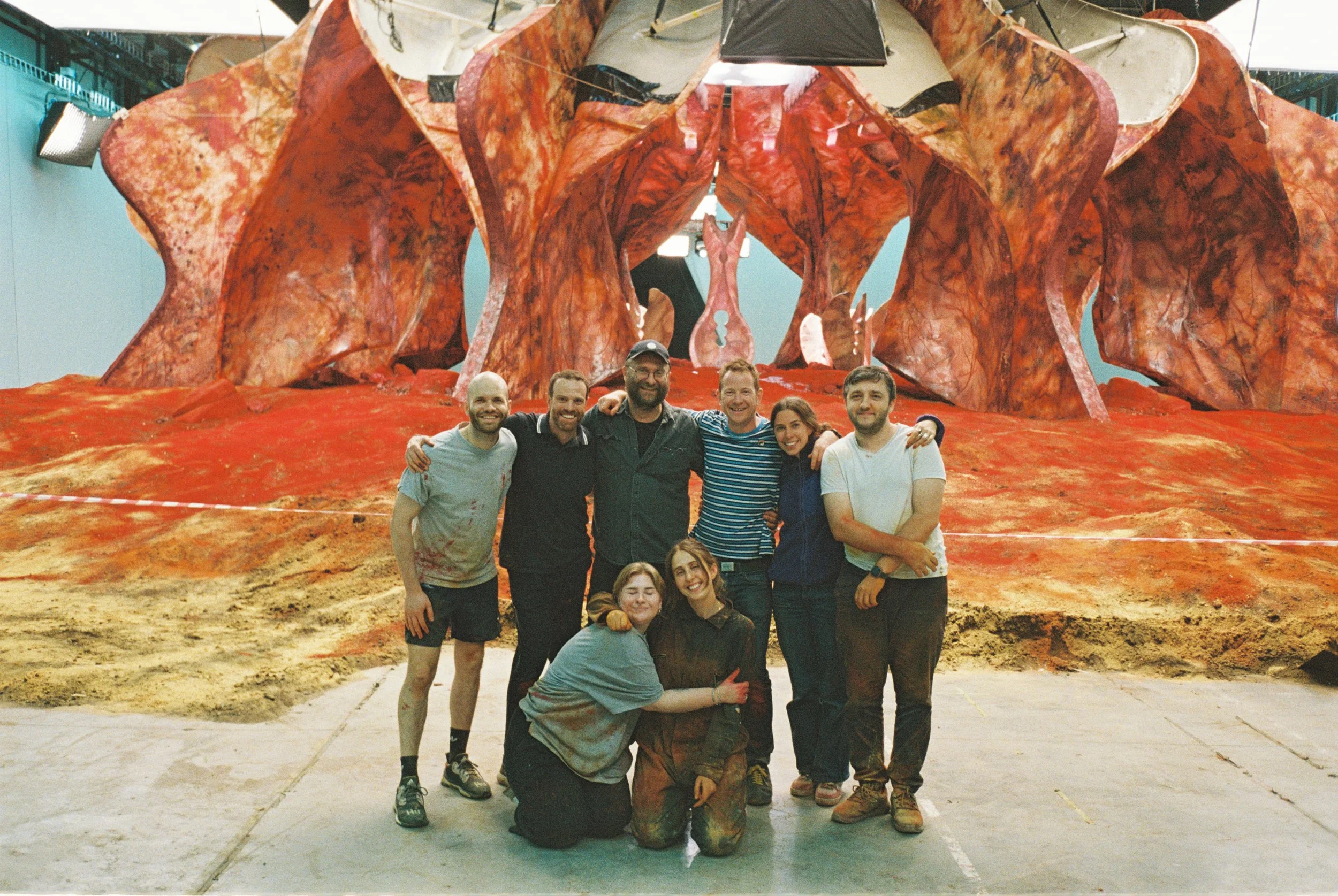
Bugonia (2025) by Yorgos Lanthimos Film Set - Image courtesy of James Price
Left to right Jonas Bethge (concept artist), Chris Wyatt (art director), Adam Makin ( supervising art director), James Price (production designer), Lili Lea Abraham(art director), Antonio Niculae (concept artist)
Bottom row left to right: Bleu Irvin (designer’s assistant and researcher), Ella Schlesinger (art department assistant)