With Mascha Schilinski
BERLIN, JANUARY 2026
Making its Cannes debut with the Jury Award, The Sound of Falling (2025) has mesmerised film lovers with its striking visual language and immersive score. Schilinski’s film was also shortlisted for the Academy Awards in the categories of Best Cinematography and Best International Feature, reigniting Oscar buzz three years after the international success of All Quiet on the Western Front (2022), directed by Edward Berger.
We saw the film at its Cannes premiere and later had the chance to ask Mascha Schilinski our questions in Berlin, upon her nomination for the European Film Awards. Below are her answers.
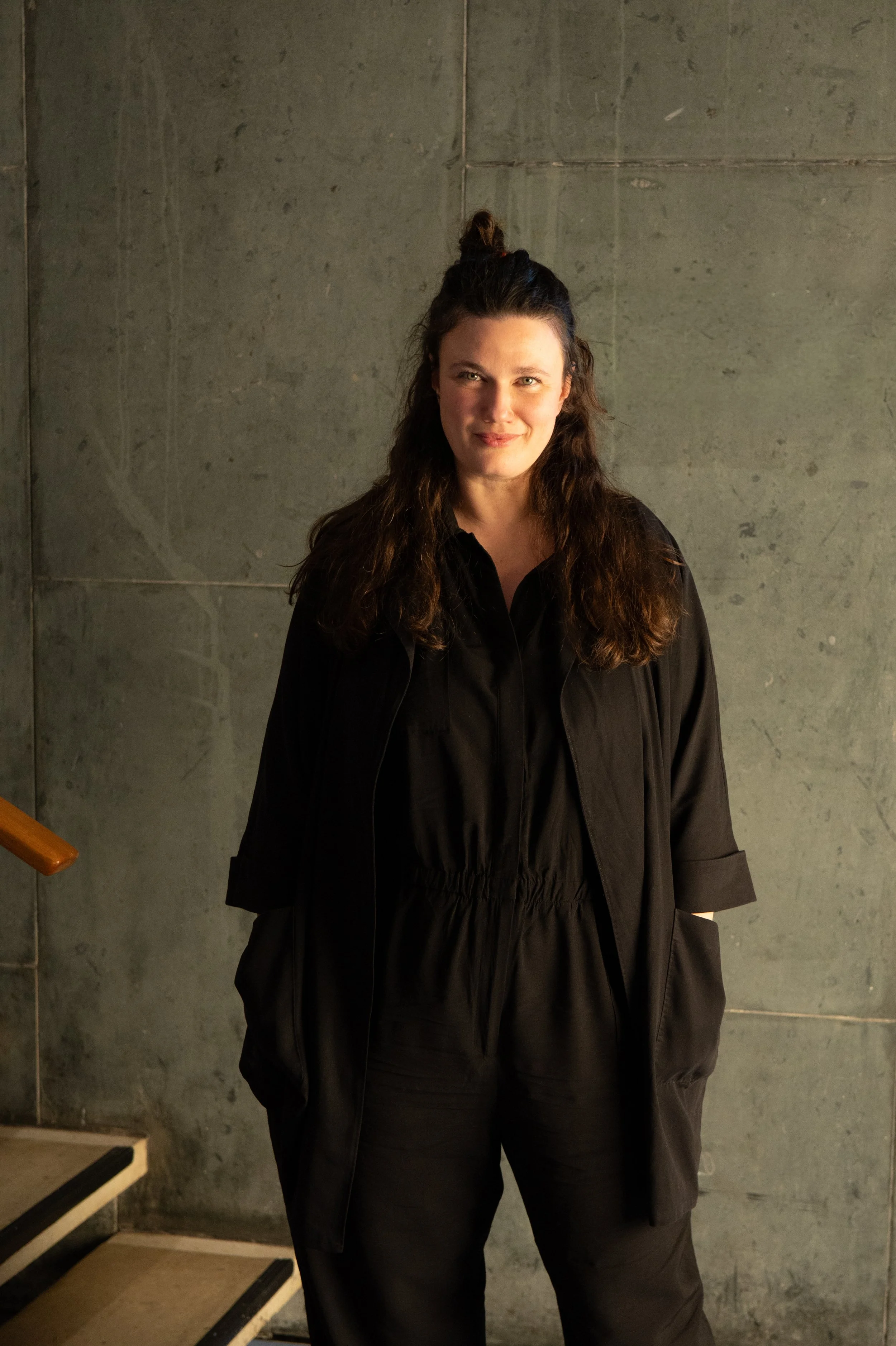
Portrait of Mascha Schilinski by Burcu Beaufort during European Film Awards Ceremony 2026, Berlin
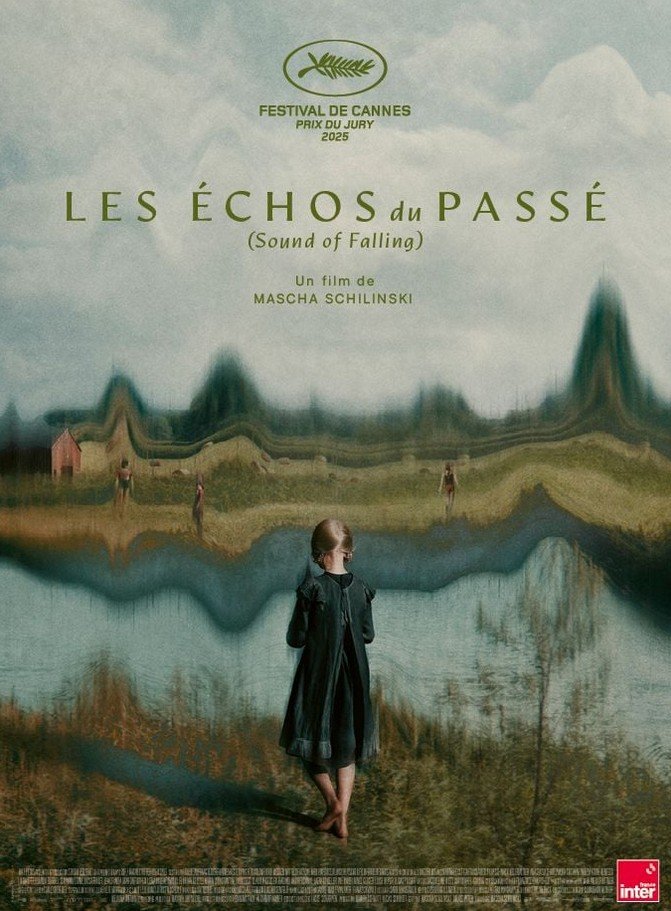
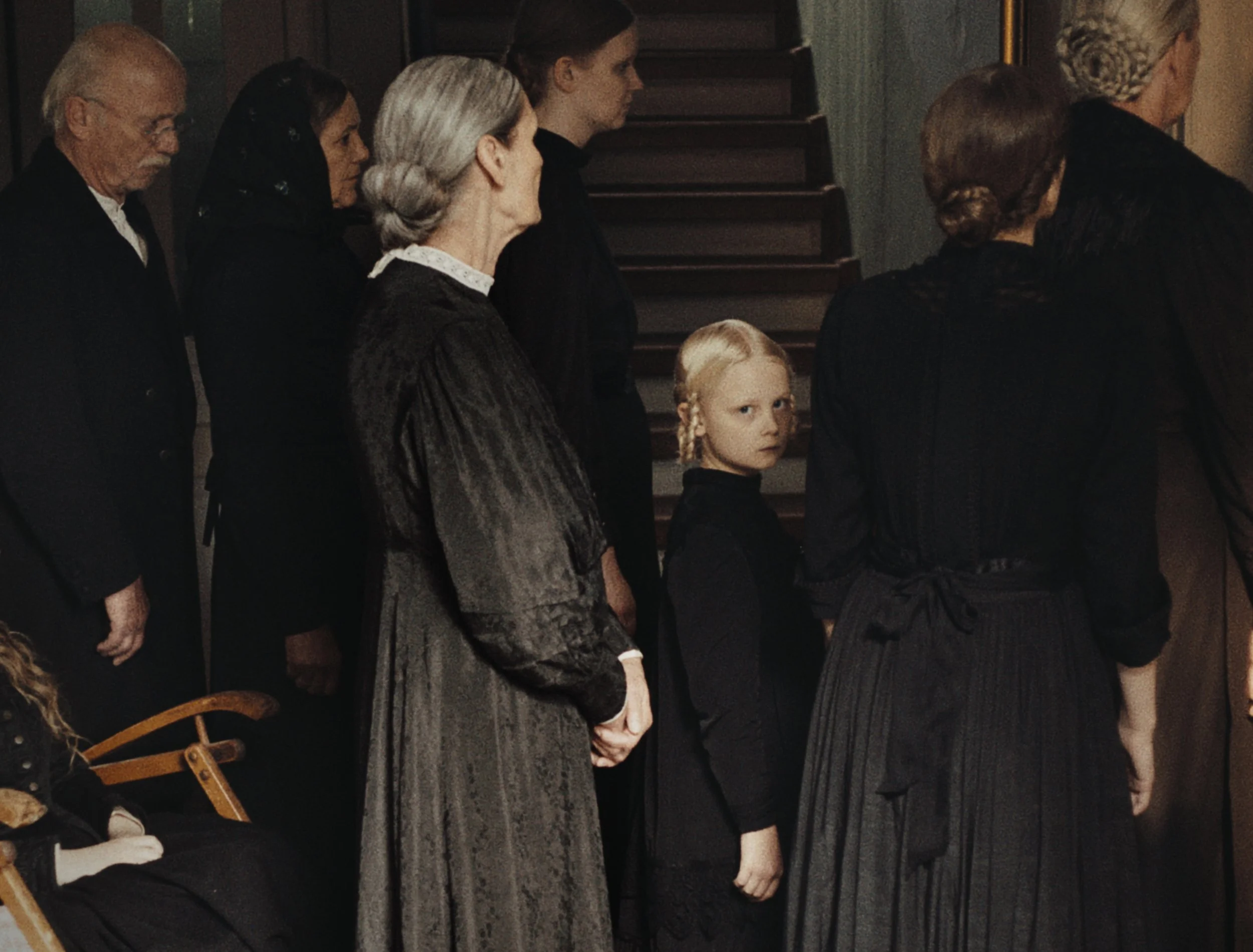
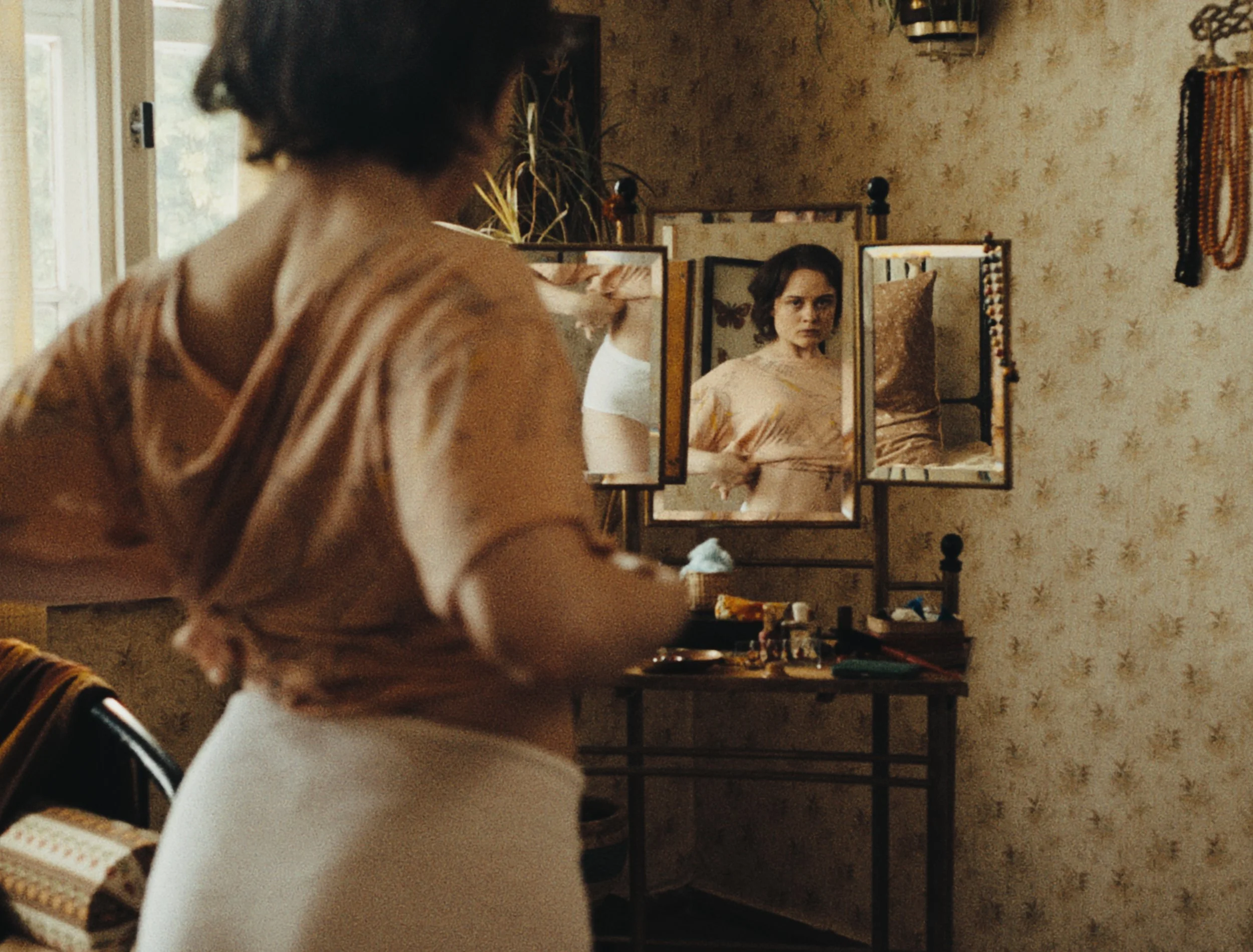
Film Poster and the Film Still with the Courtesy of Festival de Cannes
You being a European director, what does it mean for you to actually have European film awards and what does it mean for you to be nominated for them?
Mascha Schilinski: Yes, I mean, this is just incredible. It's special because I'm European and I'm now traveling through the US, and I really can feel how much of a European I am. I'm very happy to go back to Europe. Regarding the nominations, I'm very happy that this work that we were doing for five years to get this film done, and that everyone is now so aware of this film, is just a gift that you can never expect. I feel very grateful.
Given the title of the film, it might be obvious to talk about the sound. How did you philosophically approach the sounds that we hear during the film? The sound seems to invoke all of these things that we don't see, yet we can feel. It feels like a very powerful element in this film.
MS: I had the sound in my mind during writing. I knew from the beginning that the film would need a sound that preempts what is going to happen, that anticipates things we have not seen yet, things the characters are repressing. It was very important to find exactly the sound I had in mind.
During the editing process, incredible sound artists joined our team. Billy Mind was the first, and I discussed with her things like how a black hole sounds, how it sounds one thousand meters below the sea, or how the Big Bang sounds. These were the kinds of questions we were asking ourselves. Billy searched for and developed incredible sounds, as did Michael Fiedler.
We also worked with the organ. He composed tonal sounds directly associated with the images, drawing inspiration and then creating these tones with the organ. The sound is constantly present and evolving, and I felt that the film could almost exist through sound alone.
Sound is extremely important in this film, especially when trauma occurs. Very often there is fragmentation. You have scraps of images, bits of images, but no sound. Or the sound is cut off and stored somewhere else, only to return later, when a sound or even a smell brings something back. This was the process we were interested in.
The girls in this film look directly into the lens and into the world, and the sound answers them. It is as if the universe is answering them. I was very fortunate to work with sound artists like Michael Fiedler and Eike Hosenfeld. Eike composed the accordion sequences. There is a minimal tonal foundation throughout the film, and these small sounds are essential. Sound is, in a way, the biggest part of the film. As the title suggests, image and sound merge. Sometimes what you hear contradicts what you see, creating an inversion.
I also worked with Kai Tebbel, an incredibly experienced sound mixer. I had the idea that suddenly the sound would drop out completely. This makes people nervous, because silence in a cinema feels risky, but I wanted total silence.And then the sound returns, as part of this larger, universal presence.
Now that we are speaking about sound, the original German title, In die Sonne schauen, does not refer to sound at all. It points much more toward light and heat. Why does the German title place the emphasis on the sun, on the image, or on something connected to light, while the English international title focuses on something different?
The funny thing is that for four years we worked with a working title that I really love, The Doctor Says I’ll Be All Right, but I’m Feeling Blue. Obviously, I was the only one, together with my co-author, who loved it, because it’s a long title. In the end, the original title of the film became the English title, Sound of Falling.
The German distributor wanted a German title, so we brainstormed and came up with In die Sonne schauen, which translates as Looking into the Sun. In German, there is no good translation for the word “sound”; it translates more as noise, and that didn’t feel right.
I also love the title Looking into the Sun, because for me it was the first inspiration for the film. It’s the feeling that when you close your eyes and turn your face toward the sun, behind your eyelids you see this bright orange, these pulsing waves, an amorphous shape.
Looking into the sun is very painful, almost impossible, just as it is impossible to look directly into death. The women in this film are looking for a long time into the face of death, and that is why we came up with this title.
What does falling represent for you in the film, both physically and emotionally?
For me, falling has two aspects. When things are falling, there is actually no sound. I was very interested in this question of perspective, which we follow radically in the film. For these women, falling is an inner process, an inner moment in which something breaks. In that moment, falling has a sound for them.
There are also the girls who are physically falling. As you mentioned in your question, they are simply falling. For me, the film is about memory itself, and about how memory and imagination flow into each other. I wanted to create a stream of images that everyone who lived on this farm is thinking, dreaming, or remembering at the same time. This dreamlike feeling is very close to how trauma works. Very often, you cannot determine where these images are coming from. They bubble up from somewhere, and the feeling is very strong. It is similar to being in a dream, where something can feel completely real. This relates to trauma and to the return of the repressed, to things that come back even when we are not certain whether they truly happened.
In dreams, we often fall. We might be flying, and suddenly we tip and come tumbling down. In the film, we fall from one time and space into another. We slip from one moment into the next. That is the role falling plays here.
I’m wondering whether you see this as a specifically feminine story, or whether it could also work from a male perspective, given its intergenerational focus on memory and shared experience.
It was not our first intention, Louisa Peter, and I, to write a film only from the female perspective. We also had a lot of material about men. However through research, it became a female perspective because we found so many hidden, tiny stories that we could relate to or feel. Stories that still live in our bodies. We asked ourselves what is written into our bodies over time and what determines us long before we are born.
As we researched, we found many books written by men and only two written by women. They described an almost idyllic childhood, in a chatty, banal tone: the father filling the hay pipe, children playing in the hay, the mother doing the laundry. Then, suddenly, in the middle of these banalities, there were striking sentences, for example, “Women have to be made so that they are not dangerous for men anymore” or one maid said, “I lived for nothing.” These moments surprised us, and when we discussed them with people from the region, we could see a shadow passing over their faces.
Almost in a hallucinative, intuitive way, we asked with our characters what could have happened there. It became a film placing these women at the center, because we felt it was urgent, these women are often overlooked even by the history itself. I don’t think there is a difference in trauma, but there is a difference in the way women look at a century, and we wanted these women to be able to look back.