Mike Figgis on Leaving Las Vegas
"The film business brought me to my knees." Thirty years ago, director Mike Figgis fled the toxic, oversimplified world of studio filmmaking to make Leaving Las Vegas (1995). It is a raw, low-budget film shot on handheld 16mm that earned Nicolas Cage an Oscar and three other Oscar nominations.
Following the world premiere of the film’s stunning 4K restoration at the Berlinale, Burcu Beaufort caught up with Figgis to strip back the mechanics of independent cinema. Below is our conversation.
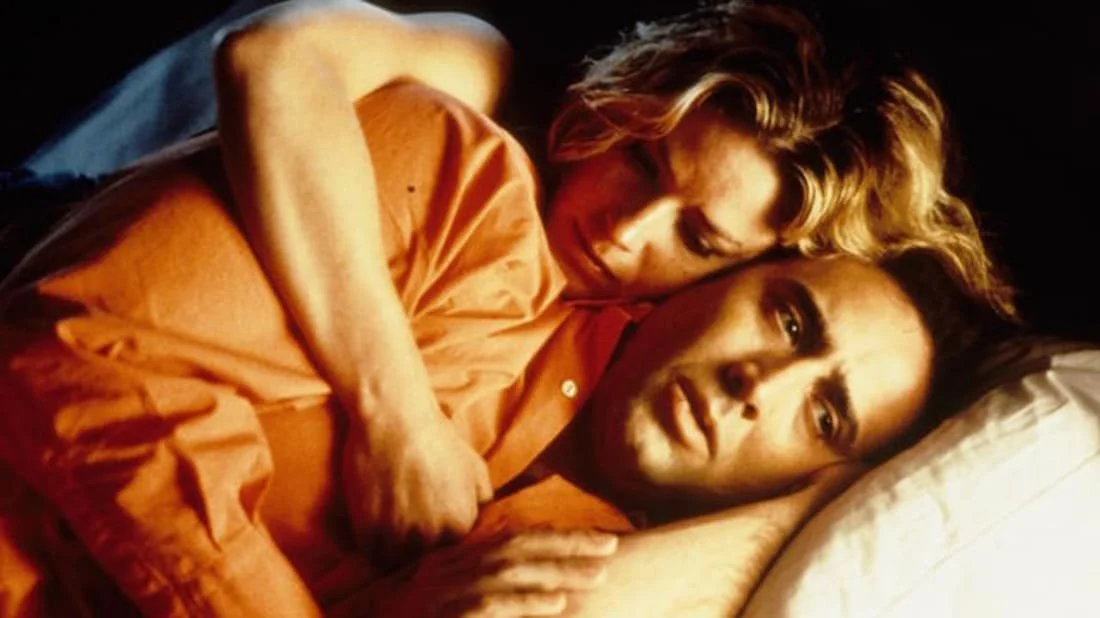
Elisabeth Shue and Nicolas Cage in Leaving Las Vegas (1995)
© Initial Films 1995
Burcu Beaufort: How does it feel to see some of your work, which is over 30 years old now, being revisited and screened in Berlinale?
Mike Figgis: I think it is appropriate right now for me to have these moments of reflection. I did not initiate the new version (restoration) of the film, it happened and I participated. I wasn’t looking to do a retrospective or anything. There have been a couple of other films, Internal Affairs (1990) and Liebestraum (1991), which have also been restored, so I’ve had to spend time looking at those films, too.
Looking at Leaving Las Vegas (1995), when I saw it with you in Berlin, I was emotionally moved in a way that is unusual when looking at your own work, because it’s very hard to detach from the process. But enough time had passed, combined with seeing it with a very powerful audience that night, it was almost overwhelming for me. I had almost an out-of-body experience. It was absolutely wonderful. I don’t think that will happen again, because the uniqueness of that screening was terrific.
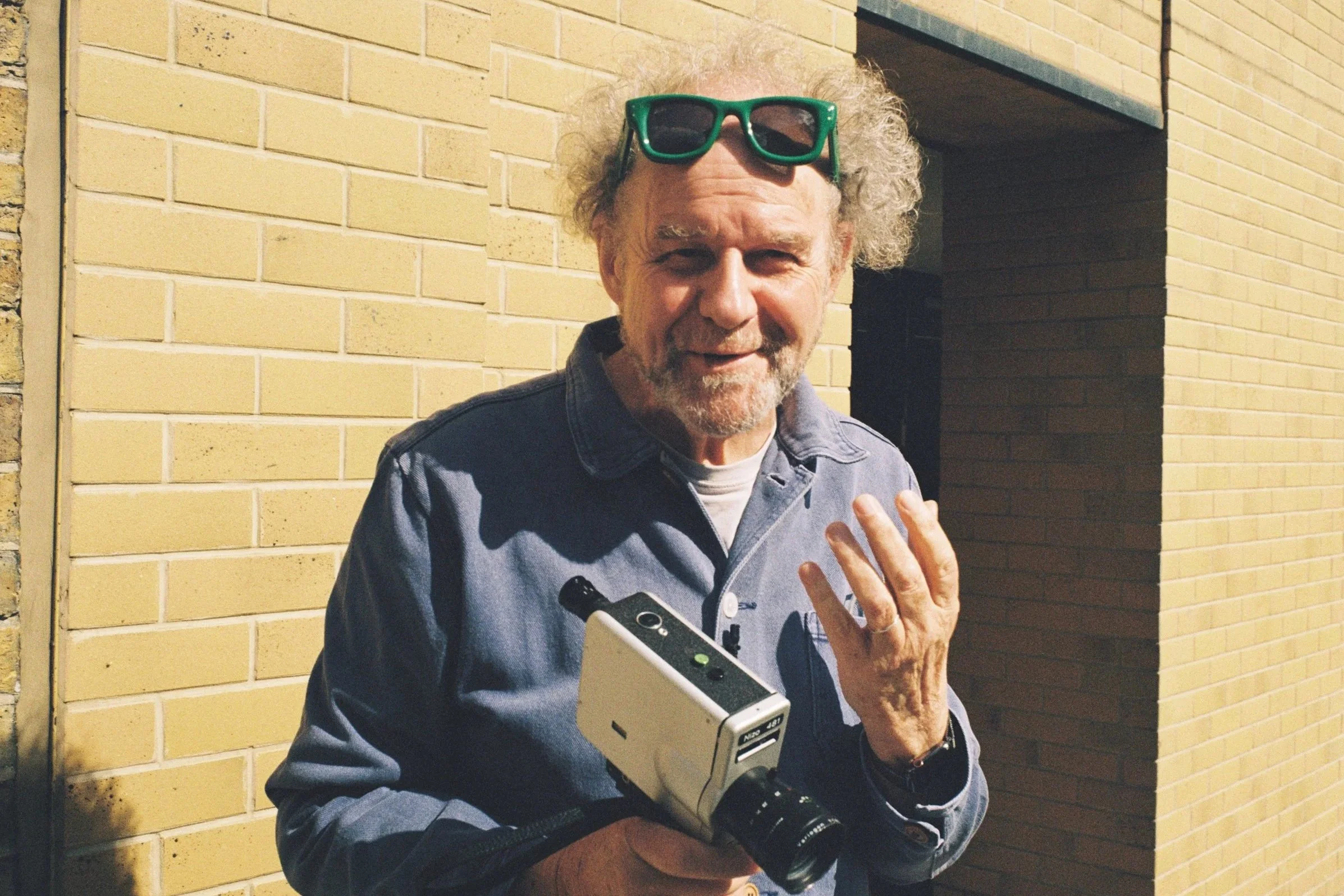
Mike Figgis in London
©Burcu Beaufort
Burcu Beaufort: I’m glad I was there for that screening. What really struck me about the film is that it feels like love in its rawest form. You don’t isolate one aspect and leave the others out, you show it as it is, in its entirety.
Mike Figgis: I realized I've been working on very similar ideas since I started doing theatre, actually experimental theatre. The same themes recur in different forms within different genre bases. I’ve found it interesting how consistent I’ve been.
My themes are simple, they’re about relationships. I like the genre of the love story, the dark love story, gender politics, the minefield of sexuality and desire, how they tie into themes of love and its confusion, whether physical, intellectual, or true love, friendship combined with those aspects, like why we are attracted to one another.
Burcu Beaufort: I’m especially curious about your casting of Nicolas Cage. How did you see that character in him? I’m not sure everyone immediately saw him in that role.
Mike Figgis: When you make a film, you make it with the best intentions, and to get that far you need quite a lot of love and respect for the script. Otherwise your energy would have failed long before. To get as far as making a film, including raising the money, is already exhausting. Then what follows next is really in the hands of the gods in a way. Because you are presented with a series of quite limited options, who is available, where you can shoot, and so on. These things have to be solved on a practical level. With most films you hope maybe sixty percent of them right and deal with the rest that aren't working.
Something happened on Leaving Las Vegas. Things simply fell into place. I didn’t do any casting. I offered the part to Elisabeth Shue. I didn’t offer it to anybody else. Nicolas Cage’s agent read the script and asked if he could give it to him. Two days later Nicolas wrote to me saying, “I beg you, don’t give this to anyone else. I want to do it. I’d do it for nothing.” And more or less, he did.
So I said, okay, there’s a commitment, I can see him as Ben. But you don’t really know until you get on set, so you hope your intuition will reward you. It’s a 50/50, throw the dice.
Raising the money in France, not America, meant no studio interference. It felt as if the cinema gods were smiling, saying: this will be difficult, but it will resolve. And it did, through small coincidences and twists of fate. If I hadn’t gone to a certain lunch, something wouldn’t have happened. It was very different from the usual “battle” of filmmaking and had a sweet, almost “by chance” feel to it. Nicolas was incredibly generous. He paid for a suite so we could rehearse, because we had no money. He also took very little money. The joke is that neither of us got paid at the time.
Burcu Beaufort: You mentioned recurring themes, almost as if they come back to you. Do you have a sense of why that is? And why was Nicolas Cage so passionate about this role?
Mike Figgis: In terms of Nick, it’s a good script, and it offers a range he wouldn’t normally have been offered. It’s basically a two-person film, mainly him. He has an ironic heroism, and a very strong character arc. Many actors would have turned it down because it’s too dark and too dirty, but Nick is different. He revels in that kind of range.
In terms of the themes, I’ve had close relationships with alcoholism, not myself, but from a familial point of view. I know the damage. The book was very powerful, very difficult to adapt, but a great book. It deals with dark personal ideas within American culture. At that time I was coming out of a period of real abuse from the studio.
They were making idiotic comments about Mr. Jones (1993), which was about a manic depressive, and I was sick of the oversimplification of the human condition. That depressed me deeply. So to read something so dark and honest, I immediately responded to it. I knew I could bring my own point of view into it because I was in sync with it.
Burcu Beaufort: Do you think it takes bravery to lean into these kinds of roles and stories?
Mike Figgis: I like to think the director gives actors the context to be brave. That’s the job. My job is to support them and encourage them. With Nicolas, it was often about discouraging him from going too far.
I saw myself as a balance arbiter. Nicolas’s default is over the top, which is what we love about him. So I wanted to nuance it and keep it within boundaries. There are moments where that excess is right, and moments where it must be contained.
When you create the right environment, you can actually do your job. If everyone is comfortable on set, you have far greater creative freedom. It’s the opposite of the studio system.
Burcu Beaufort: Looking back, how did it feel at the time? What kept you going?
Mike Figgis: Joy, basically. I was so unhappy before this film. Mr. Jones was brutalized by the studio. Then an HBO film with Juliette Binoche had my music replaced. Then The Browning Version (1994) was dumped. Before that I made Liebestraum, which I loved but failed.
The film business brought me to my knees. I was blocked creatively at every step. So Leaving Las Vegas was pure joy. Nobody was stopping me. My brain was working well, I was making quick decisions.
In post-production, I found a great editor and learned digital editing, which took the film further. Then came the difficulty of selling it. Nobody wanted it, it was “too dark.” Then John Kelly at MGM loved it. They bought it, invested in it, and then suddenly everything changed. Awards season followed, and everyone said it was wonderful.
Burcu Beaufort: Do you think “too dark” is really about darkness, or about reluctance?
Mike Figgis: One Flew Over the Cuckoo’s Nest, quite dark. Chinatown, quite dark. The Godfather, quite dark. These are landmarks in cinema history.
But the studio system changed. It became about money makers, franchises, remakes, sequels, prequels. What Netflix is doing now is an early form of the algorithm.
Now films are often like children’s films for adults. No sexual tension, no gender dynamic. Just boys shooting guns. It’s boring. There is room for those films, but not as the whole landscape.
After Leaving Las Vegas I quit Hollywood and did more experimental work. The joy came back. The joy of creativity, of pushing actors into places they are willing to go but are rarely asked to go.
It is fun. That is really what it is. As opposed to the misery of studio filmmaking. They pay you a lot of money, and you are miserable.
Burcu Beaufort: What is the difference between film and theatre in that sense?
Mike Figgis: In theatre, I was also a performer. My favourite roles were non-speaking. I was directing from within the stage, changing tone through music and movement. I was participating. That is key. Now in filmmaking, using small cameras, I am participating, not observing. In the studio system you observe. With a small camera you are inside it.
David Lynch said the same. He would never go back to a full crew, because the camera becomes participation.
Jung called it participation mystique. You are already inside the story.
On Leaving Las Vegas I was participating because I was close to the camera. I knew the script, so I could anticipate movement. I could direct from the camera. That was the first time I worked like that.
Burcu Beaufort: You shot on 16mm, so you were working with a smaller camera which helped you to participate…
Mike Figgis: A 16mm camera is lighter than 35mm. I used an Aaton, beautifully designed, shoulder mounted.
I had my own camera. I am also a stills photographer, so it’s very important that you own your camera. It is not just any camera. You should be so familiar that your fingers know it instinctively. That shows in the work. John Berger said the same about pencil and paper. Contact is vital. The pressure is transmitted through the body. That is why I often despair at contemporary films repeating fluid camera movement. Why are you moving the camera? Let the actors move.