With Tilda Swinton
Amsterdam, September 2025
Tilda Swinton – Ongoing at the EYE Filmmuseum in Amsterdam explores Swinton’s long-standing collaborative relationships and her role as a co-creator across cinema, art, and fashion. Rather than a retrospective, the exhibition presents works shaped by enduring partnerships with filmmakers and artists including Derek Jarman, Joanna Hogg, Luca Guadagnino, Tim Walker, Olivier Saillard, and Pedro Almodóvar. Emphasizing trust, creative exchange, and shared authorship, it shows how sustained collaboration fosters experimentation, reflection, and artistic evolution. The exhibition marks both a gathering of creative histories and a significant milestone in Swinton’s ongoing artistic journey.
After visiting the exhibition at the EYE Filmmuseum, we met Tilda Swinton at the Rosewood Hotel Amsterdam. Striking as ever, dressed in all black with her blonde hair swept back, she moved easily between laughter, teasing, and quiet reflection over tea with milk and sugar. What follows is our conversation.
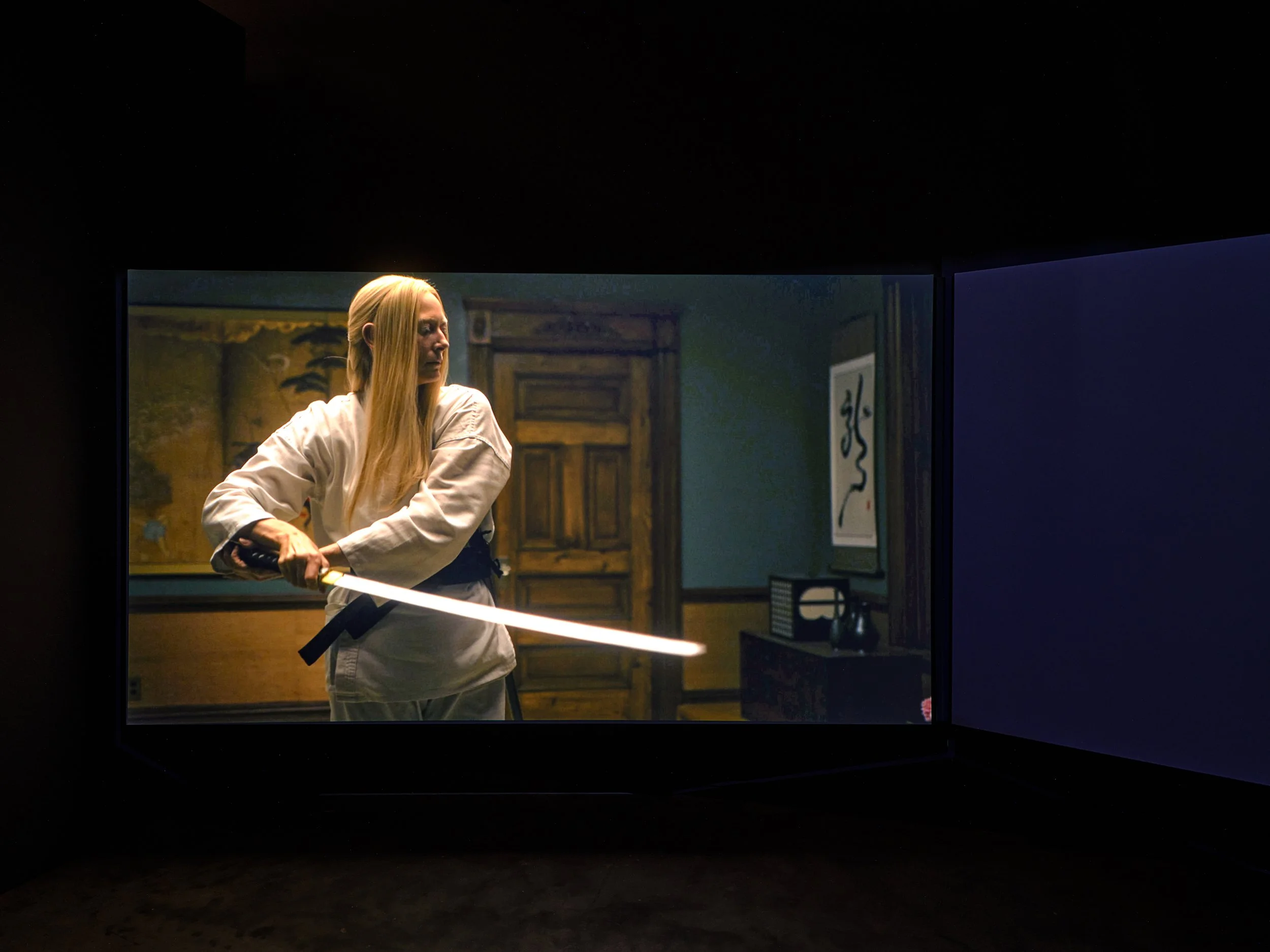
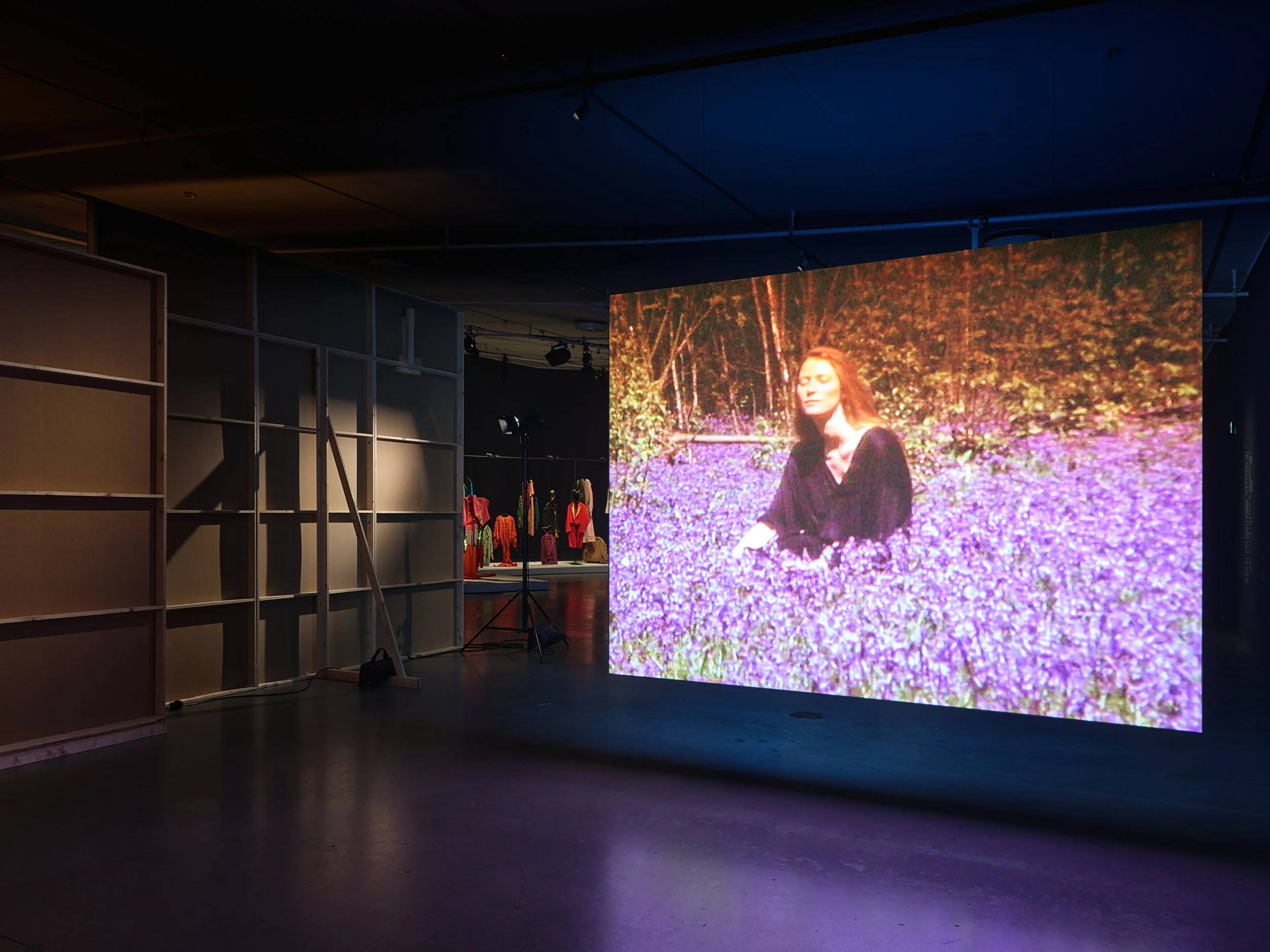
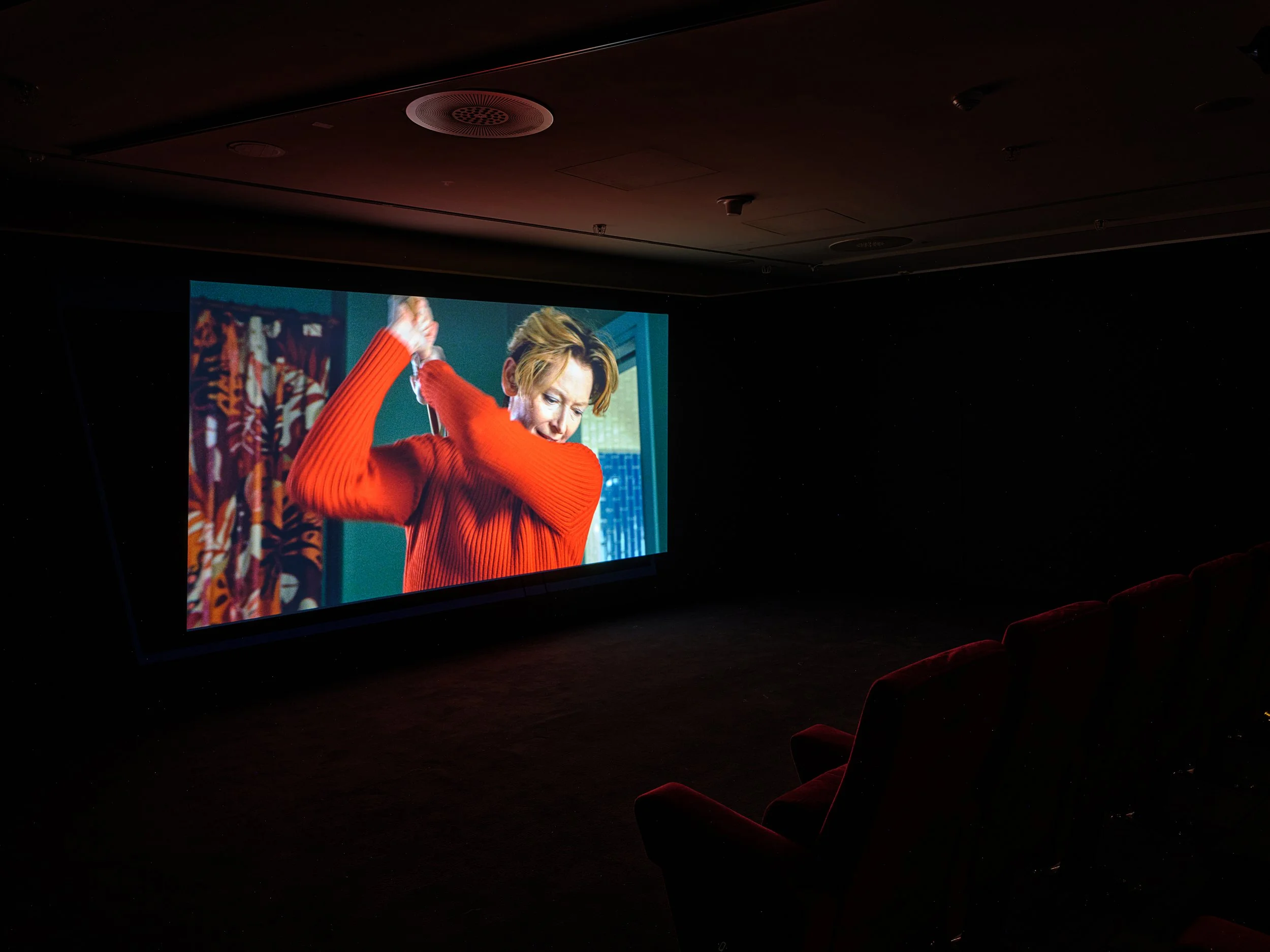
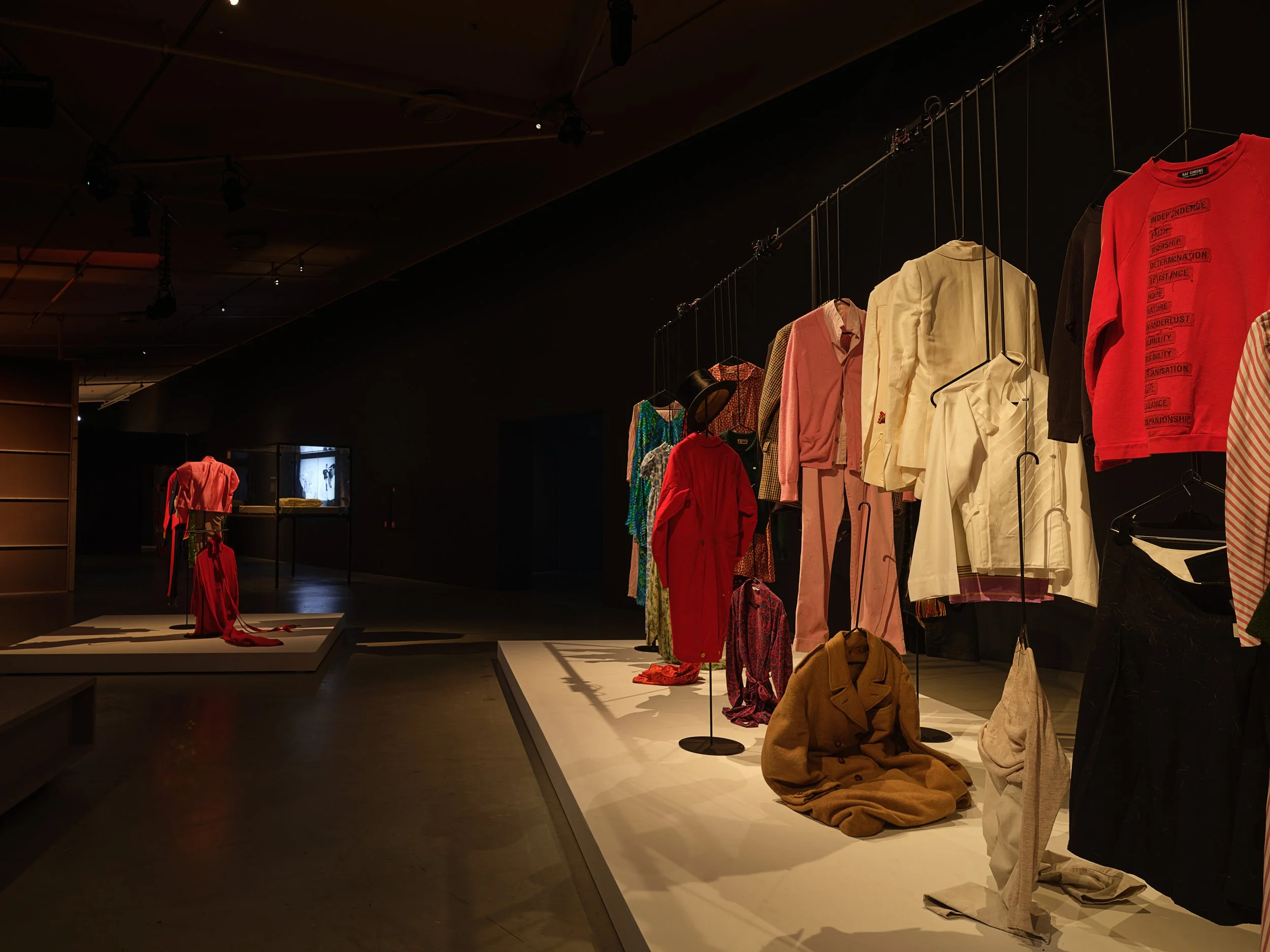
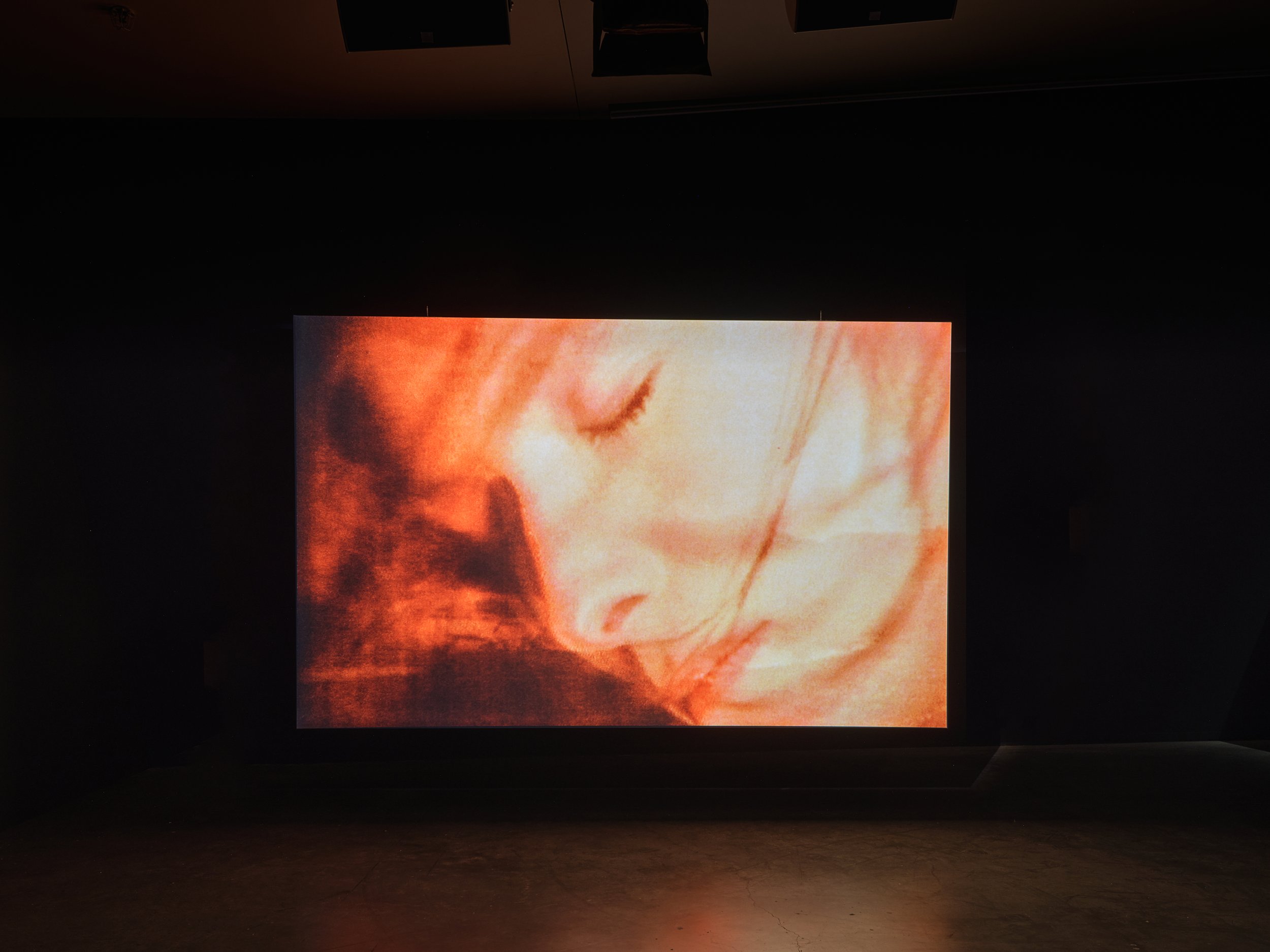
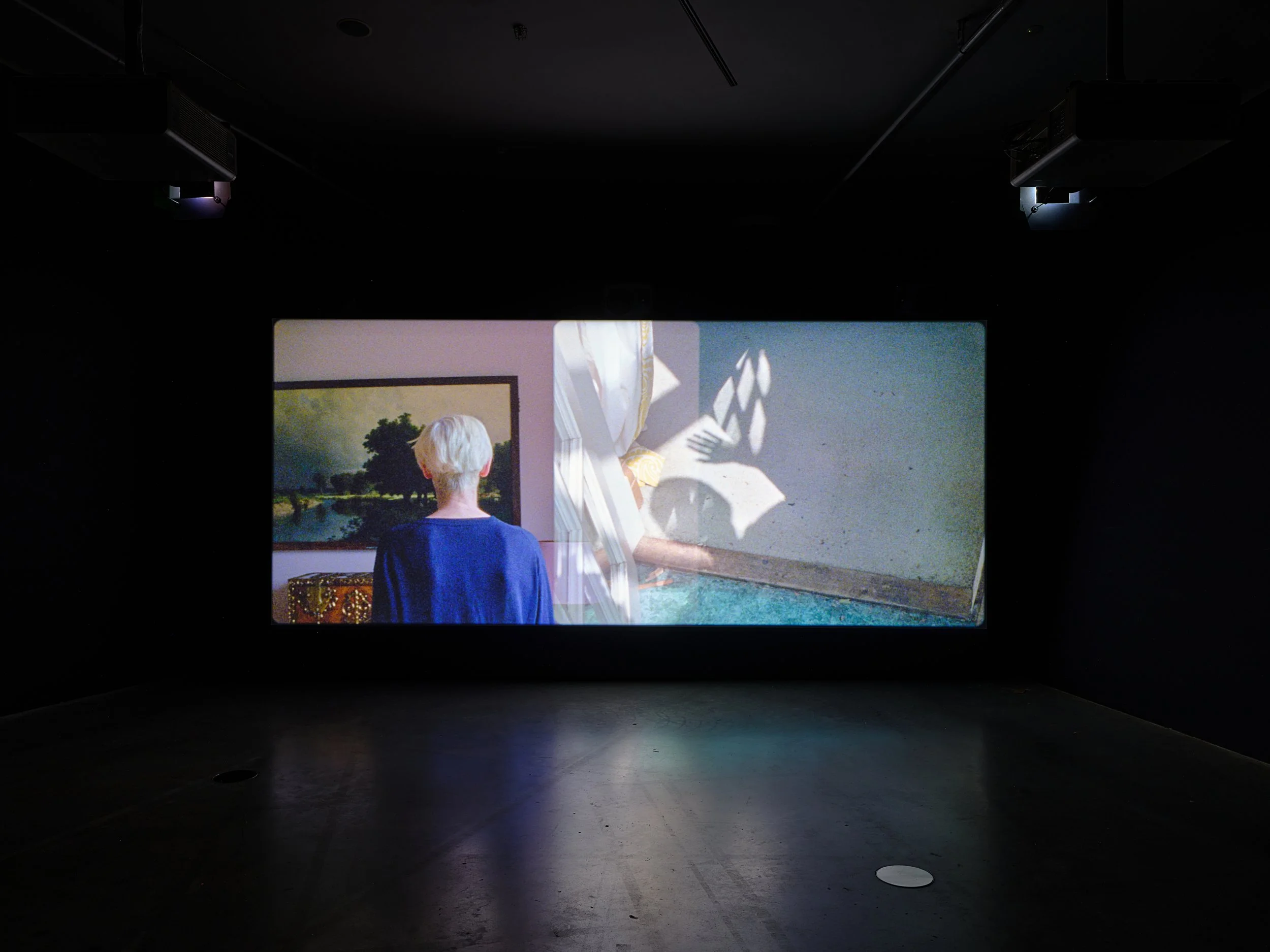
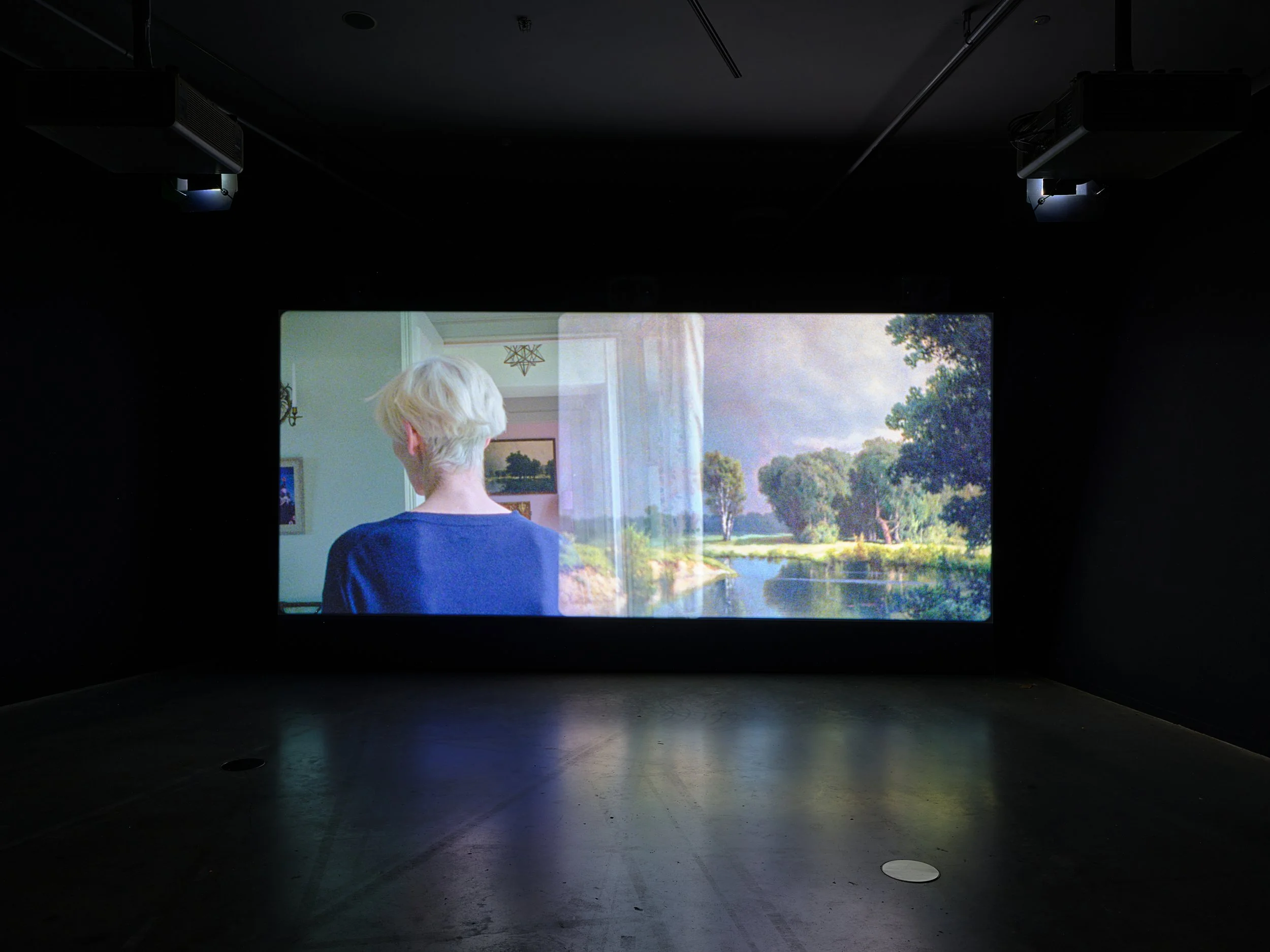
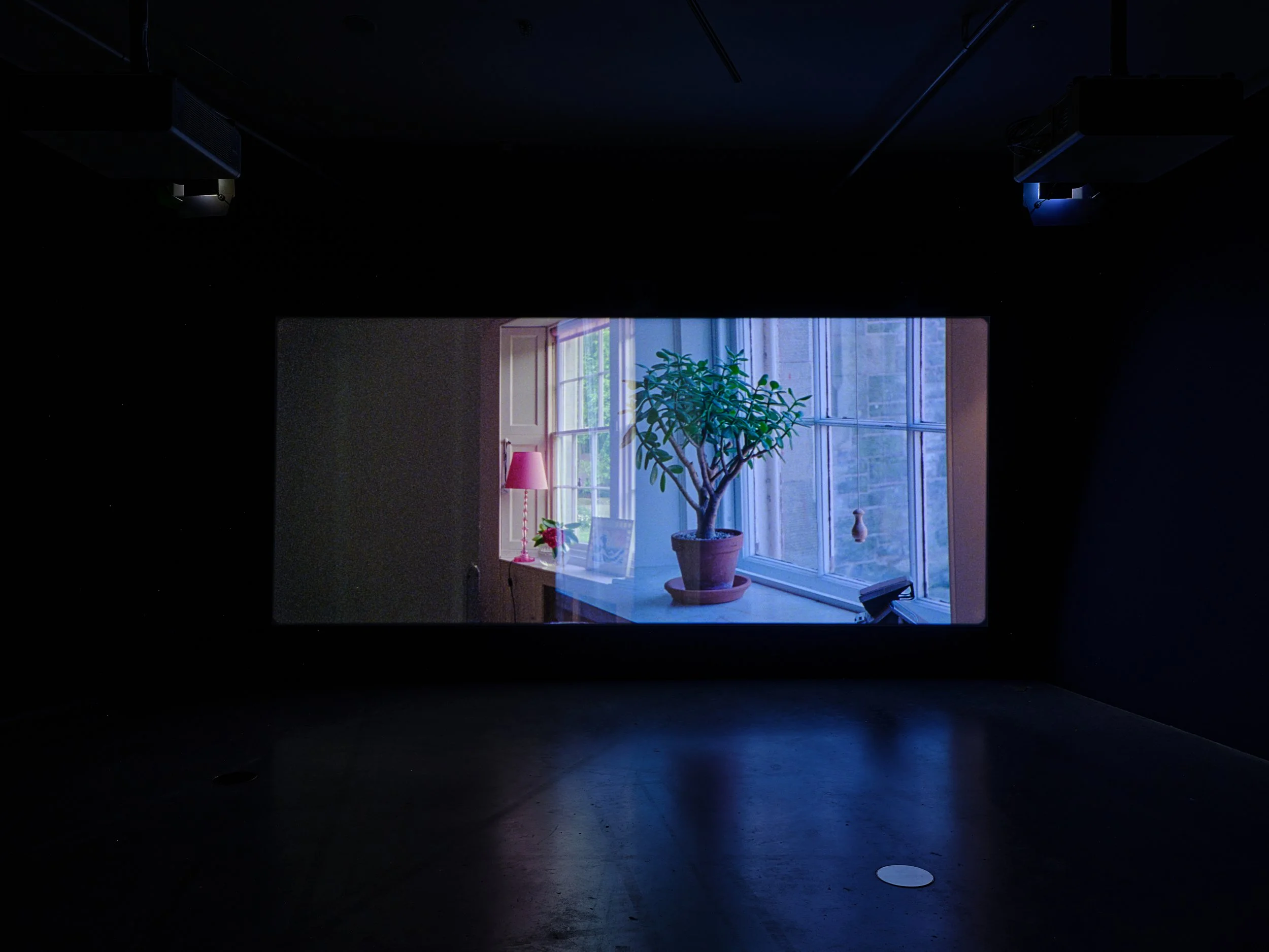
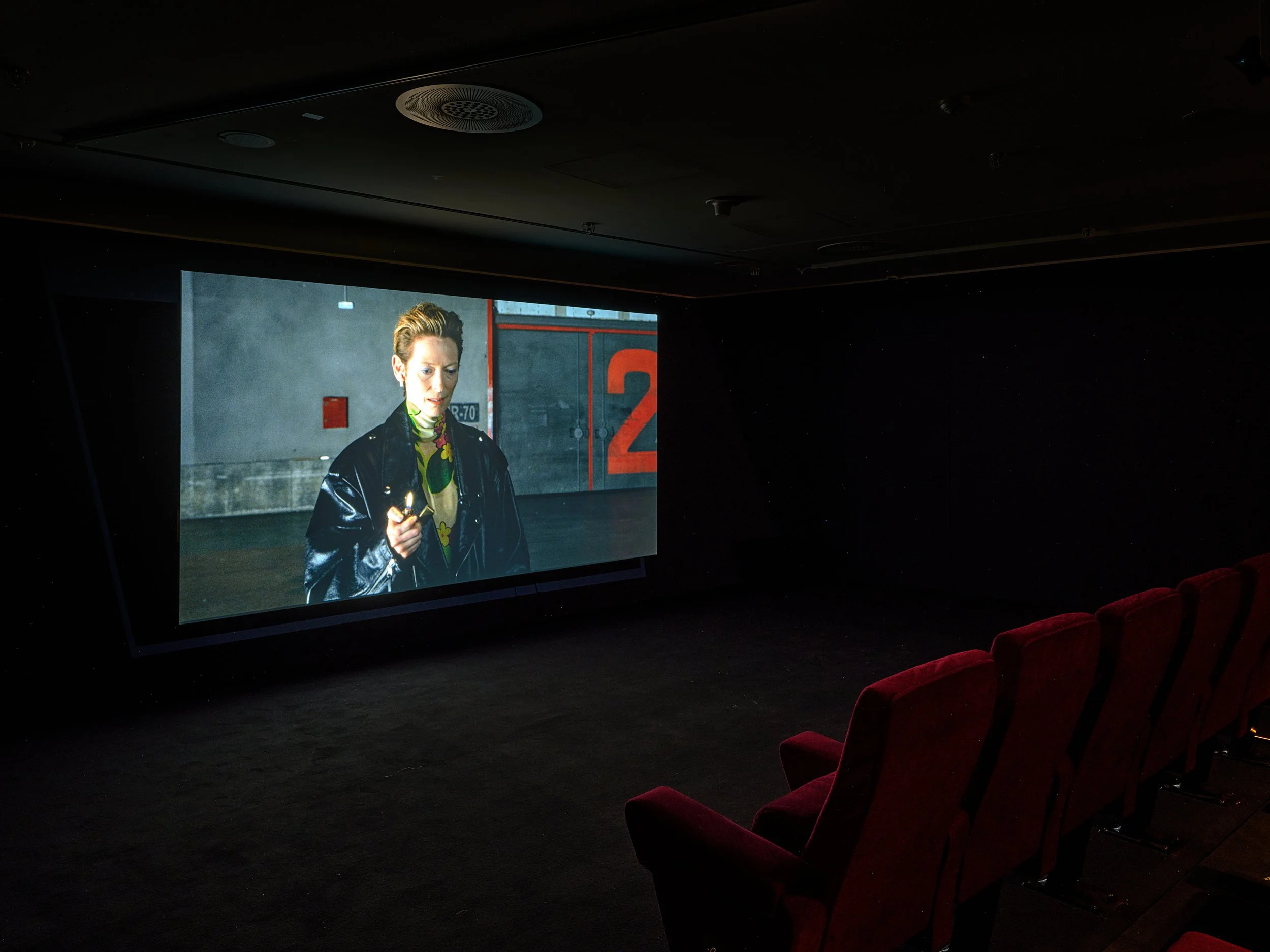
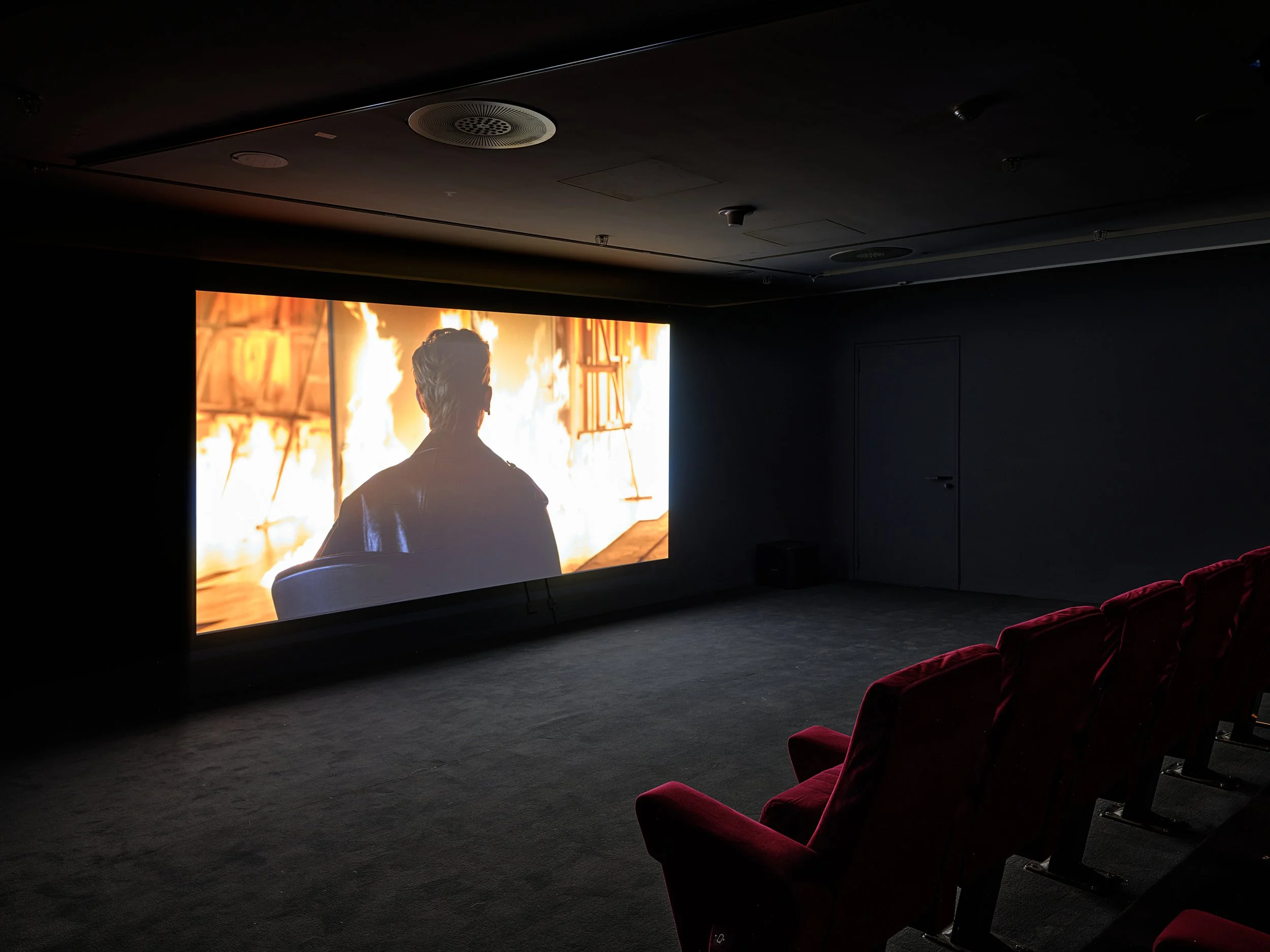
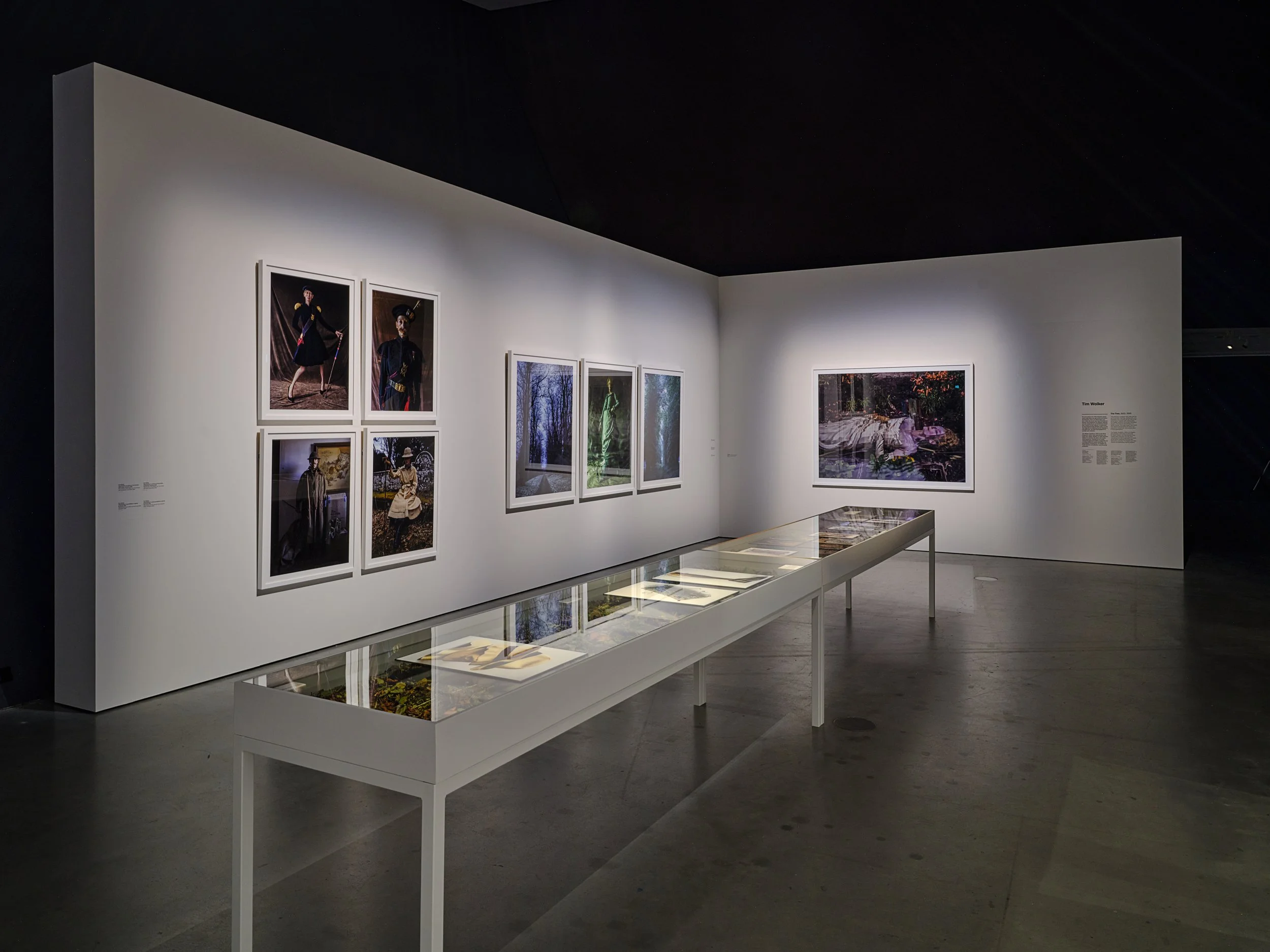
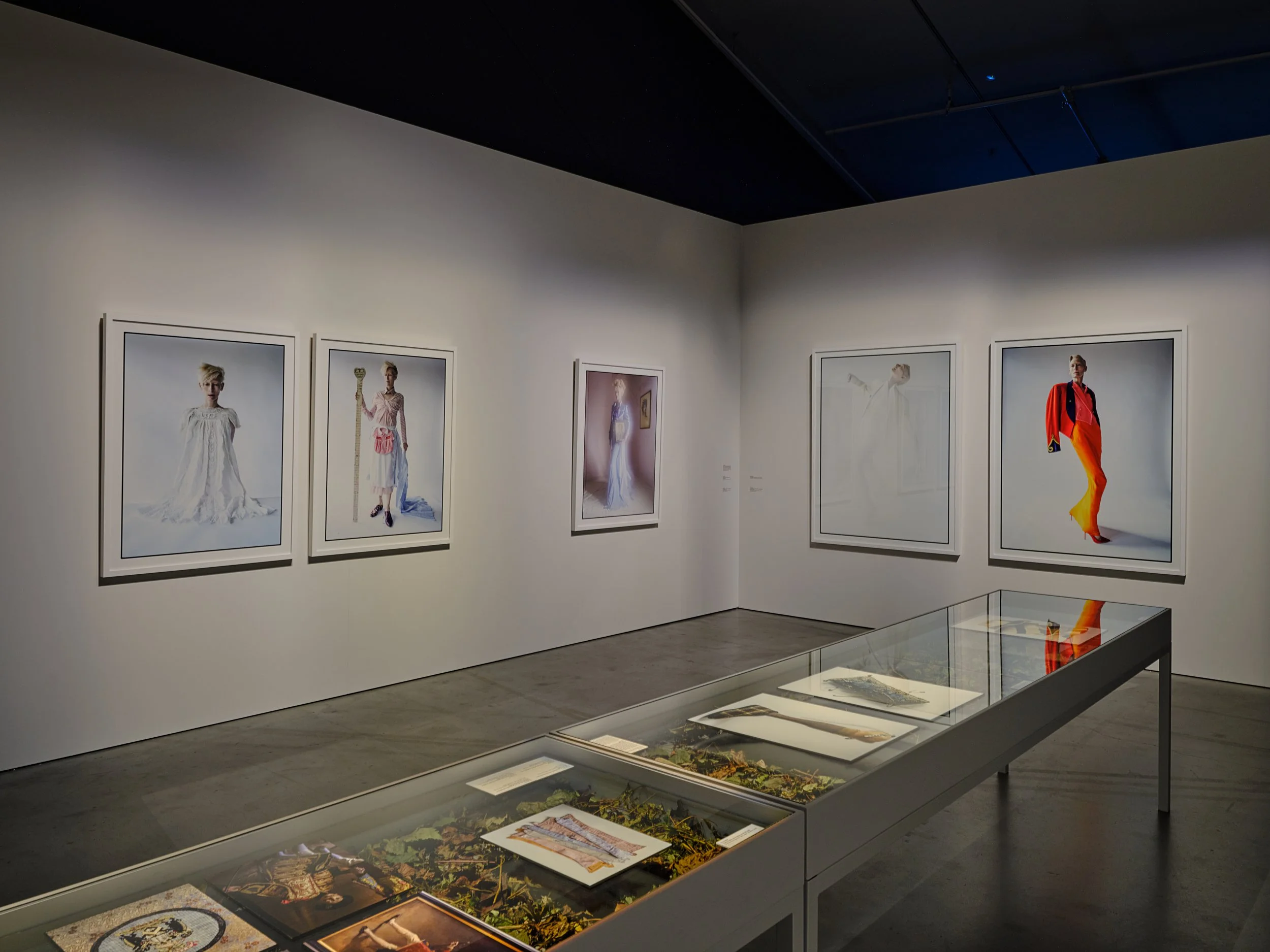
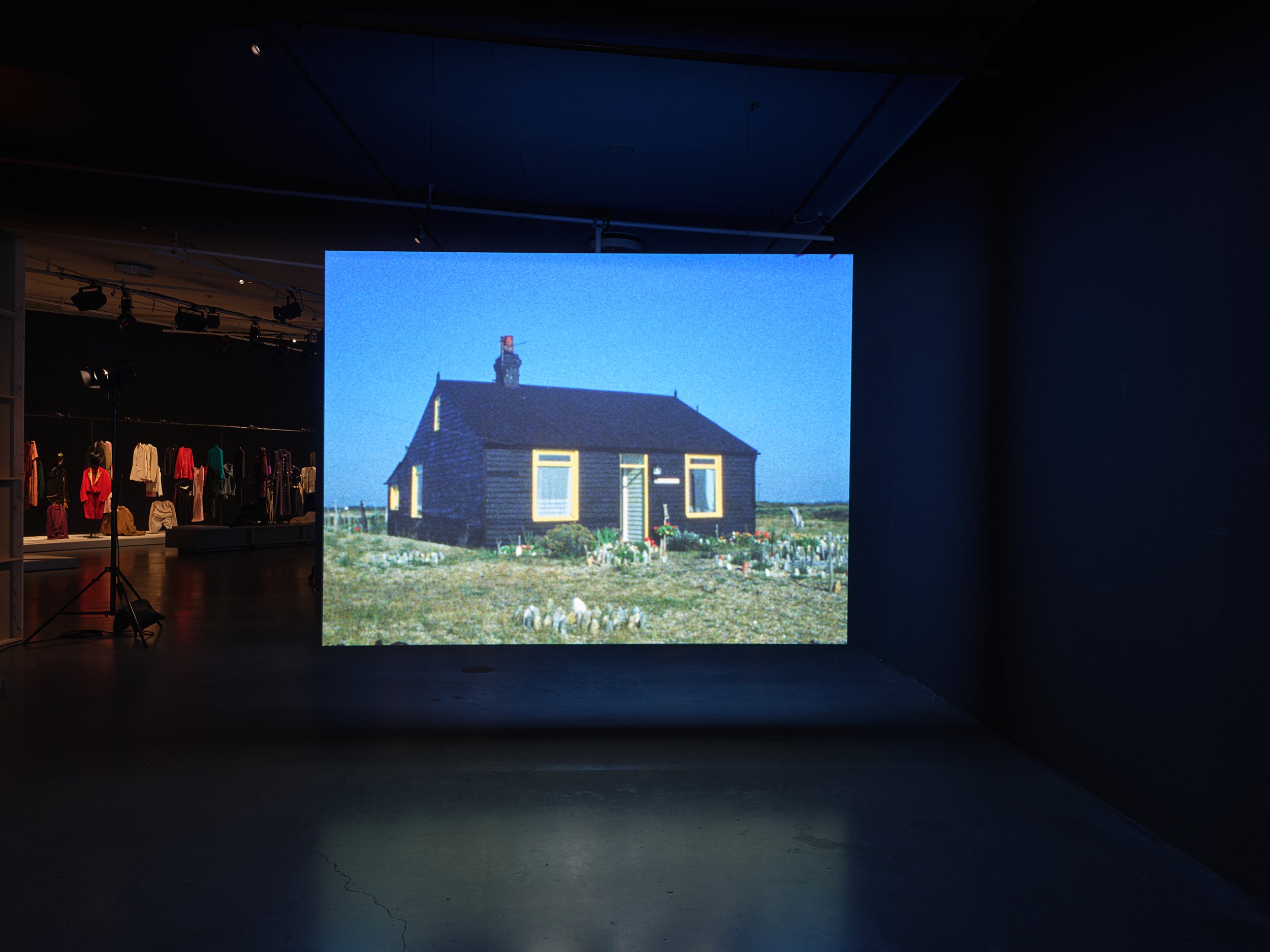
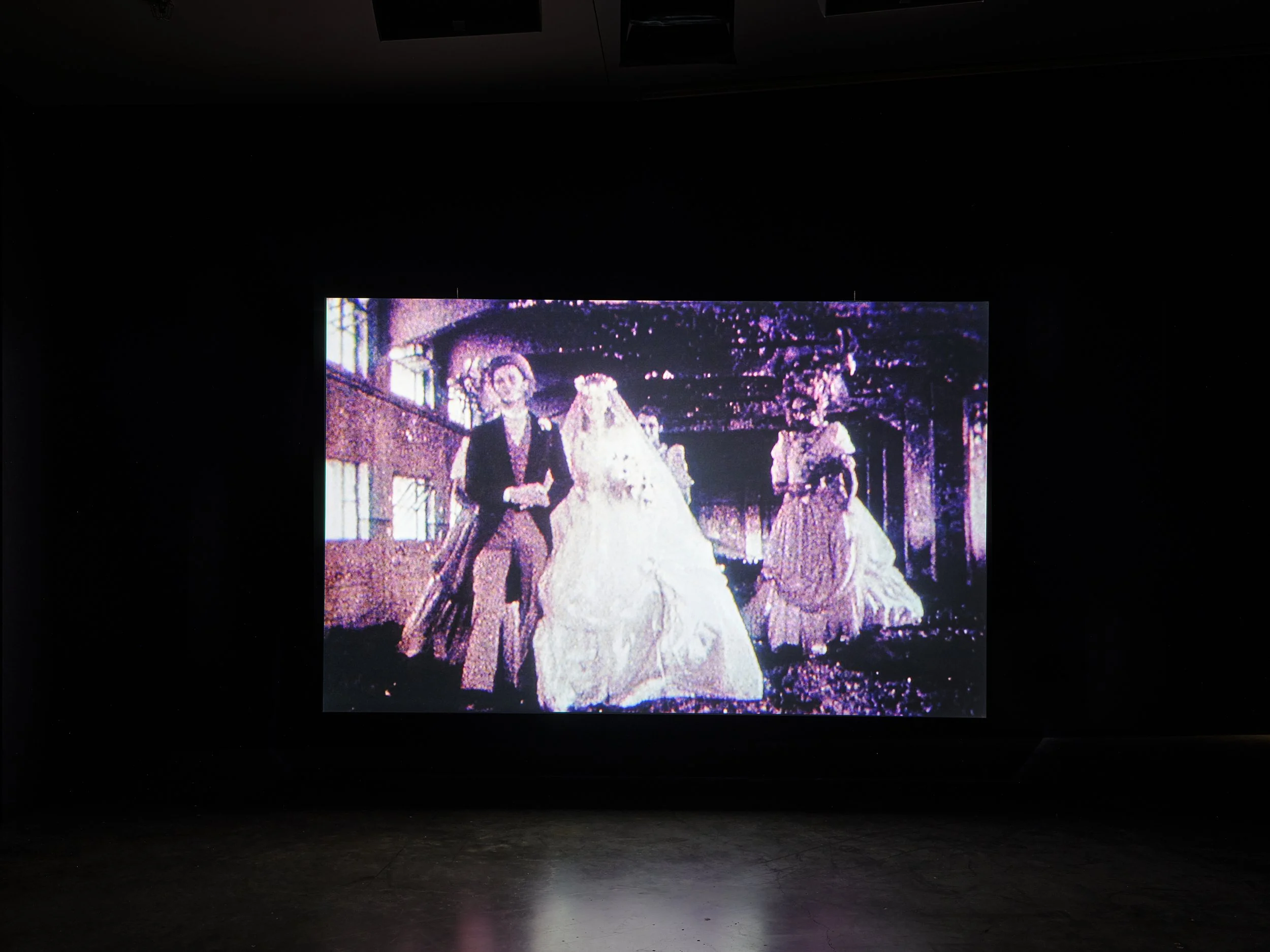
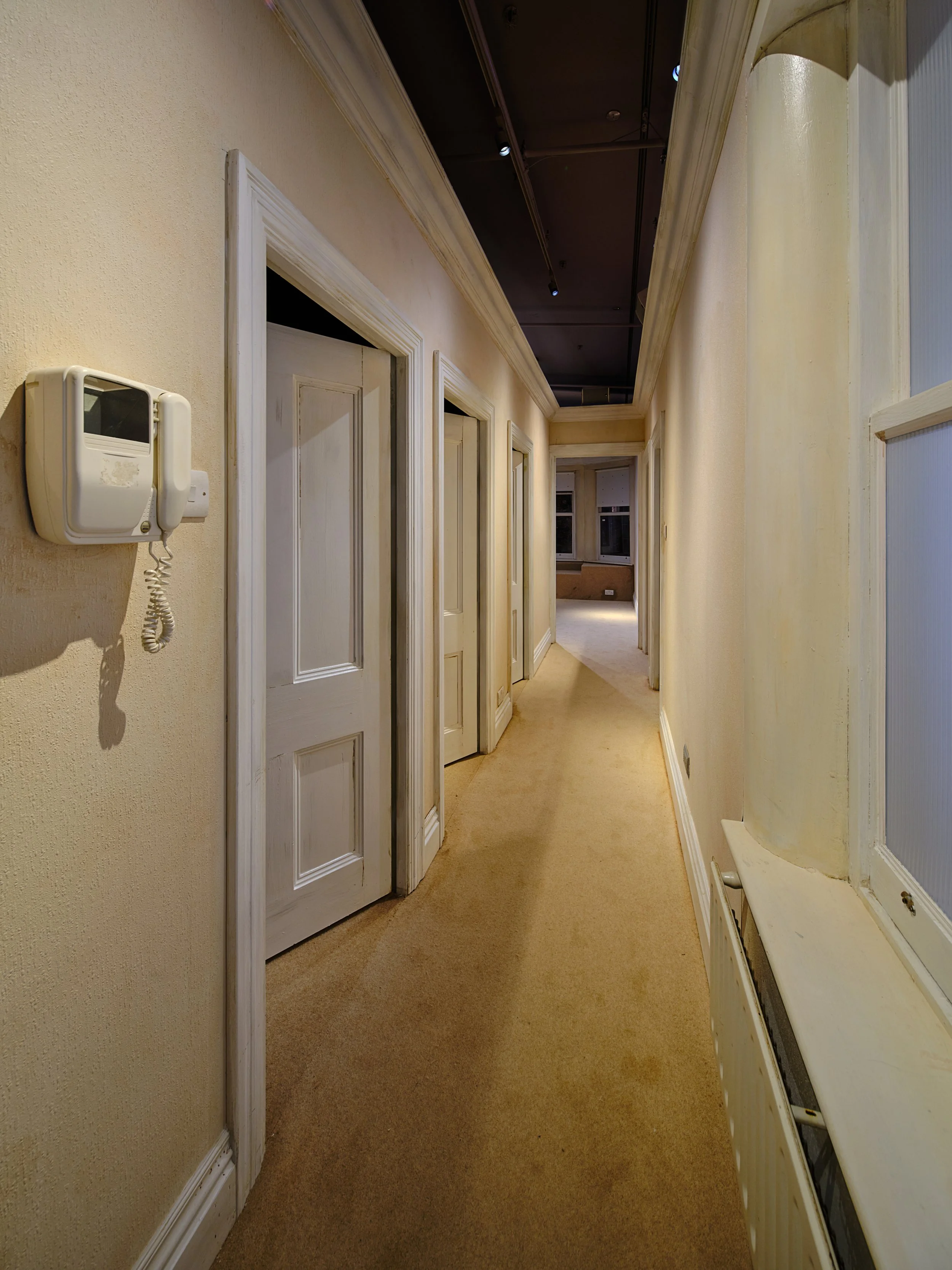
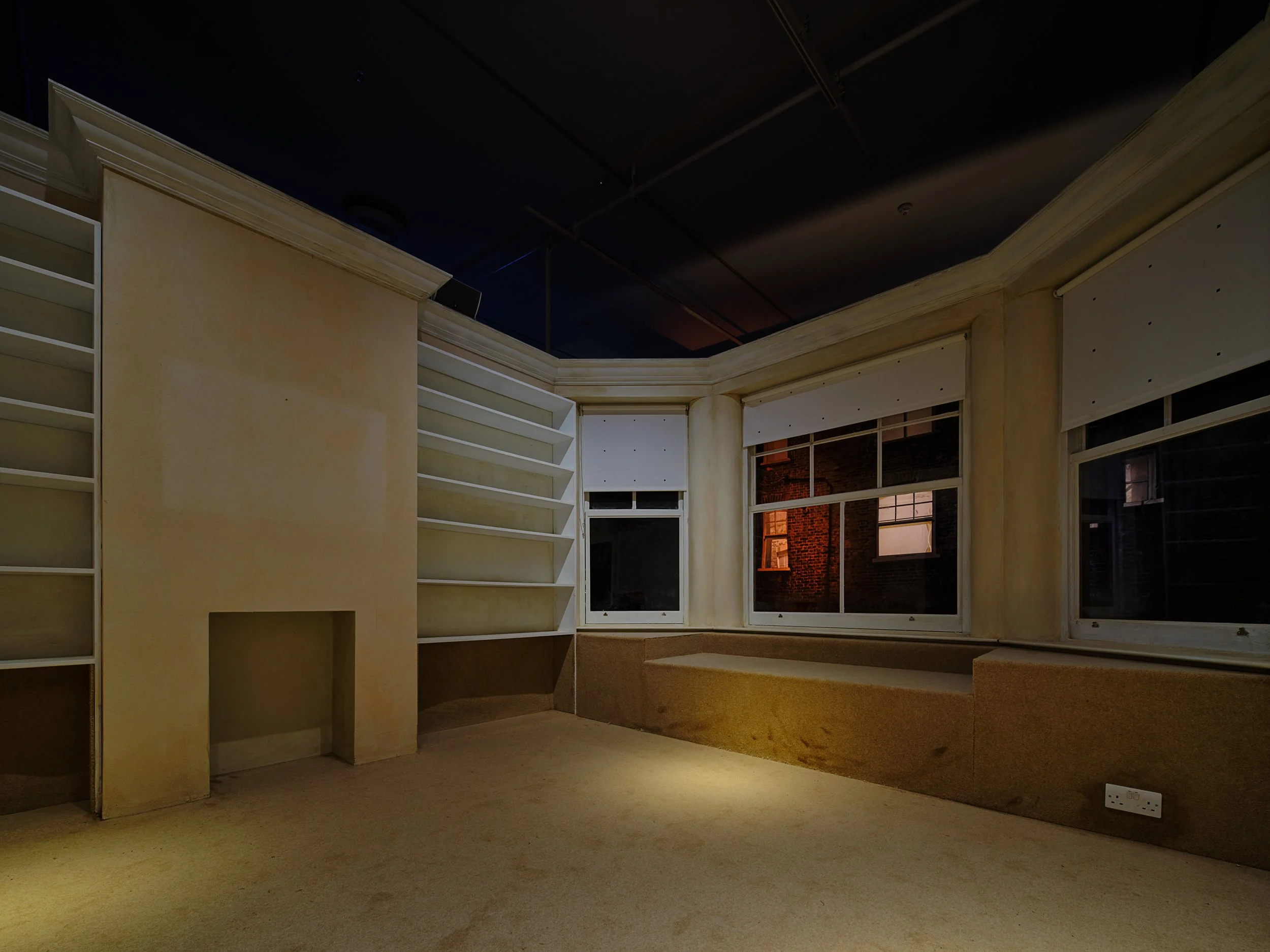
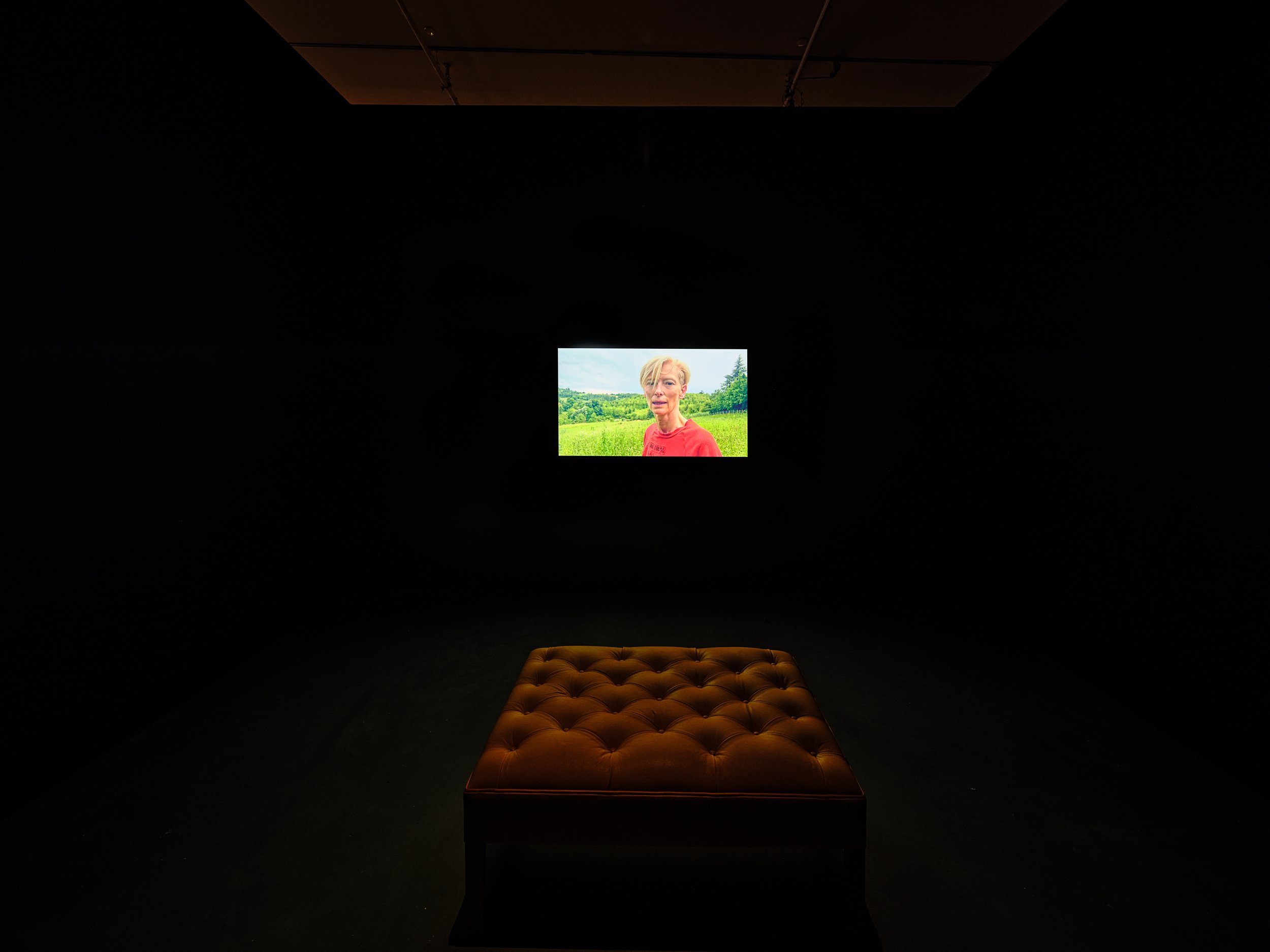
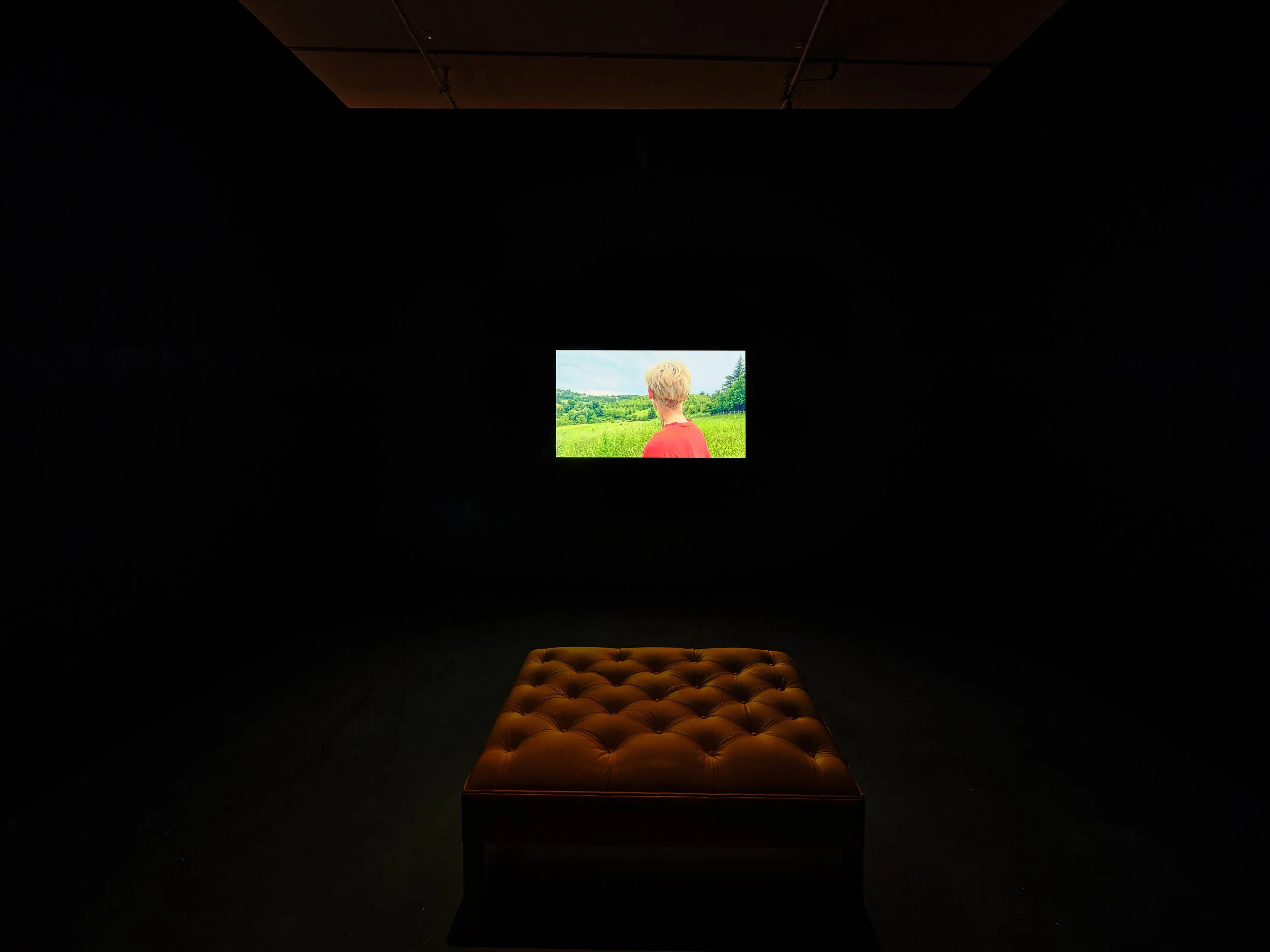
Image courtesy of Eye Film Museum and Studio Hans Wilschut
We just saw the exhibition, it was kind of a biography. How did you build it, how was it constructed, whose idea was it?
Tilda Swinton It was not my idea to make a show. But the show that it is, is entirely my idea. Sandra (den Hamer), the previous director of Eye, asked me probably about five years ago if I would consider making a show. And I hesitated, really big time hesitated. I didn’t think it was going to be possible. It was 35 years since I’d been making work, and I felt overwhelmed by the amount of work I’d made and the projects I’d made, particularly over the last 20 years, really developing a very sporadic relationship with all kinds of cinema. To make sense of that felt overwhelming. It was only after reflecting for a couple of years that I began to think there might be a way if I focused on what really makes me make work, which is fellowship. Then the next animating idea was that I have to make a show that might be useful. I can’t commit myself to making a show that is just kind of retrospective. I didn’t think that it would be useful for anybody who might need a burst of courage to make work themselves.
What might surprise people in the show is how simplistic it is. It’s quite wide, but also very simple. It’s about simple gestures based on relationships. I hope that will translate into people realizing that they can also make work very simply out of their own connections and relationships. It’s a very personal show. First of all because it is based on these important relationships; but also those relationships and these particular pieces of work in this show are deeply personal.
Another crucial decision I made, given that I didn’t want to create a retrospective show, was to select a handful of my ongoing relationships and make new work with all of them. With the exception of Pedro Almodóvar, who wanted to make a new piece of work but was making a feature and just didn’t have the time. We then placed something complete at the end of the show with the Human Voice (2020). Everybody else including Derek Jarman, there is new work, and I am very proud of that. From Derek Jarman there are two fragments at the beginning which have never been seen before.
Can we think of Derek Jarman as the root of it all? Could you imagine your career without him?
TS I don’t think of him as the root, he was the model, the first trunk. The very first relationship in terms of chronology is the one with Joanna Hogg, who I’ve known since I was ten. The very first film I made was her graduation film, even before I met Derek. But the thing about Derek is that he was the first practicing artist that I met, who had a working practice that was a regular, societal, collective thing. He formed an example of how one might make work. Working with him for nine years grew my habit. That’s where I learned to do what I do. When he departed early, I didn’t know if it was possible to ever work with anyone again, because I knew how unique it was. Those habits nourished other relationships. That sense of joint curiosity and to certain extent shared authorship has really driven my whole story.
The exhibition seems like an attempt to present an alternative to auteur theory, which sees a singular voice uniting the work. As you revisited your work, were there red lines that you didn’t consciously experience at the time?
TS (The alternative to auteur theory) is not even intended as a provocation, it’s intended as a point of accuracy. People who work in this way will attest to the accuracy of the fact that all of us who make films are filmmakers. It’s actually about linguistics. All becomes a bit pyramidical when you start talking about a “director”, the single auteur at the top. Even joint directors, there always seems to be a fetish about well, who is the actual leader? For me, that’s inaccurate.
So is this an alternate model that you suggest? Co-authorship?
TS Yes, it’s a different angle, a shift of perspective. In terms of myself, I’ve worked in so many ways in filmmaking, but I’m known as an actor, and yet, this is not a word I find comfortable to describe myself as. Because it doesn’t feel properly accurate. I do know when I’m in front of a camera, especially in a situation where I’m not a co-author, learning lines I didn’t write myself, dressing up, and not looking like myself, people in that position very often would say that their working life is completely different from mine. They don’t feel like co-authors, they don’t want to be co-authors, and they don’t feel like they’re working in a collective, nor do they want to. I’m aware there are many different ways of working, but I don’t think this way of working (co-authorship) is properly represented. I don’t think it’s as rare as people might think it is. I would like to think, especially for people who have not started their working practice yet, that it might be encouraging to see that. That’s all.
Are there any thematic things that attract you to certain roles, or resonances you notice when you look at your work as a whole?
TS Even if it’s within a narrative that’s quite naturalistic and vernacular, not fantastical or esoteric, I love the idea of people reaching a kind of precipice and facing the necessity of change. It could be something really naturalistic, like a Hollywood film such as Michael Clayton (2007), where this woman is falling apart. That moment of falling apart is what I’m really interested in. But it’s also Orlando (1992), who is endlessly transforming, and the woman I play in Memoria (2021) by Apichatpong, who is on the tightrope of not really existing at all. She hasn’t fully formed. So that, I suppose, is an ongoing theme.
If every creative project is ultimately collaborative, can art ever be the product of solitude?
TS I think it absolutely can be the product of solitude. Not everybody wants to work in a great, noisy mass. Most of the people that I work with, even in the collective, within the “relatively noisy mass”, most of them are also artists who work in a solitary way, as well. I noticed this a while ago, that for the first few years, the filmmakers I worked with were all either painters or writers or musicians. And then most of them would say that they made films for the company and for the collective gesture. But they know what it is to work in a solitary way. I also know what it is to work in a solitary way as a writer. But I think even those people who only produce work in a solitary way have families, have influences, have friendships, have animals, have influences that they draw on. And that is a sort of spiritual collective, even if they’re not in the room with you when you’re bashing out your piece. I mean, of course there are going to be rare exceptions.
You describe your work with the filmmakers included in the exhibition as a collaboration, not simply as them directing you. Is this something you consciously choose, to work with people where you can have an impact on the final work of art?
TS My beginnings with Derek Jarman were a very particular experience, and a spoiling one. Because my first experience of making work was with someone I really trusted, who also trusted me. He wanted me to bring myself to the table, even at 24, when I had never made a feature film before. He did this with all of us. He did it with Sandy Powell, my colleague, an incredible costume designer, who has since worked with Martin Scorsese and won multiple Oscars. Caravaggio was her first film too, and he told her, “Just make the costume. Do it, you’ll be all right.” He gave us responsibility and shared authorship with us, even when we were very young. I am very spoiled by that, and I do look for that in my collaborators. Very occasionally, I will meet someone I want to work with who doesn’t work in that way, but I am so interested in them, and we have such a communication that I will take the journey.
One such person is Pedro Almodóvar. He has been making films for nearly 50 years, and I know them inside out. He is the latest in my collaborations; I only started working with him in 2020, when we made the film Human Voice (2020) which is in the exhibition. He doesn’t work in that way at all. That in itself was fascinating for me. We have a close relationship, we have plans for the future, and we’ve already made another future film. So he is one of my ongoing collaborators, but he is somebody who does have the film in his head. He comes in in the morning and literally pulls it out of his ear telling you what happens in the film that he saw last night in his head. Then it’s your task to make it so. But he needs us. He needs all of us. He needs his designers, his camera people, his performers. He needs us in a different way. He doesn’t need us to create the text or even to drive the energy. He needs us to incarnate something that he’s actually visualized himself. And I understand that it is not an unusual way of working, but it’s unusual for me.
As an actor, you do have an impact on a Pedro Almodóvar film. He’s so interested in everybody he’s working with. It’s in his interest to make you have an impact. So he’s not going to suppress you, but he’s asking different things from me. In this particular film that I chose for the exhibition, it’s quite a strange bedfellow with the other pieces in the exhibition, not only because it was already made when we made the exhibition, but because I am literally acting. I am enacting someone very unlike myself. I don’t look like myself. I walk differently, I have a different body, I have very different expressions, and it’s, for him, quite a natural thing to ask somebody to behave that way. For me, it’s very exotic. So for me, it was a transport.
How is it when you wear clothes from your ancestry, your mother’s, your father’s, your grandfather’s, in the performance during the exhibition?
TS This performance that we’re making as part of the exhibition with Olivier Saillard is based on my biographical wardrobe, which doesn’t necessarily mean all my clothes. It means the influences on me of the clothes I was brought up among, the clothes of my mother, the clothes of my father, the clothes of my grandfather, my grandmother. The performance, which we are literally creating at the moment, is more interested in the roots of my life, my family, and where my eye and my sort of predilections were grown. It’s more about that than it is about anything that you’ve seen me necessarily wearing in public. I think, after seeing the performance, it will be possible to trace why I tend to choose certain attitudes, certain silhouettes, because they are reminiscent of, very often, my father’s clothes, particularly the uniforms of my father, more than my mother’s clothes. I would like to think that anybody watching this performance that I make with Olivier will go, “What if it was my wardrobe? What if my grandmother’s jersey was there? What would my father… how was I influenced by what my father wore?” That’s the kind of suggestion we’re making.
You often play mothers, sisters, daughters. Is this a way of collaborating with yourself and working out family relationships?
TS There was a whole patch of time when I realised I was really noodling away at my interest in mothers. I mean, I was playing mothers for several years, whether it was I Am Love(2009), We Need to Talk About Kevin (2011), or Julia (2008), which is actually about motherhood from a completely different angle. And then many mother–son relationships. I suppose that is one of the simplest attractions of playing things out, putting oneself in other people’s shoes is always a useful thing.
Do you think society recognizes cinema’s full expressive potential, or is it confined to entertainment?
TS I’m not somebody who is concerned about the future of cinema. Short answer: I don’t think so yet. I think there’s a slight lull in a real appreciation of the power and necessity of cinema. We have to be a little patient, but I have no doubts that cinema will reassert itself as an incredibly important humanist tool. The more we need humanism, and clearly, we need it now, the more cinema is going to come to our aid. First of all, the experience of sitting in a big room with a bunch of strangers in the dark is incredibly significant, healing, and enlightening. Beyond that, putting oneself in other people’s shoes, looking, being quiet for two hours, three hours, or however long it is, it’s such a therapeutic practice to experience it in the cinema.
Parallel to the exhibition, Eye Filmmuseum will feature an extensive film programme in order to highlight the breadth of your body of work in cinema. Is there any film in particular you’re excited to see again on the big screen?
TS Pretty much all of them. I haven’t seen Caravaggio on the big screen for years. I’m tempted to go. I’d rather see films on the big screen. I’m fond of them all, they represent memories and life.
In the exhibition, there’s a part where you go back to your childhood home and to your student flat. How was that?
TS I wanted it to be as vulnerable and as hands up, disarmed as possible. Can you imagine going to your first flat, the first flat you had as an adult, when you’re just getting used to being an adult? For me, this was after I left university. I was in London for the first time alone, and it is that strange feeling of being in a chrysalis. During the time I lived in that flat, I met Derek Jarman, I started my working practice, and I lived there for 14 years. I left with twins and went to Scotland, thinking I would never go back. Last week, when I walked in that part of the exhibition, I was back in that flat. It is so beautifully done. They have not made a set of a flat. They have actually made the flat I was in.
What does the future look like, more exhibitions, more focus on art?
TS I don’t know, which is a nice answer. I like not knowing. This show is a punctuation for me. It will travel for the next few years. I’m developing work in a different way, I’m not going to be appearing in films as much as I have been, but I’m going to be doing other things, and it’s too early to say yet what they are. I have loved making this exhibition. It’s been incredibly reflective.
You said you are not going to be making films as much. Is there one filmmaker you’ve never worked with, that you’d immediately say yes to?
TS There are several, but I’m going to be discreet. If somebody comes forward with a new road, fresh snow, something, an opportunity to make new shapes that interests me, I’m up for it, absolutely open.
How important was it for you to always say something about society, stereotypes, gender?
TS I do find it difficult to imagine any gesture, particularly gesture in art, not being political. I’m interested in difference and making space for difference. I think the more open and personal the work is, the more relatable and universal it becomes.
Your acceptance speech at Berlinale has caused a lot of discussions, which was very good. How was it for you?
TS All any of us can do is to speak honestly, and what others make of that is up to them. Then we have to deal with our own responses to that. I was honored to have the opportunity to speak honestly on that night.
Is freedom of speech total for you? It is tricky, once you restrict it, who dictates on what to restrict?
TS It is the subject, isn’t it? It never occurred to me that we would have to examine freedom of speech in the way that we are now. What we do have to. We have to be clever about finding ways of making it inviolable. But we have to be clever about it. What can I say? I’ll leave it there. We have to be clever. We have to be cleverer than we’re being right now, that’s for sure.
Thank you so much.
TS Thank you.