Austin Kolodney: One to Watch
LOS ANGELES, MARCH 2026
By Burcu Beaufort
Premiering at the Venice Film Festival, Gus Van Sant’s Dead Man’s Wire (2025) is the perfect nod to Sidney Lumet’s Dog Day Afternoon (1975) on its 50th anniversary, featuring Al Pacino reappearing as an idol-turned-adversary.
The film is inspired by the 1977 Indianapolis hostage standoff, when Tony Kiritsis held mortgage broker Richard O. Hall at gunpoint, demanding “justice”. This tense, darkly comedic drama captures the chaos and moral ambiguity of the real-life event, which remains one of the most infamous, bizarre, and widely televised hostage cases in U.S. history.
Its writer Austin Kolodney’s first reaction to the archival footage was, “How has this not been made into a movie yet?”; after seeing the finished film, its quietly growing fan base, myself included, is left wondering: “How has this movie not made it into the Oscar race?”
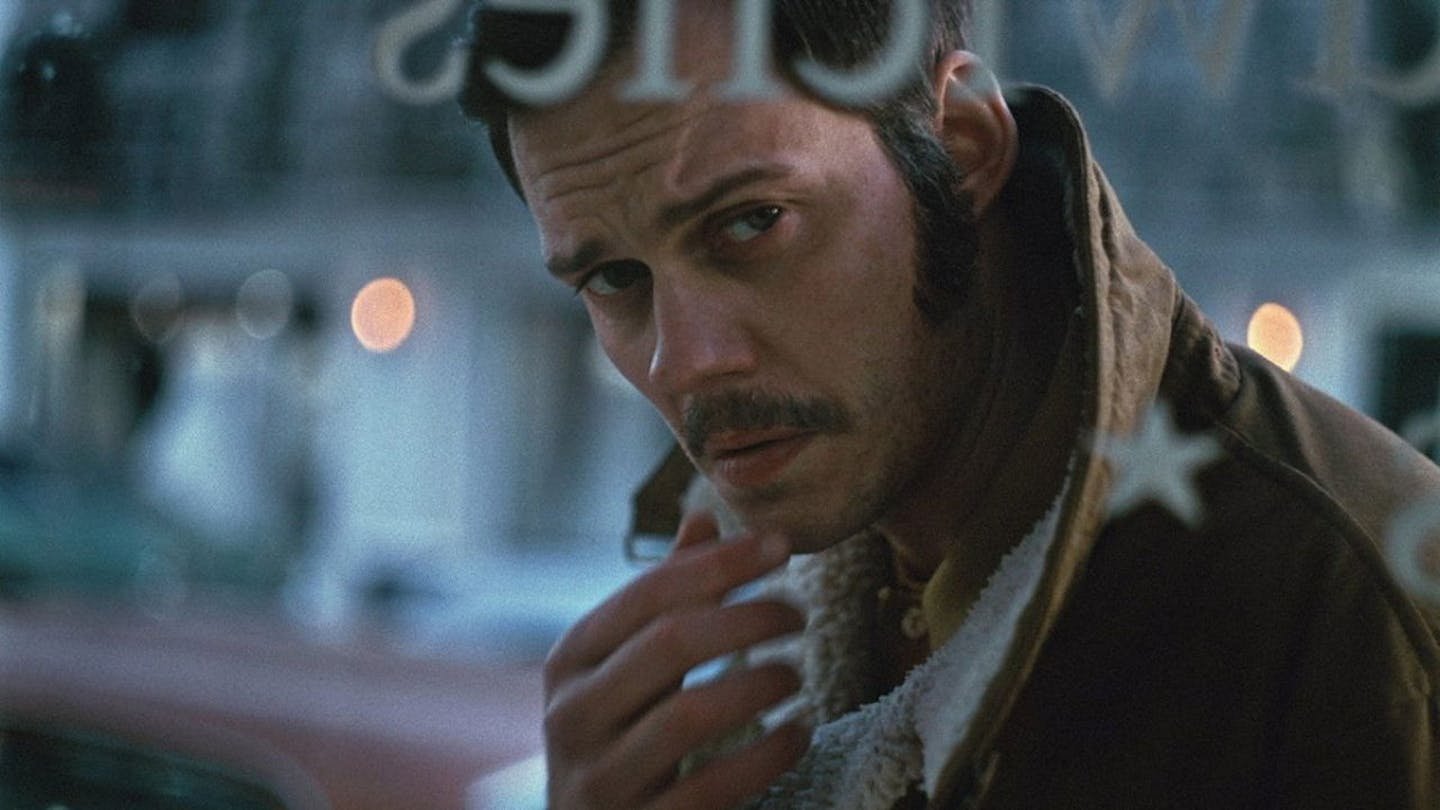
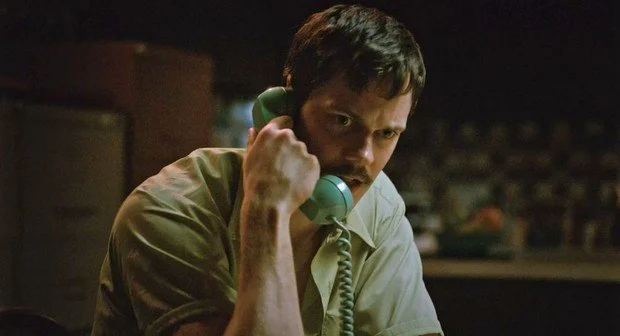
Unlike many films where visuals and effects steal the spotlight, Dead Man's Wire is a welcome return to unpretentious, human-centered storytelling. Bill Skarsgård almost becomes the rage-filled Tony Kiritsis, delivering an outstanding performance, while Dacre Montgomery perfectly captures the fear of Richard O. Hall, who was held hostage by Tony Kiritsis for 63 hours with a wire around his neck and a gun pointed right at him.
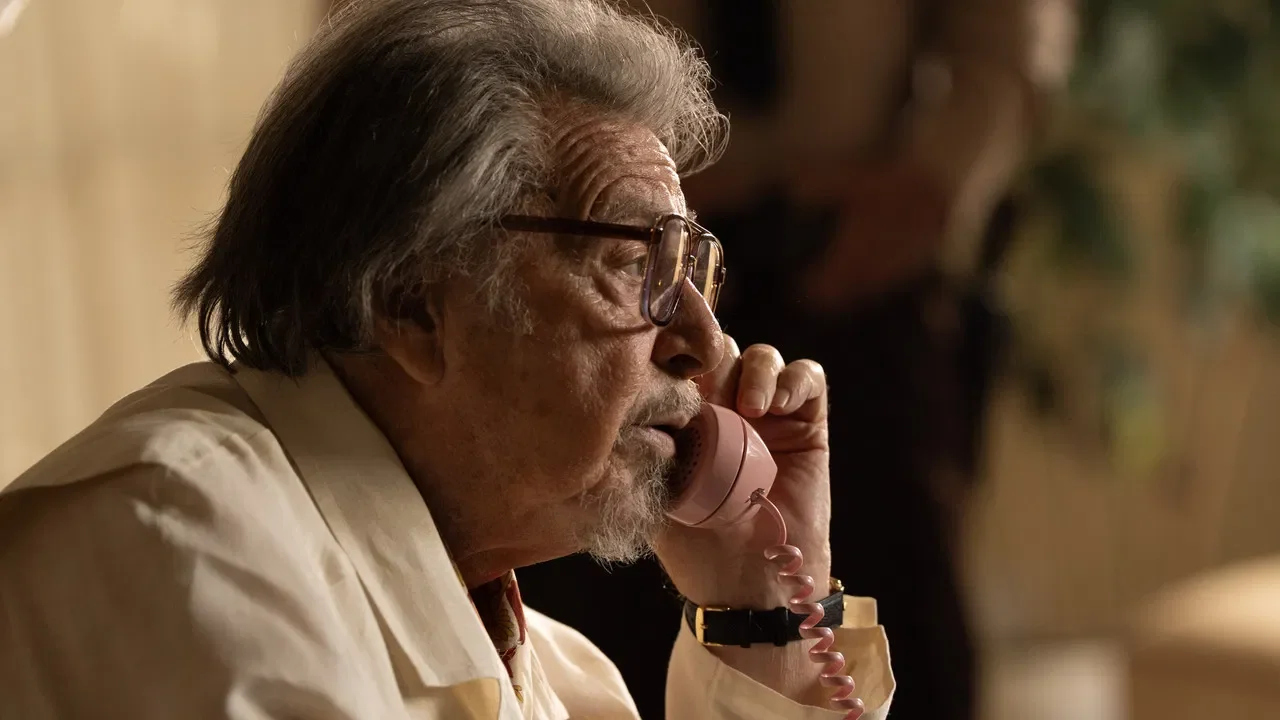
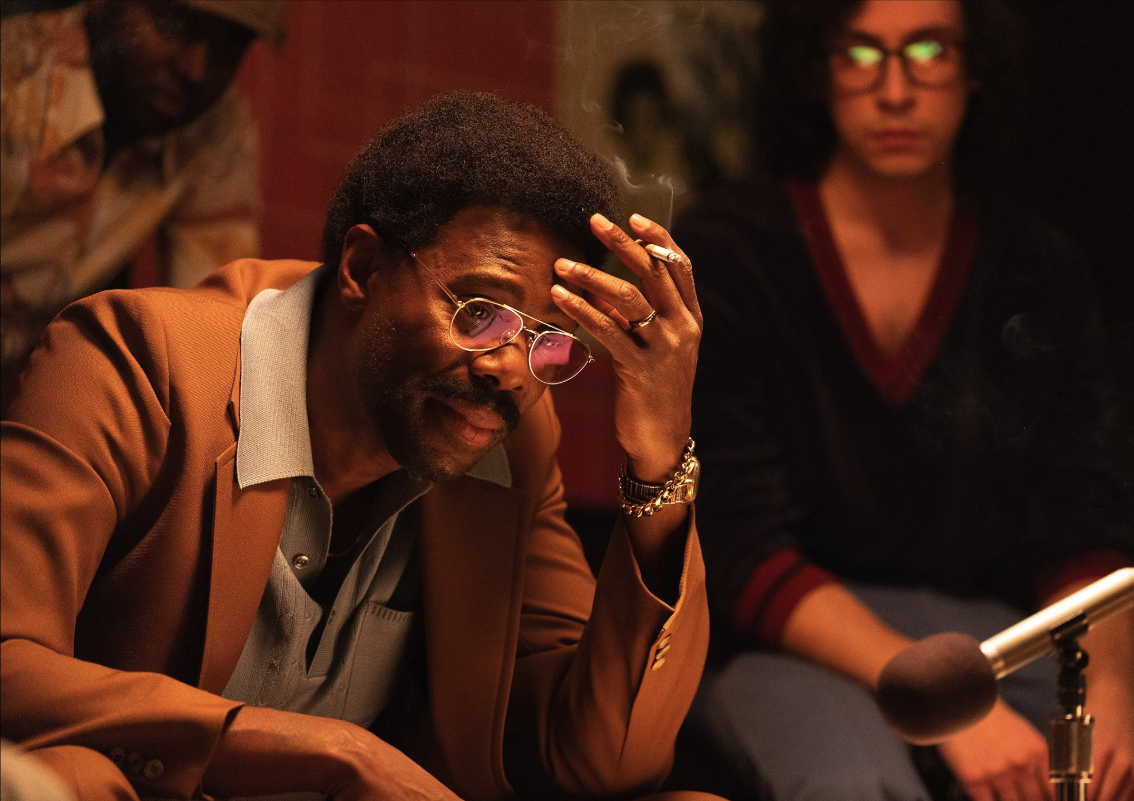
The great ensemble cast further anchors the thriller, featuring Al Pacino as Richard’s father M.L. Hall and Colman Domingo as the radio host Fred Temple, whose melting voice provides a calm contrast to the chaos. Adding a layer of humour to the tension is Myha’la, who plays a young, enthusiastic TV reporter eager to deliver this "delicious nugget" of a story to the TV news.
While the script took Kolodney little more than a month to write, the making of itself took almost five years. According to producer Cassian Elwes the fact that it all finally came together was simply a matter of kismet, as he describes the process in a talk with Film Independent,
Below is my conversation with Austin, whom I was lucky to meet in his neighbourhood of Silver Lake, LA, over a black coffee.
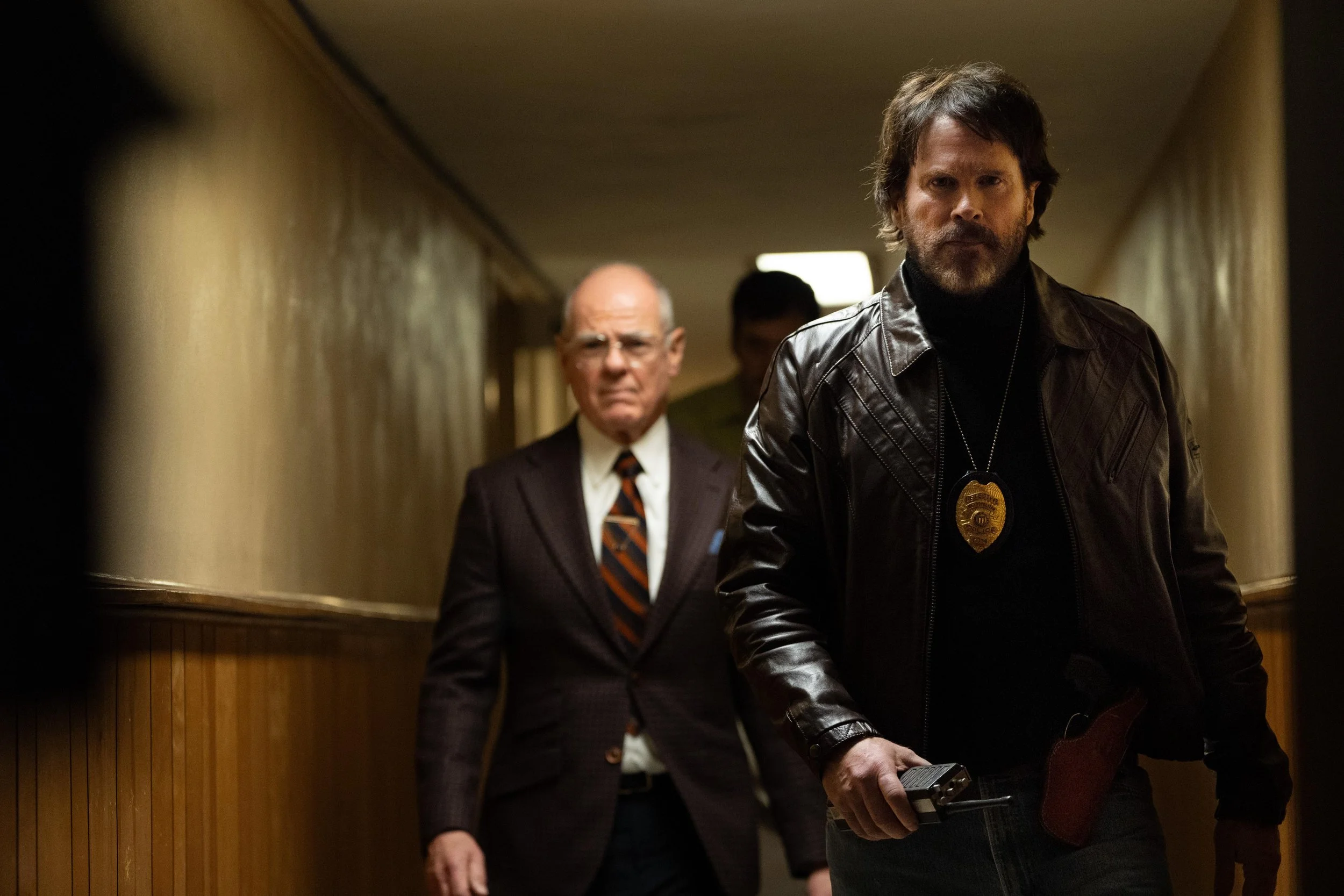
All film stills below are by Stefania Rosini SMPSP.
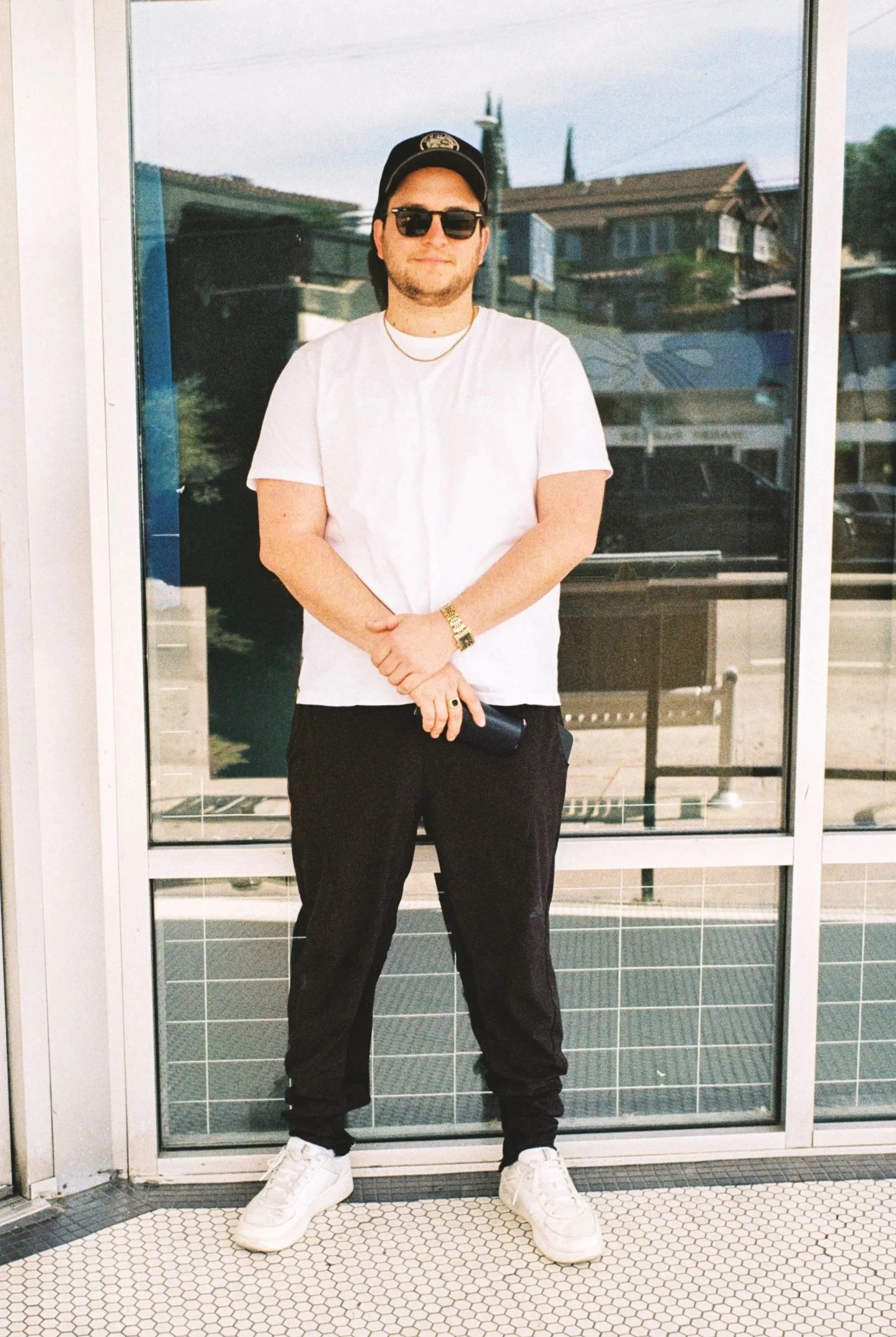
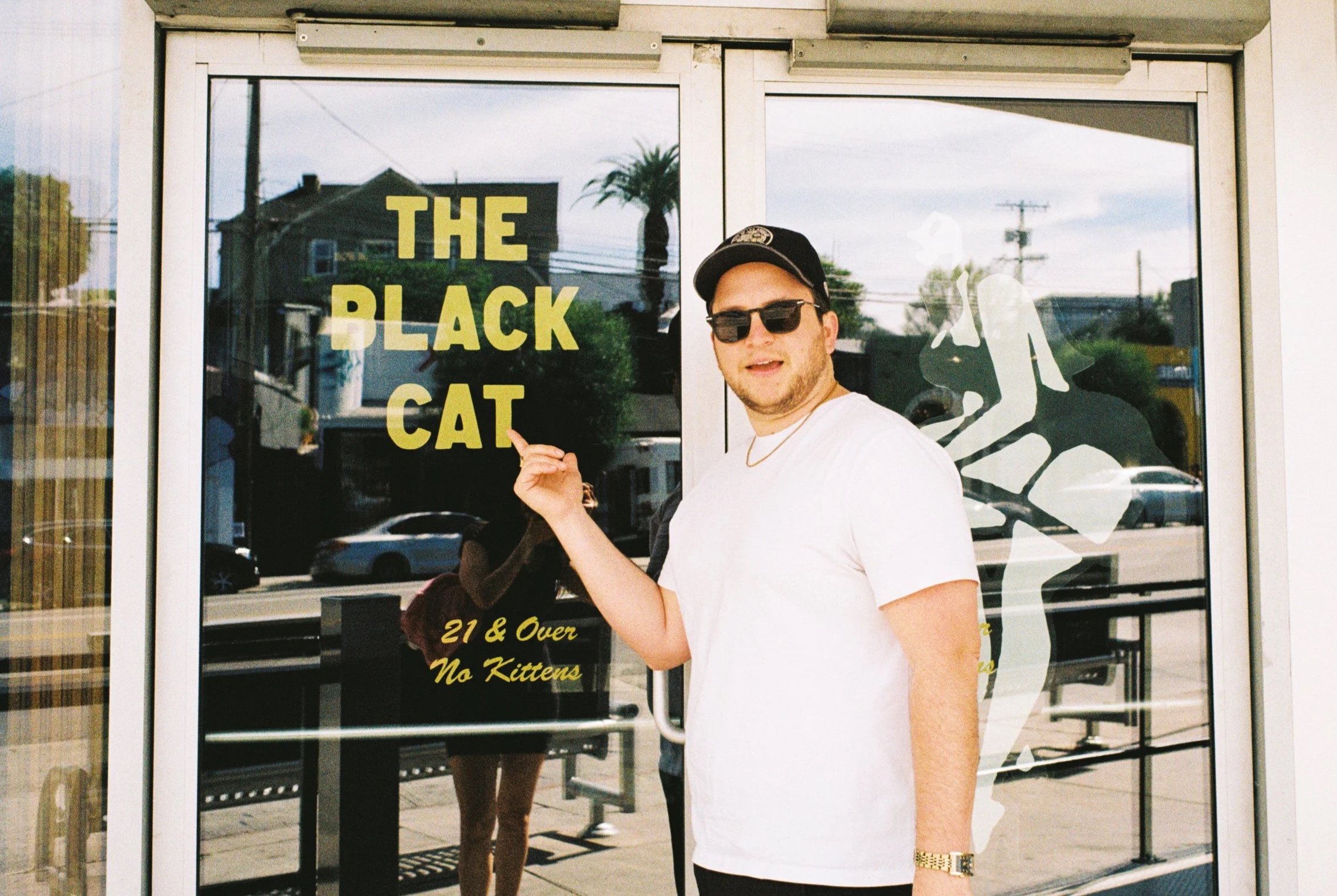
Walking around in LA with Austin Kolodney ©Burcu Beaufort
The Movie & The Legends
Burcu Beaufort: Teaming up with Gus Van Sant, one of the most acclaimed directors of our time, how did that happen?
Austin Kolodney: I wrote this script on spec. From the beginning, I wanted Gus to direct it and Jack Black to play Tony. That was my dream scenario. In 2022, my manager and I sent it to a company that had done Gus's last movie, but the executive passed on it and never gave it to him. It was another two and a half or three years until it finally got into Gus's hands. Before Gus, Cassian Elwes joined the team as our producer. We really lucked out that Cassian had worked with Gus before, and he just happened to see Gus in a restaurant and went straight up to him, saying, “Hey, I'd love to send you the script.” At that point in time, another director had left the project, so we didn't have a director attached. He read it the next day and said, “Hey, this is good.”
Burcu Beaufort: What made you believe in the script and that Gus Van Sant would want to direct it?
Austin Kolodney: I think the story is so rich with tension and drama, but also dark comedy. I put a lot of time and care into the research and writing that initial draft. Then, reading it back, it was the type of movie I want to go see in theaters. I knew that he would respond to this story and to these characters. The archival footage I saw of the crime just made me say, “How has this not been made into a movie yet?!”
Burcu Beaufort: The movie has an incredible cast. How did you develop Al Pacino’s character, M.L. Hall?
Austin Kolodney: I did some rewrites while I was still working at the zoo when Gus was first talking to him about being in the movie. Al wasn't signed on officially, but we all worked on augmenting the character. I was reading Al’s autobiography Sonny Boy and his interviews to infuse certain things of his vocal cadence a little bit. If you remember, at the end of his autobiography, he shares a poem When I Die written by his mentor Charles Laughton, and he talks about the moon. So I kind of infused that bit to the character and to the final scene where he's watching Richard and Tony at the press conference.
Burcu Beaufort: The film is inspired by the 1977 hostage standoff involving Tony Kiritsis and his mortgage broker, a case that drew intense media attention. How did you approach the research process?
Austin Kolodney: I worked with these historical consultants, Alan Berry and Mark Enochs, who were helpful and shared their research with me because they're from Indianapolis. The actual writing of the script wasn't that long, maybe just a month or two. After that, it's just a lot of waiting. You send the script out and then you wait for months and months for people to read it.
Burcu Beaufort: The story feels still quite relevant to our time. Why do you think it still resonates?
Austin Kolodney: What Tony Kiritsis was raging against back in the day was an economic system that wasn't working for ‘the common man.’ When I was writing it in 2020, that was how I felt about the economy. It has revealed itself to really strike a chord with people, as it did in the 70s; and even now, in 2026, it's out in theaters. People are finding parallels with how they're not able to own a home or build a business.

The Hustle & The Zoo
Burcu Beaufort: How long have you been in filmmaking? How did you start?
Austin Kolodney: I transferred from community college to film school in 2012. So I've been working on film sets since then. I've written other features, some of them haven't been made yet. I've been on sets as an assistant and a producer of other features. I was a Director's Assistant on Joy (2015) by David O. Russell starring Jennifer Lawrence. I also worked on the LA unit photography of Bird Box (2018) and did behind-the-scenes for Thelma (2024).
Burcu Beaufort: During this period, you were also doing small jobs on the side, right? It's really inspiring how you kept going and stayed so dedicated to your craft.
Austin Kolodney: I come from a single-parent household with no connections to film at all, but my mom raised me on watching good movies. I’ve worked since I was 15; I was at Baskin-Robbins for three years, then Lyft driver, librarian… all sorts of jobs.
Burcu Beaufort: I can imagine, doing these jobs, you observe a lot of different people and hear some really interesting stories. How did they help you keep writing and stay creative?
Austin Kolodney: A part-time manual job can be great for writing. Others with full-time office jobs only have weekends, when they’re exhausted. Obviously, would I prefer not having to and having a giant well of money to fund a passion project? Yes, I would much rather have that. But, I think I've made it work for me. Especially in that period of 2024, right after the writer's strike, I was broke. A lot of jobs in LA had disappeared, and I had depleted my savings and maxed out my credit cards.
Burcu Beaufort: Yesterday, at the panel hosted by the Academy Museum, Guillermo del Toro was talking about the making of Frankenstein (2025). He said, “If something is not working, it’s actually working for the movie.” Looking back, do you see that waiting period as a necessary part of the process?
Austin Kolodney: In one of his interview series, Al Pacino says “The fruit falls off the tree. You don't shake it before it's ready.” I think that's pretty apt with filmmaking, where there were times in 2021 and 2022 when I was pushing the script forward and trying to get it made urgently. And it wasn't happening. That was frustrating at the moment, but it all worked out, because it aligned with when Gus was available and interested in taking on a film like this.
The Craft & Artist Identity
Burcu Beaufort: How did you start writing scripts?
Austin Kolodney: I view myself as a director first, but I think most directors are writers as well; to me, the two roles are one and the same. In film school, directing and producing were the disciplines I gravitated toward. But coming out of school, getting paid to write and direct is a rare thing. I did 1st AD work and producing, but I realized that writing the script is the most viable way to get your first features together. I say that because writing is the one medium available to all of us. Cinematography and editing have technological and fiscal barriers to entry, whereas writing really only requires a pen and paper. At most, you need a laptop for the final draft, but even that is more accessible to people. I started writing Dead Man's Wire (2025) during the pandemic, when we were all stuck at home and not on set.
Burcu Beaufort: How do you face the fear of critique, especially when the work feels important or very personal to you?
Austin Kolodney: There is a moment where you tinker and make sure that it's in a good enough shape before you send it out. I share it with close, trusted friends, who have good eyes, like my manager; I think he is a great sounding board. But, once I send it out, I'm usually pretty proud of it. To me, you are the most important audience member for anything that you work on.
Burcu Beaufort: Do you write any other things?
Austin Kolodney: I try to journal every day to kick off. Facing a blank page, sometimes just writing freehand about your day gets the gears going to then carry that momentum into the keyboard, onto the final draft.
On Dead Man's Wire, I was inspired by Gus to write some poetry for the Fred Temple character, he reads at the beginning of the film. I wrote that on a walk once when I was in Louisville. Every now and then I'll bust one of those out if it comes to me.
Burcu Beaufort: I have a feeling many filmmakers are afraid to admit their artistic side, whether it’s painting or writing poems or something else.
Austin Kolodney: I know, I’m careful not to lead with it. Working with someone like Gus has given me more confidence in leaning into the term artist, because he’s a beautiful painter. I once mentioned to him that maybe my mom would have wanted me to be a lawyer or doctor, something more traditional. He said, “Really? That sounds harder to me.” To him, being this director, a prolific auteur and indie legend, is easier than being a lawyer or doctor. I think I’m embracing that.
Burcu Beaufort: I think it's a hardship that comes from doing something that you don't love. To some people, it is the hardest thing not being able to do art and express themselves.
Venice & The Legacy
Burcu Beaufort: How was it being in Venice for the first time with your film? Were you a little bit anxious after the release?
Austin Kolodney: It was surreal. I've gone to film festivals in Austin, Santa Barbara, and Tribeca for friends' projects, but I had never been to an international festival, let alone the longest-running one, which is Venice. To be candid, I was anxious. The final film is not exactly what I had in my head. We made it outside the studio system, so we had to condense things. I didn't know how it was going to be received. The night before the premiere, we were all at dinner while the press were watching. Dacre (Montgomery) and I were on Letterboxd, seeing the first reviews roll in. After that, we were breathing a lot easier.
Burcu Beaufort: How was the day of the premiere for you?
Austin Kolodney: The morning was the press conference; it was exciting to see it received so well. Then it was quickly getting dressed and taking the water taxis. It was the culmination of a five-year journey. It felt like we’d earned it. There was a funny moment. You arrive at the Hotel Excelsior and they put you in these Lexus cars for the red carpet. I was in a car with Cary Elwes, Colman Domingo, and his husband, Raúl. I sat there, only a year removed from working as a custodian at the zoo. In January, I was in a uniform picking up trash; eight months later, I’m in a Lexus next to Colman Domingo, and he looks like a god. Nothing prepares you for pulling up to that red carpet with hundreds of people screaming. Inside the car was dead quiet. I noticed "Hotel California" playing, but the volume was down. I asked, “Should we turn the volume up? It wouldn't be a Fred Temple car ride without a little music, right?” Colman said, “That's right. Let's turn it up.” We were all singing the lyrics. It helped get the jitters out. Then the knock on the car, we get out, and everyone's screaming. I basically blacked out until the next morning. Before the movie, they played a three-minute montage of Gus's body of work set to Elliott Smith and the Red Hot Chili Peppers. That footage stirred something in me; it was a reminder that our film is now joining a legacy alongside Drugstore Cowboy (1989), To Die For (1995), Good Will Hunting (1997), and Milk (2008).
Burcu Beaufort: The film seems to be building a devoted fan base, earning its status as a hidden gem. What’s it like seeing that unfold?
Austin Kolodney: You never truly know how a movie is received until decades later; time is the only true marker of a film’s quality. We’ve joined several legacies. It’s not only Gus; we now have a movie with an Al Pacino performance in it. Then there’s Bill Skarsgård. Bill is going to have a massive career for decades, and this will be one of those early roles people point to as a standout performance.
This is a true independent film. Made for not a lot of money, outside the studio system. Obviously, it has big A-list actors, but I think they were all there because they wanted to work with Gus. What I take solace in is reading reviews, Letterboxd, everything. People, on the whole, have been enjoying it. The dialogue about the film’s themes is right where I want it to be. The movie doesn’t tell you how to feel, it leaves the ball in the audience’s court. Seeing people engage with it and reflect on the socioeconomics, that’s been rewarding. And I think that will grow with time.
Burcu Beaufort: You should also give yourself the credit.
Austin Kolodney: I joke that this is my Natural Born Killers (1994) or True Romance (1993). Using those as a model is helpful, to see a bigger movie get made, to learn from that director, and to use that experience to get a larger project off the ground.
The Cinephile Outro: Influences & Peers
Burcu Beaufort: So who are your writer gods? I understand Quentin Tarantino is one of them.
Austin Kolodney: Yes, he is up there. William Goldman is another writer god, for sure. He wrote Butch Cassidy and the Sundance Kid (1969) and Misery (1990). He has a couple of books, Adventures in the Screen Trade is great; it covers his methodology on writing, but also the industry at large. Goldman is definitely one of the greats. I also love Paul Thomas Anderson and the Coens.
Burcu Beaufort: And among your peers, whose work are you keeping an eye on?
Austin Kolodney: I have a lot of peers who have been off to the races lately. I'm excited to reconnect with my friend Jack Begert. He’s a music video director, but his first feature, Little Death (2024), just premiered at Sundance. His style is incredibly visual, reminiscent of Michel Gondry (Eternal Sunshine of the Spotless Mind, 2004). Jack is a one-of-a-kind thinker that I’m a big fan of.
Burcu Beaufort: Any favorites among the latest films nominated for Best Picture?
Austin Kolodney: I loved It Was Just an Accident (2025) by Jafar Panahi. It is a film that tackles an important subject. The ending is poetic and powerful, even haunting. I was also surprised by the dark comedy and levity within something as heavy as what they were tackling; I was very impressed.
I also love One Battle After Another (2025) and Sinners (2025). I saw both in theaters three times. Hamnet (2025) made me weep, and I loved Marty Supreme (2025). It was just a great year for movies. I would have loved to see Bill Skarsgård among the Best Actor nominees if we had released earlier in the year.
Burcu Beaufort: What are you working on currently?
Austin Kolodney: I have two other scripts that I wrote that I'm trying to direct. I'm most excited by the one I wrote more recently, maybe it is the recency bias. But there is another one that I wrote prior to Dead Man's Wire; it is slowly picking up momentum.