Behind the Camera with Adolpho Veloso
During Berlinale, we met Oscar-nominated Brazilian cinematographer Adolpho Veloso in Berlin. We had the chance to dive deep into his latest projects: Train Dreams (2025) by Clint Bentley, nominated for Best Picture, Best Adapted Screenplay, Best Cinematography, and Best Original Song, and Queen at Sea (2026) by Lance Hammer, starring Juliette Binoche, Tom Courtenay and Anna Calder-Marshall, and Florence Hunt.
The movie had just premiered at Berlinale, winning the Silver Bear and Best Supporting Actor shared between Tom Courtenay and Anna Calder-Marshall.
We asked Adoplho about his approach to cinematography, his beginnings in Brazil, and the inspirations behind his distinctive visual style. Adolpho shared insights into framing, lighting, and working with actors, giving us insights into the thought process behind the scenes.
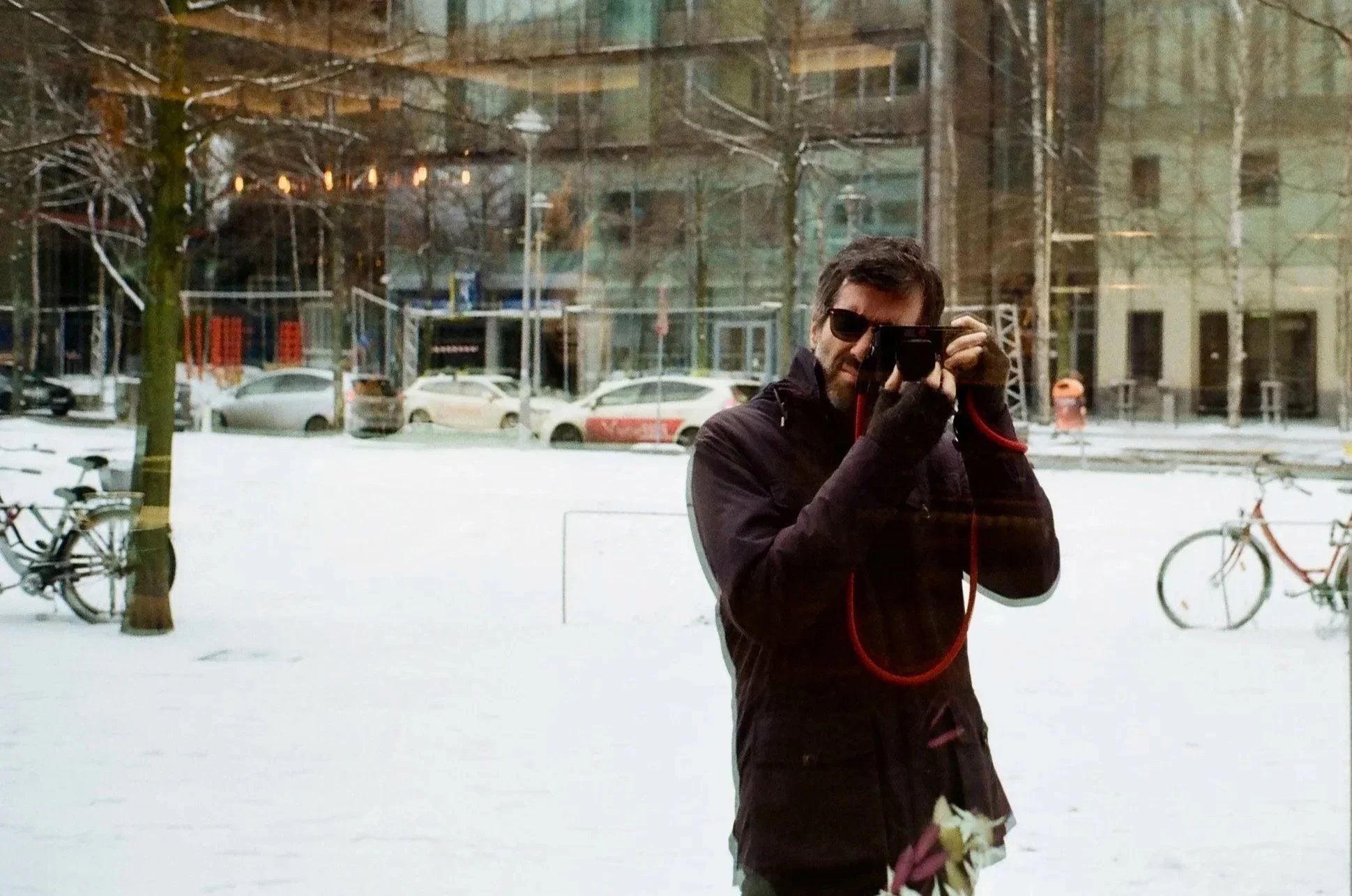
Adolpho with my camera, Potsdamer Platz Berlin
The Architecture of Displacement: Space and the Frame
Burcu Beaufort: Since I am coming from photography, it's interesting to me how you frame a scene. I think it is unusual and very beautiful. Looks like you're not necessarily applying all those so-called composition rules. For example, in Queen at Sea, when I see Tom Courtenay’s character, Martin, walking in a busy London street, the frame captures the city, the sky, and the buildings perfectly, yet he’s just in the corner. Most people wouldn’t place a character that low in the frame.
You do have a similar approach in Train Dreams which is very refreshing. I thought you're maybe fed up with the rules. It just looks different. Am I the only one who has told you this or do you also think that you have an unusual approach to framing?
Adolpho Veloso: When I think of that London shot in Queen At Sea and Train Dreams now, there's something in common between both stories. We are so much a product of the places we live. On Train Dreams, we really wanted to show how much the spaces around the characters are part of what they are feeling, and vice versa. Spaces and the characters are all interconnected.
There's something about the fact that we are just this really small piece in everything. Framing it that way helps you understand that the world is much bigger and we are just in a little corner. There's also this feeling of displacement that maybe is common to a lot of the characters in those movies, and maybe even to myself.
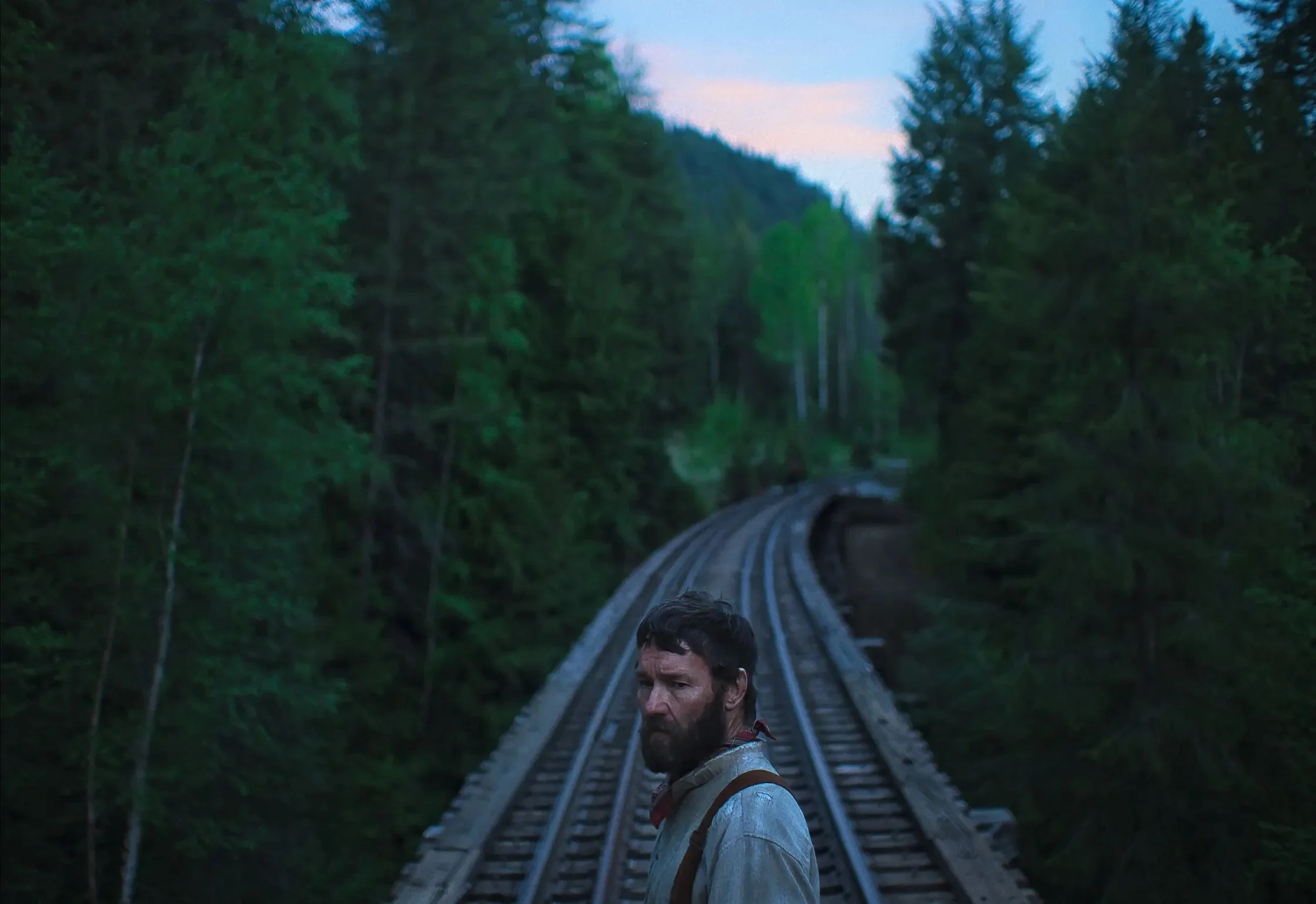
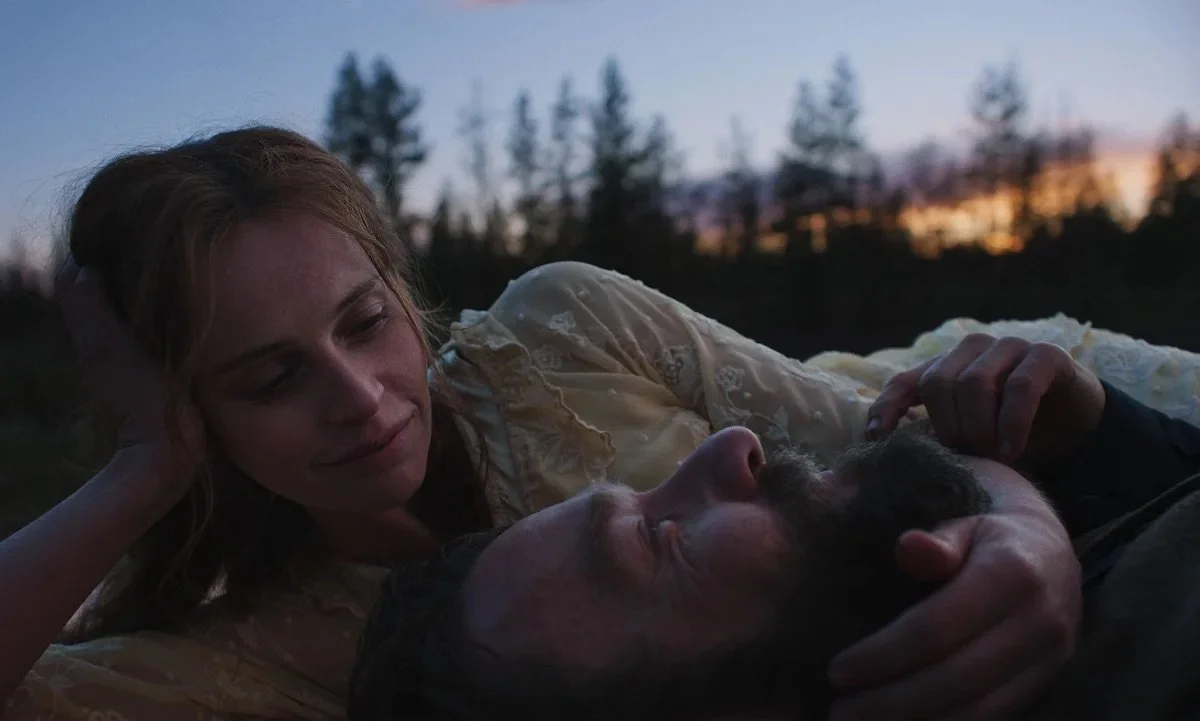
Film Stills Train Dreams, Photo Courtesy of NETFLIX
Burcu Beaufort: What is your focus while shooting a scene?
Adolpho Veloso: I always think how a scene would look if there were no dialogue, no narration, and we just relied on framing and lighting to convey the story. It helps show what the script is supposed to say, and that informs a lot of how we shoot it.
Burcu Beaufort: In Queen at Sea, the camera language shifts between different spaces and characters. How do you decide how to move or frame the camera in each situation?
Adolpho Veloso: Especially with Tom and Annie’s characters, we wanted the camera to feel almost like a piece of furniture in the house. The house reflects their routine so much that the camera becomes a part of it.
It’s not framing for the characters, the camera is there as they move through the space. Sometimes they’re in corners, sometimes moving up and down, and the camera is just present. This also creates a separation from Florence’s character and her teenage friends. With Florence, the camera moves with them, handheld, centering them more. It’s as if the camera is another teenager, discovering things with curiosity, following the subject.
For the older couple, it’s about routine. It's that piece of furniture that has been seeing that routine happening every day.
Juliette's character is in between those two worlds; so the camera does a bit of both, reflecting her position. At some point, Tom and Annie become kids again, leaving their routine. The camera follows, handheld, reacting to their actions.
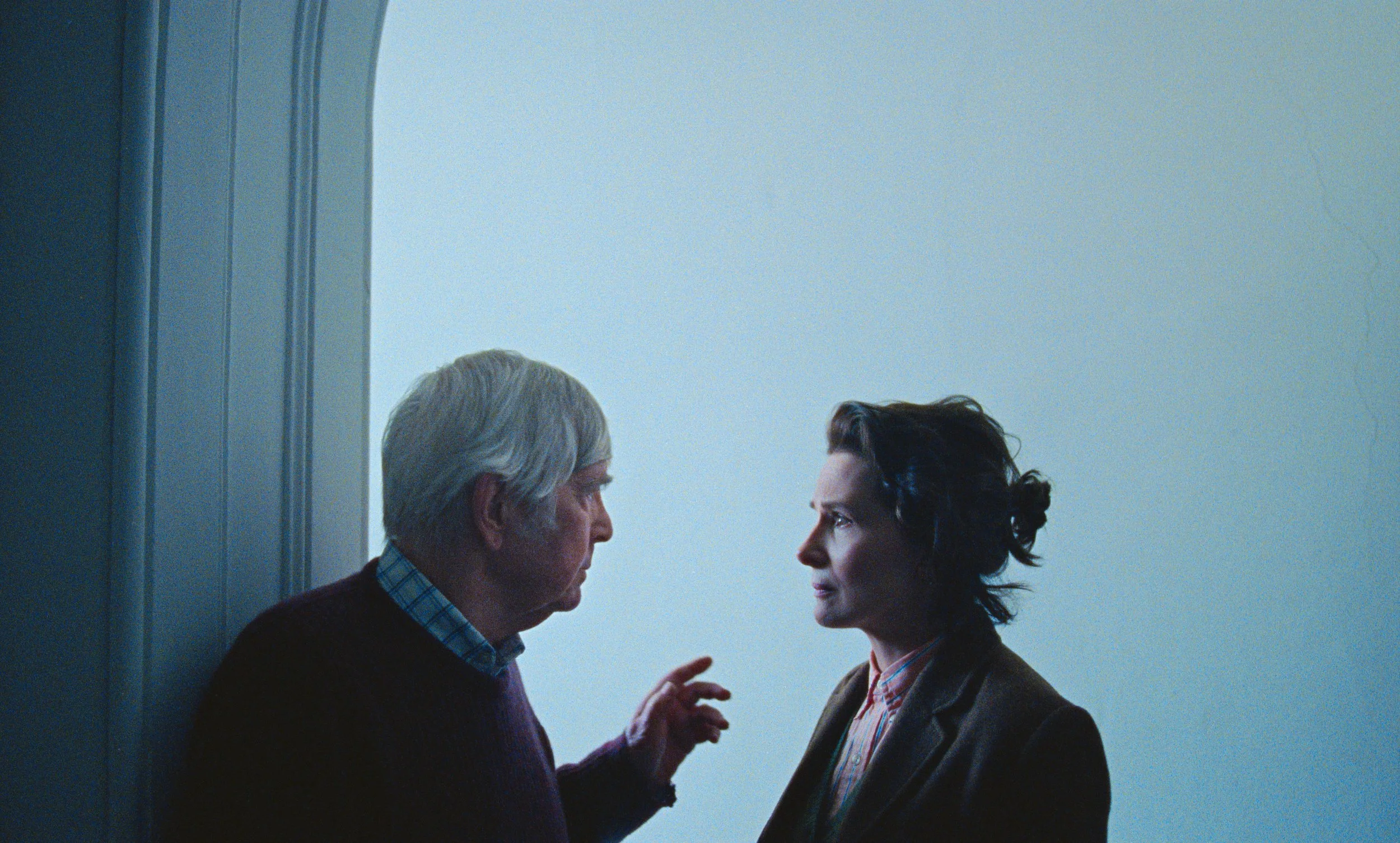
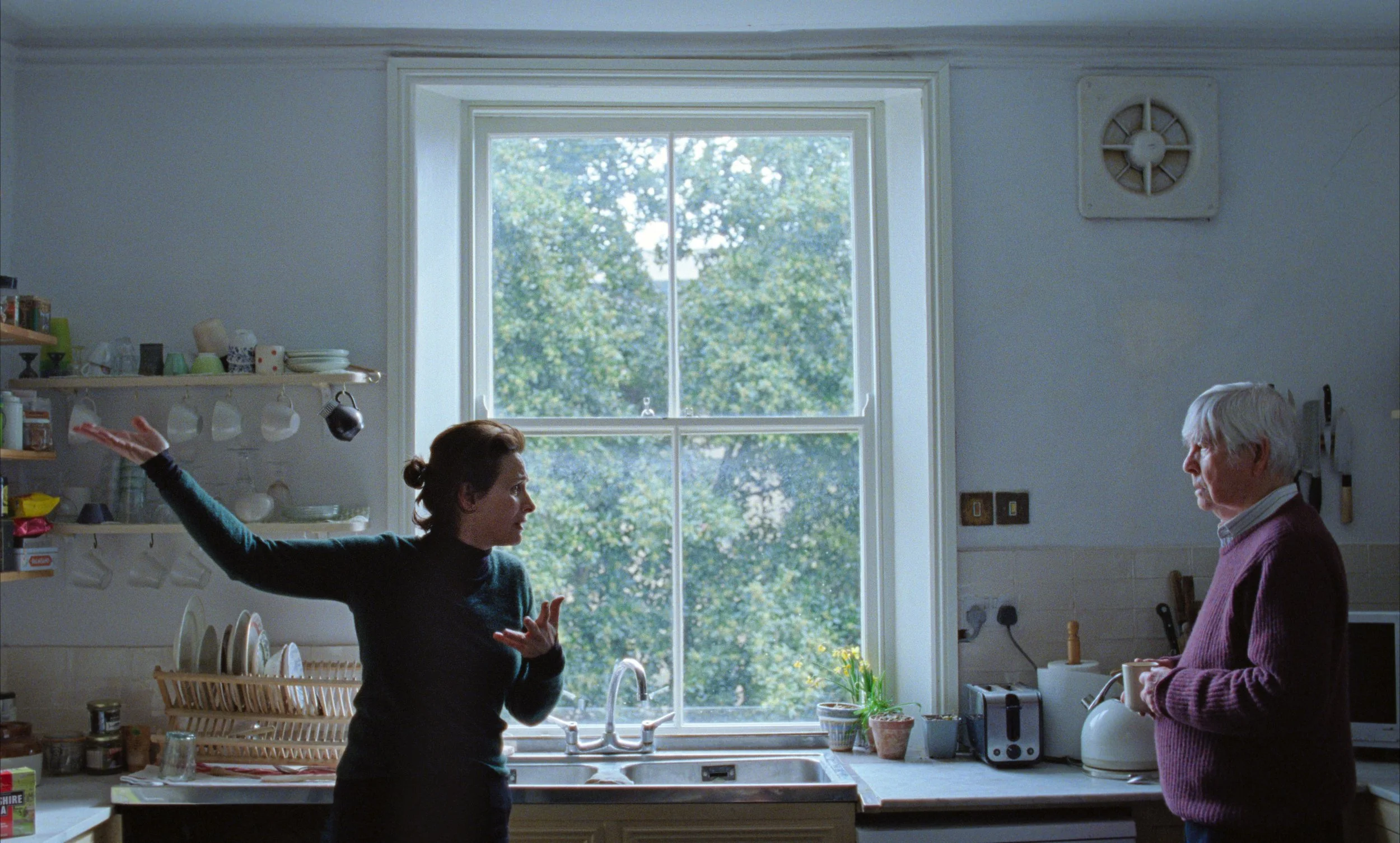
Film Stills Queen At Sea, © Seafaring LLC
Film, Light & Technique
Burcu Beaufort: Can you give us some technical information about Queen At Sea?
Adolpho Veloso: It was shot on 35mm with an Arricam LT and ARRI Master Primes. That's it, a simple kit.
The house in Queen At Sea was a real house, which was quite tricky to shoot in. It was however very important for the story, like all those stairs which became part of the struggle of those characters, the ups and downs. That's hard on their bodies, but it's also another metaphor of life. Sometimes you're down, sometimes you're up, and you're going between those spaces a lot.
Since it was such a tricky space to work with, we tried to be as minimal as possible. We didn't even have space to put the cameras. We barely used any lights. Everything during the day is basically natural light.
Burcu Beaufort: Which stock did you have?
Adolpho Veloso: 500T. We wanted the movie to be colder. There's no sunny day in the movie if you see it. It's super cloudy the whole time. We tested different things and landed on keeping the consistency of the 500T so that we wouldn't vary the grain size too much. We even explored doing processing in the lab later to add more grain, but we didn't do it.
Burcu Beaufort: What was the reason for going with celluloid for the film?
Adolpho Veloso: That decision was made before I joined the project. Lance’s (Hammer) first movie, 18 years ago, was shot on film. For him it was important to keep it that way. There's something about shooting on film for this story that felt appropriate. It's a story about time and traditions.
It also helped with the empty canvas that house has and all the white walls. Digital would have been a little bit boring, you know?
Burcu Beaufort: Is it much more expensive than shooting digital?
Adolpho Veloso: It depends on how you shoot. If you shoot film the same way people shoot digital now, where you just keep rolling, then you're spending a lot of film. But we didn't shoot that way. We had only one or two shots per scene.
We rehearsed a lot. For two weeks we stayed in the house with the actors rehearsing all the scenes. I was shooting everything on my phone, so the shots were already pre-planned. We also knew the choreography of the characters moving around the house and how we would frame it. So when we got to the actual shoot, we were usually very clear about what we were doing.
They are amazing actors. The performances are amazing. I mean, three legends: Juliette, Tom and Annie, plus Florence.
True legends. We also had a lot of the cast who were non-actors, people who actually do those jobs in real life. So they were very comfortable, saying things they say every day in their professions. So it was an easier process.
Burcu Beaufort: Do you have a preference between analog or digital?
Adolpho Veloso: No. I don't have nostalgia. They're just different tools for different purposes. Each project is different. It's just another choice like choosing the lens, choosing where to shoot…
Burcu Beaufort: How was it the right decision for Train Dreams to shoot digital?
Adolpho Veloso: Two main reasons. First, we worked almost entirely with natural light. For the night scenes we used candles and oil lamps. That wouldn't necessarily be possible when shooting on film. We didn't want to have an exaggerated amount of candles. We didn't want to have a cabin with 500 candles in it just so you could shoot on film and expose properly.
Second, we wanted to shoot in a way where we would have a lot of freedom for the actors to do their thing. Sometimes we would shoot nonstop for 40 minutes, 15 minutes of it improvising, and just be running around the actors with the camera. So we wanted to keep it fluid. We didn't want to stop much to reload the camera, and all that process that takes a bit longer on film.
For Train Dreams, we were shooting a lot of things at very specific times of the day. When you need to reload, you suddenly lose five or ten minutes, and then the light changes.
Becoming a Cinematographer: Influences, Collaboration, and Creative Process
Burcu Beaufort: On set, which role do you spend the most time collaborating with?
Adolpho Veloso: The director, definitely. I feel like being a director is so hard. They are basically in a position, where everyone is asking them questions all day.
I try to help them by not asking more and try to find some answers and help. For both Clint (Bentley) and Lance (Hammer), I was trying to have everything ready for them so that they would have that freedom to spend more time with the actors and have the focus on performances and being creative.
I also always work very closely with the production designer, especially when we rely on natural light. We are very co-dependent. For example, the production designer Alexandra Schaller built the sets for Train Dreams from scratch. It was a close collaboration. We had to decide where the windows would go, where candles and oil lamps would be placed.
For Queen At Sea, it was similar although all the locations existed already. What are we gonna do with those windows? Are we going to have curtains or not? How many lamps are we gonna have? Where are we gonna put those lamps so we can actually use those lamps to light the scene for the nighttime scenes? So there is a lot of collaboration on set also with our department to move things around, to create a frame that feels organic, even though people are kind of misplaced.
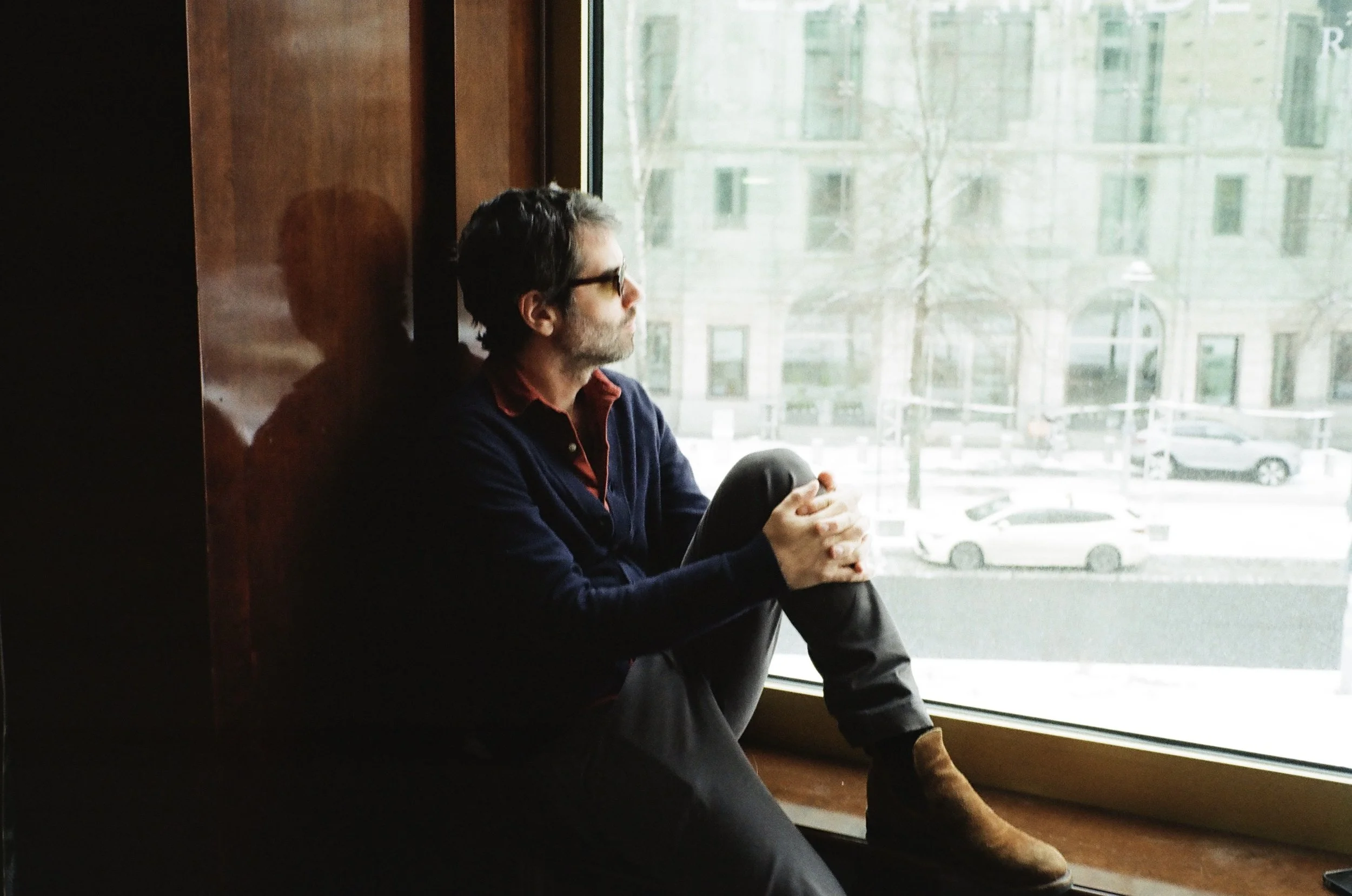
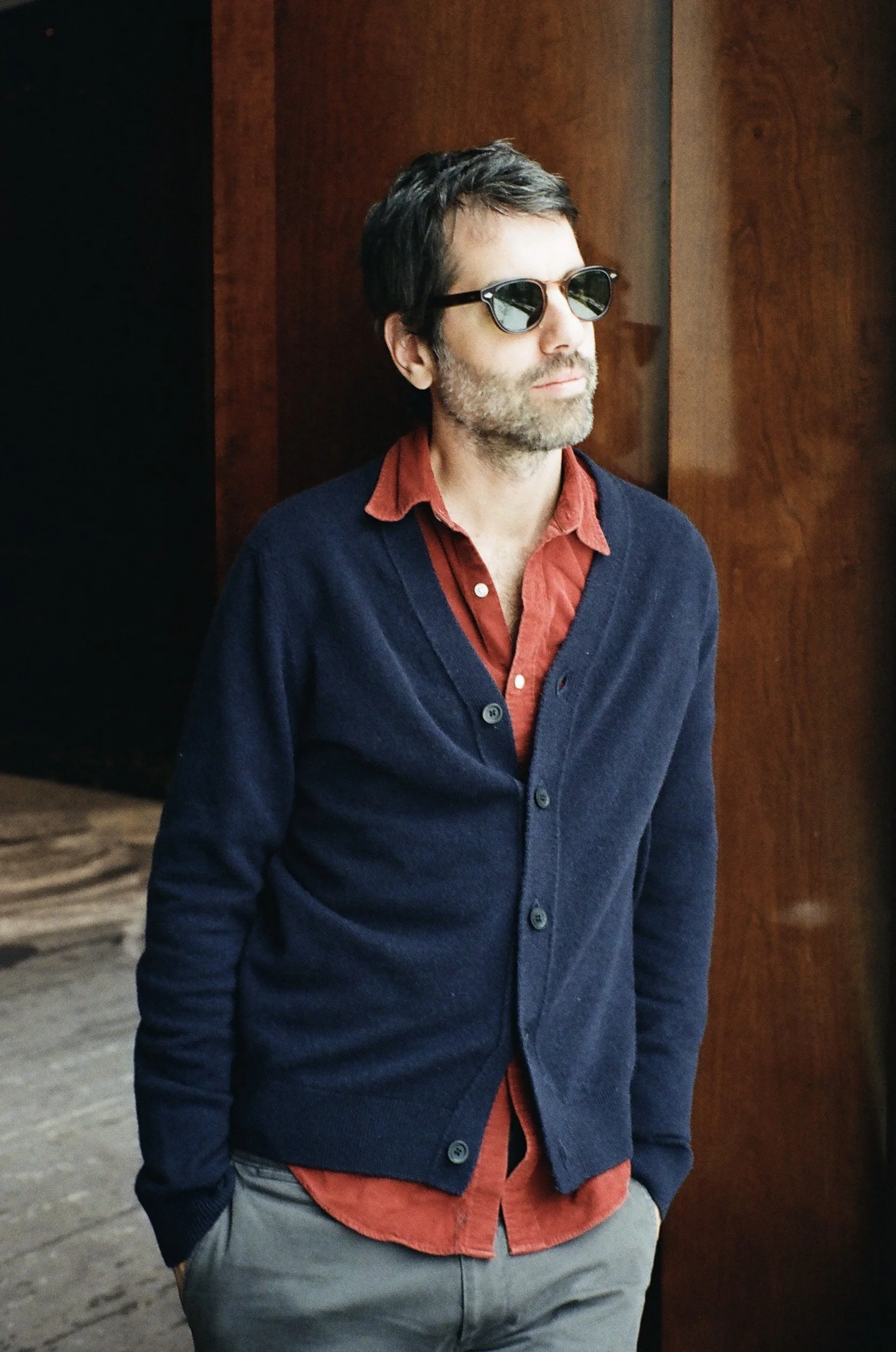
Adolpho Veloso in Berlin, © Burcu Beaufort
Burcu Beaufort: How did you decide to become a cinematographer?
Adolpho Veloso: I have loved films since I was about 12 or 13. I went to film school in Brazil. At first, I didn’t even know what a cinematographer was; I only knew what directors and actors did.
I knew I didn't want to be an actor; I wanted to be behind the camera. So, I started working on sets doing everything, including being a PA and a third AD, just to learn. On set, I realized that cinematography was the part I liked most: the camera, the lighting, and that relationship with the director and actors. I fell in love with it and decided that was what I wanted to do.
It was tricky in the beginning because the jobs I found were everything but that. Then I started shooting some stuff at film school, short films, and then I shot something for a friend who had a band, a music video no one ever watched. You know those kinds of things.
Slowly, I started to get more projects, like commercials as a cinematographer, and at some point it was just doing cinematography and it became my job.
Burcu Beaufort: Do you have another creative endeavor?
Adolpho Veloso: I love art in general. I love music, but I'm not doing anything myself. My meditation is taking care of plants. I love spending time taking care of plants in my house. Where I live now is basically a forest full of plants.
Burcu Beaufort: Do you think cinematography is creative or technical?
Adolpho Veloso: It's both. For me, it's interesting because I don't come from photography; I just love movies. It's actually hard for me to take a random picture. If you give me a camera now and tell me to take a picture of this place, I have no idea how to do it. To me, it's hard to make an image without an idea, an emotion, a story, a street behind it. I'm just thinking about what the character is feeling, what the emotions are, and what the story is supposed to say. It's about expressing that with the camera and the way we frame.
As I said, if you give me the camera now, I wouldn't know what to do. But if you tell me something happened here yesterday, someone fell from the stairs, I can start thinking about it. Maybe we should have the camera down on the stairs, looking up. Then I can think about where to frame it and where to place the characters.
I'm always reacting to the story and the actors. That creates frames that aren't necessarily conventional.
Burcu Beaufort: Are there movies where you think they were extremely brave in the way they shot certain scenes? Like The Godfather, it's dark, it's beautiful. Or Eraserhead, which is so rich in shadows.
Adolpho Veloso: Gordon Willis is probably my biggest reference in terms of bravery. I love watching his interviews where he says he almost got fired so many times. I feel it's amazing to see, especially at that level, that he was brave enough to try things. Even if he got in trouble often for it. Like doing things for the story and not for the concept of “if you have a big star, that's how you're supposed to light that star.”
It is Marlon Brando, but I’m not going to see his eyes because it’s more important for the story that you don’t see them.
If you prioritize the story and emotions over your style, and over the rules of composition, that is brave. So I’m very inspired by that.