With Rebecca Lenkiewicz
Berlin, June 2025
Premiered at the Berlinale, Hot Milk (2025) is about family, lost memory, and the persistence of one’s own identity. The movie brings Fiona Shaw, Vicky Krieps, and Emma Mackey together, just right for the emotionally intense story, with profoundly sensitive performances. We spoke with its director, Rebecca Lenkiewicz, who is also a playwright, screenwriter, and actress.
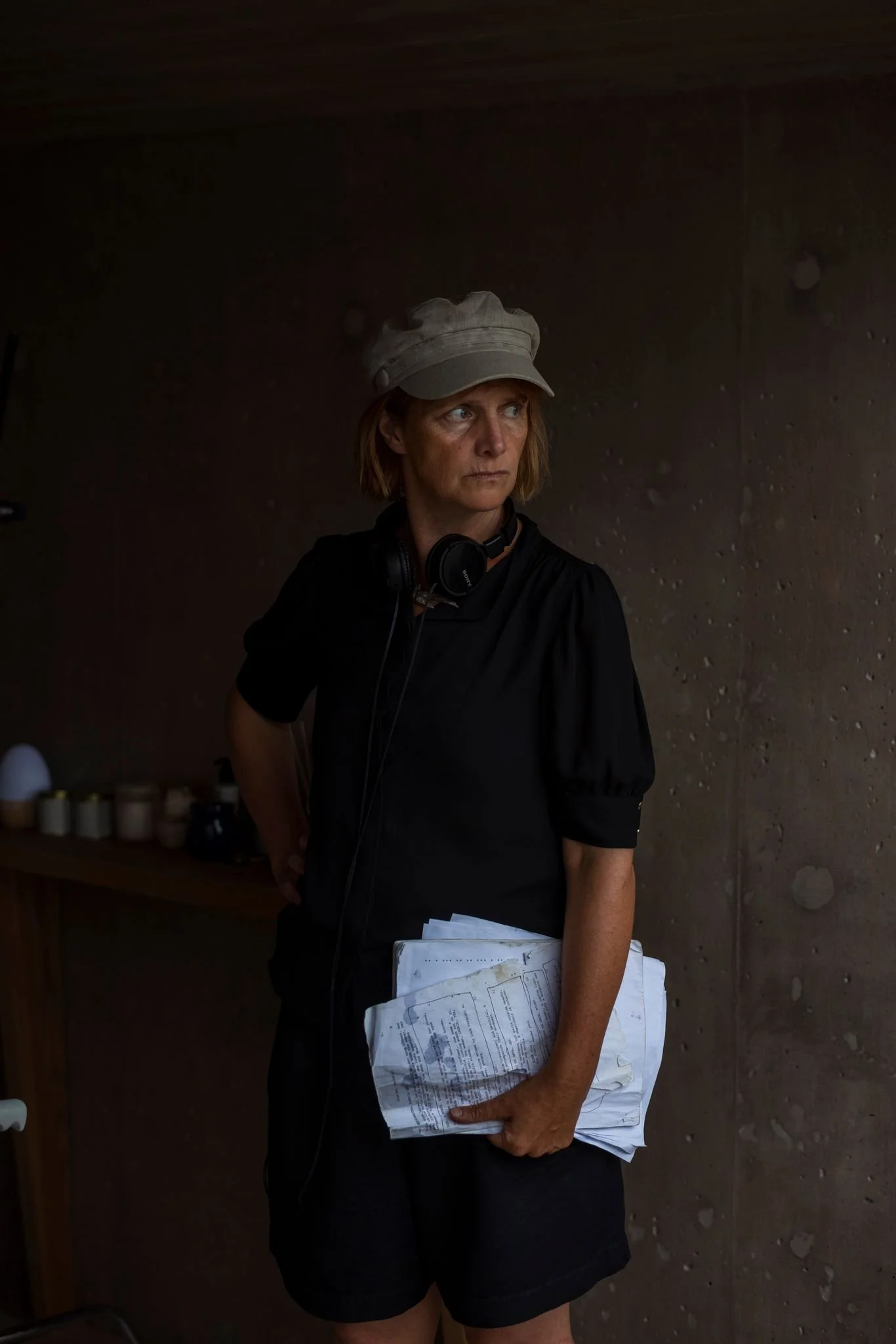
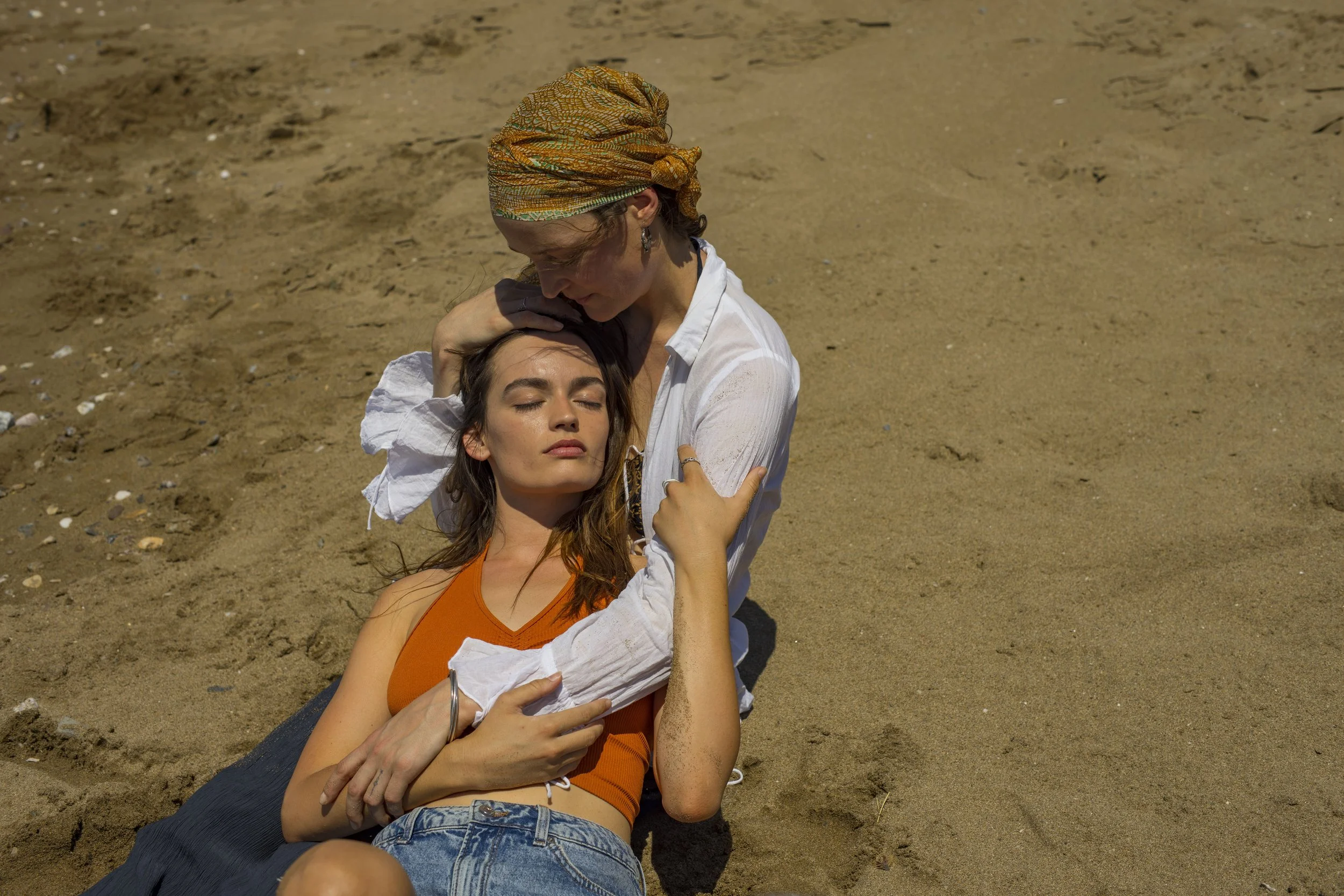
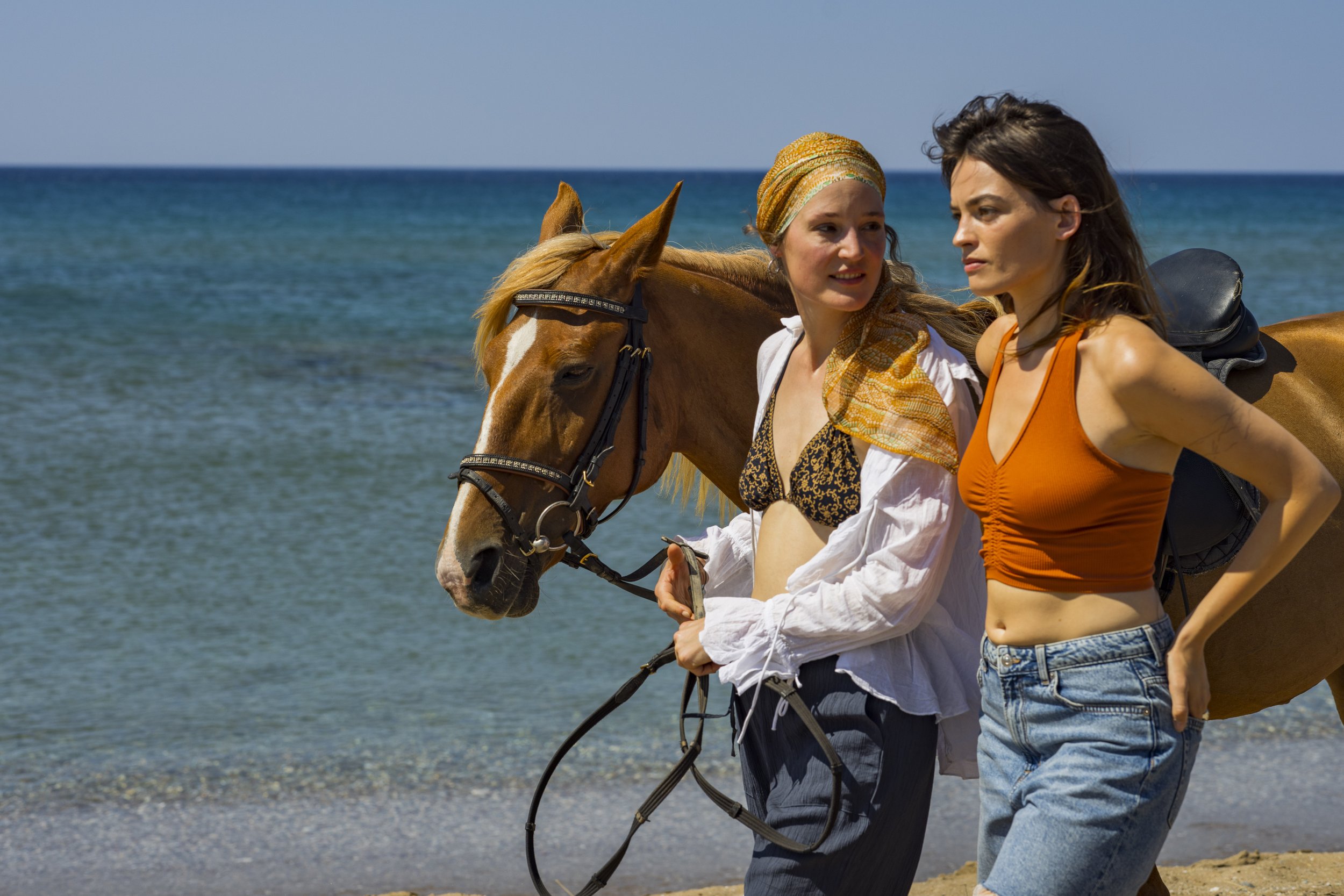
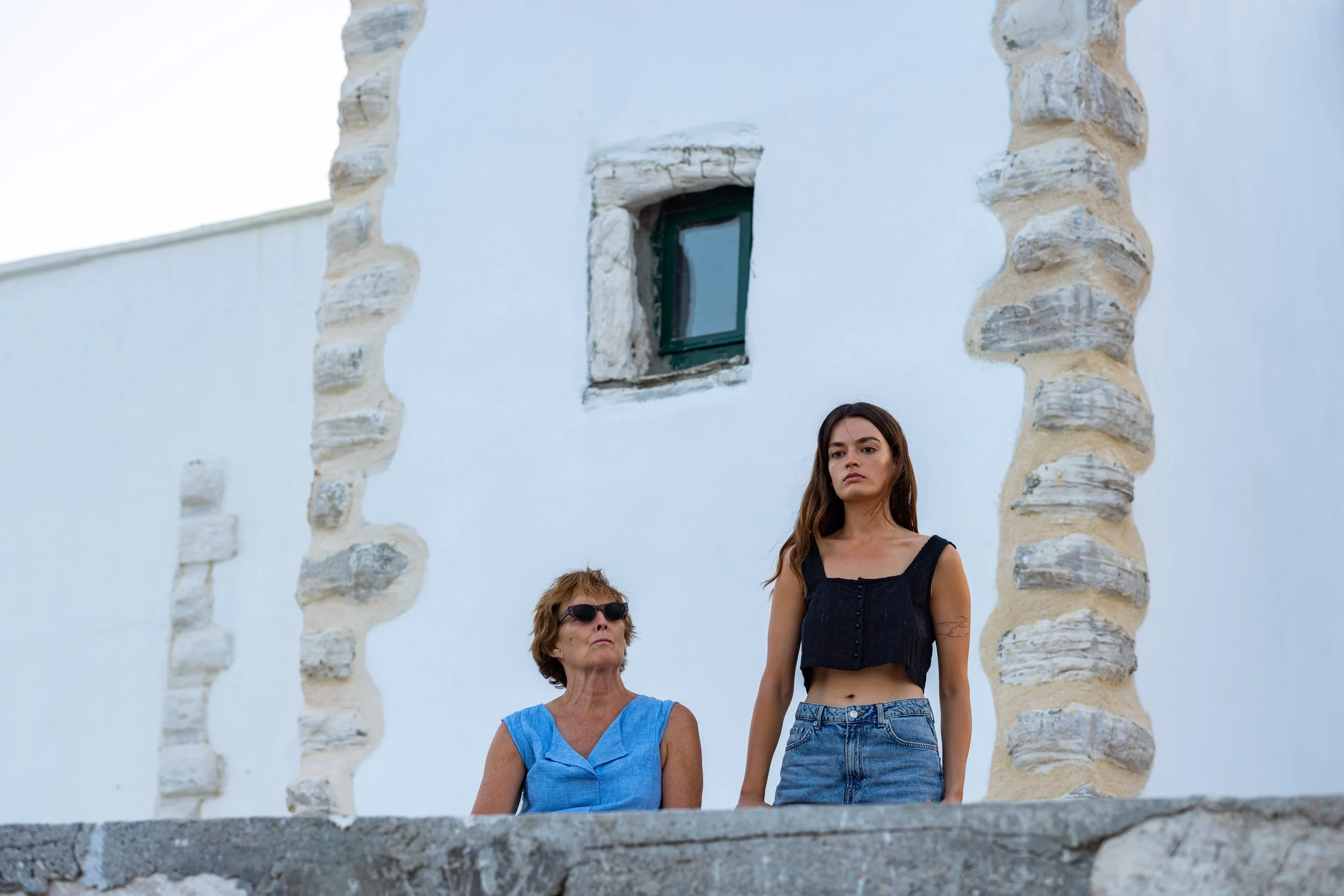
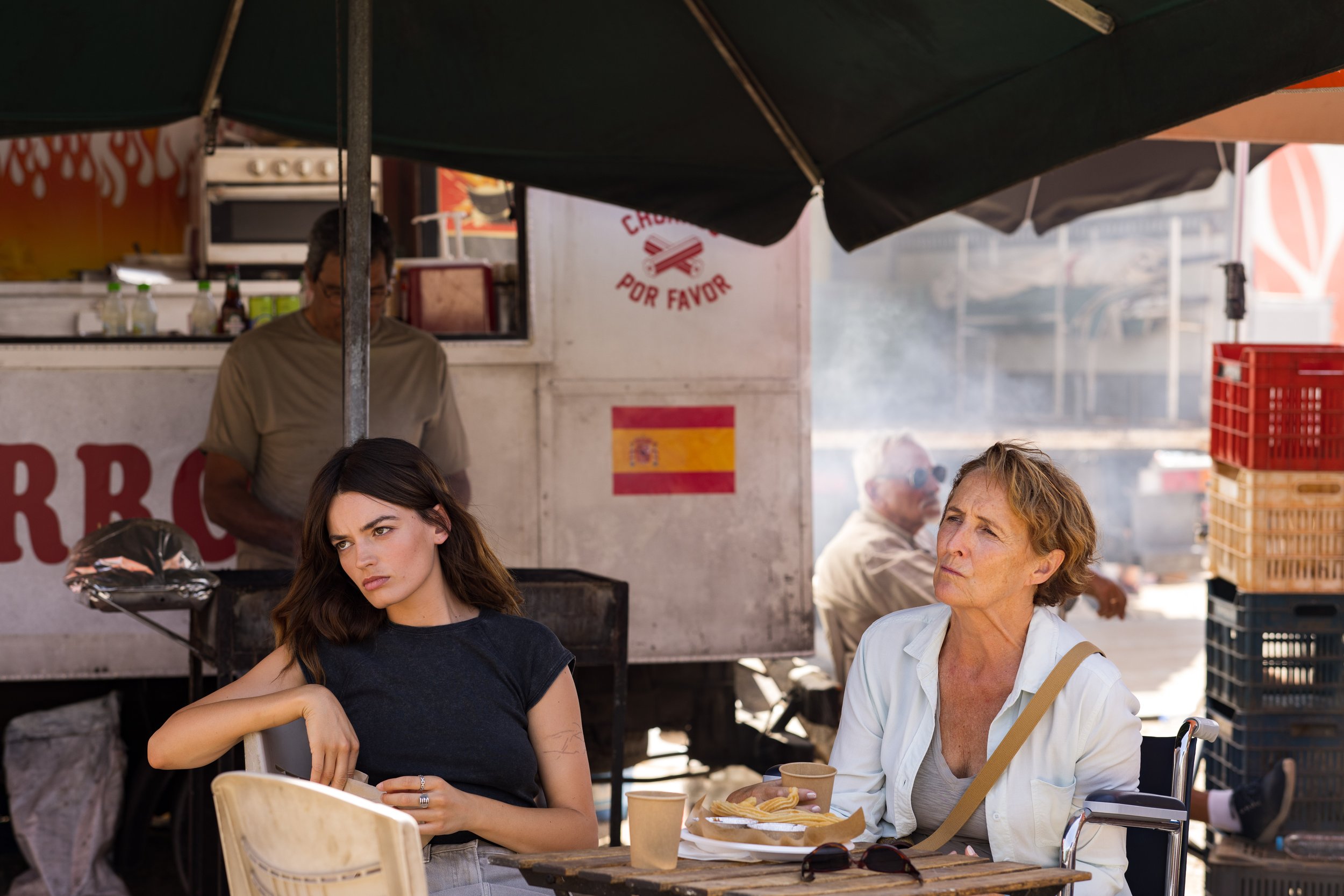
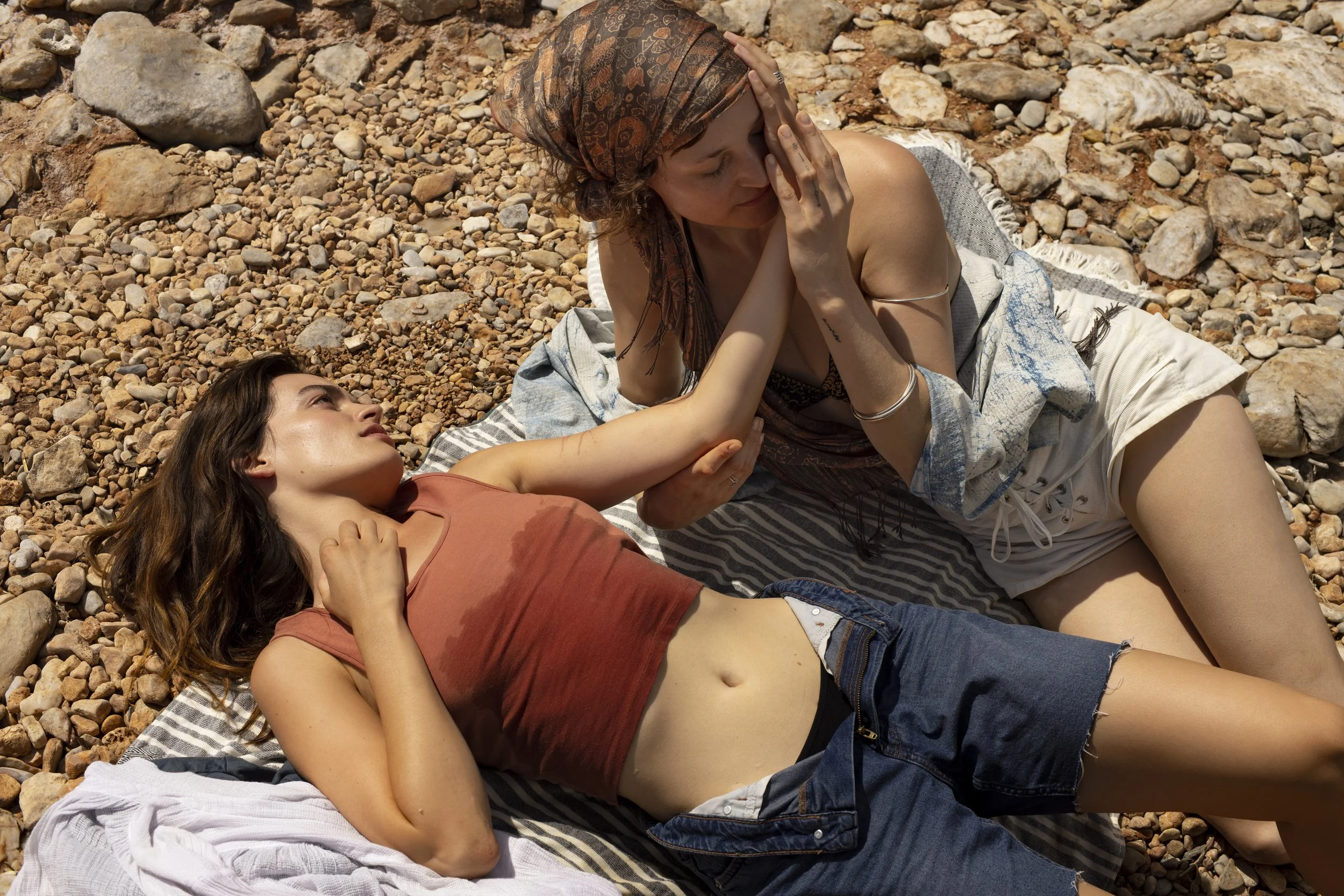
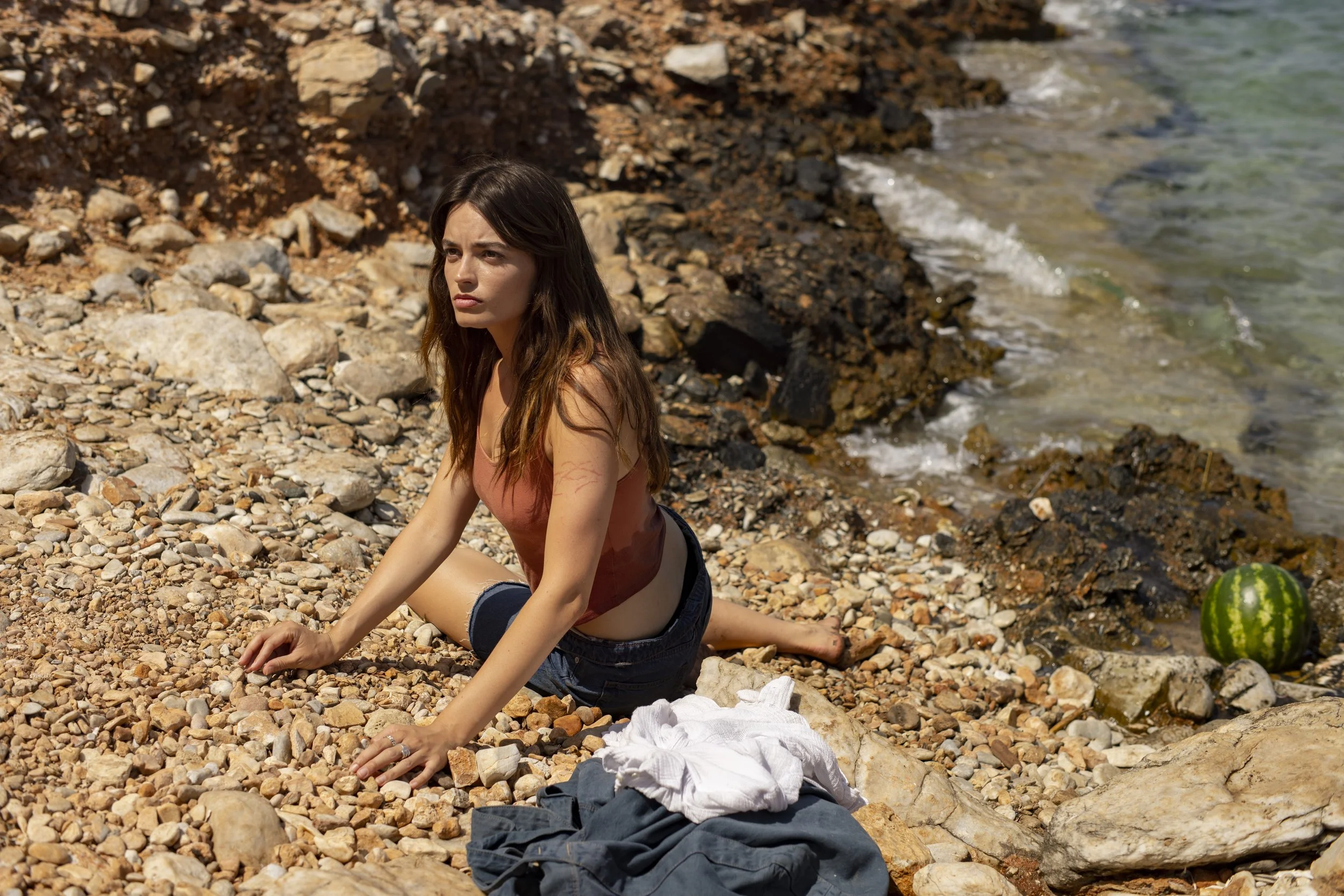
Image courtesy of Rebecca Lenkiewicz. Film Stills by Nikos Nikolopoulos/Mubi.
A mother-daughter trip to the Spanish coast of Almería soon reveals itself to be a much deeper journey than it first seems. Rose, the mother played by the amazing Fiona Shaw, has booked a private treatment for her disability, hoping she may walk again. Sofia, the daughter played brilliantly by Emma MacKay, in her twenties, has been caring for her mother since she was four. This is a powerful story of a narcissistic mother-daughter relationship, in which the daughter eventually seeks to break free. Along this journey, Sofia encounters Ingrid, played by the lovely Vicky Krieps. She is a (seemingly) free spirit from Berlin, whom Sofia is immediately drawn to.
Burcu Beaufort: Before we go deeper, I wanted to ask about the title, Hot Milk. I know it comes from the book, which I’d love to read, but how does the name connect to the story thematically or symbolically?
Rebecca Lenkiewicz: In the book on the very first page, Sofia is talking about the Milky Way. That’s the first time the word milk is there. Also she’s a barista back in London, so she’s always boiling milk. But I think in our version, it’s very much about maternal milk and it’s hotrather than body temperature. It’s almost like off the scale because their relationship is heated. That’s how I interpret it, something inviting and repulsive.
It is similar to the sea with the jellyfish in the film which can be inviting and repulsive at the same time. Something that’s kind of ambiguous.
BB: That brings me to my other question. At first, I thought the mother was funny, warm and talkative. But as the scenes unfold, I started to feel overwhelmed by her emotional need for attention. Would you say that Sofia is, in a way, although I hesitate to use the word, emotionally abused by that need?
RL: She’s certainly a bit suffocated, yeah. I think the mother has a narcissism that is extreme, and she’s not aware of it. Also Sofia has kind of cared for her since she was four years old. So inevitably, there is a fatigue there for a young woman to always be attending to their mother. I think there’s a deep, deep love, from both of them to the other. You know, it’s not a loveless relationship. But I think there’s frustration. I don’t think that Rose (the mother) is aware of that because she’s in her own world of pain.
BB: It’s such a psychoanalytically intense and rich story. The contradiction between deep love and the desire to break free really stood out to me. Sofia clearly loves her mother, but she also feels the need to escape the emotional hold. In some ways, she does. For example, in the scene where she throws the dishes to the ground and suddenly the mother gets up. That felt like a turning point for me. It is the moment when we begin to understand more about the reasons behind the mother’s condition which is psychosomatic and deeply unconscious.
RL: I suppose that links to the end, where your hope is that the shock will ignite the mother into action. But yeah, it’s a real condition, where people can’t walk, but sometimes they can walk. It comes from trauma. Rose has this trauma in her body, and she hasn’t got over it. She’s in denial about her background. And so it’s very complicated, but it’s not fake. You know, the pain is real. And also the condition is real, although she also has the ability to move her legs like at night-time, while sleeping. So her legs move and therefore her muscles don’t die. But her psyche is stopping her from walking.
BB: The physician in the film seems to understand this and, at one point, is almost cruel in bringing Rose face-to-face with her past. I’m not sure if something like this is actually possible—combining physical and psychological treatment. I wonder if this kind of treatment really exists.
RL: In the book, he’s a bit more mysterious. But Vincent Perez, who played Gómez, had met a real healer. He played some of the real healer that he had met. And so that’s fascinating for him to bring that into his performance. The Physician is genuine in the film. He wants to help, and it’s through what we call the talking therapy, you know, where you talk someone well. But Rose doesn’t realise that. She just says, “Why would you pay thousands of pounds for a chat?” You know, because she can’t really recognise the depth of it.
BB: Regarding Sofia’s relationship with Ingrid, played by Vicky Krieps, do you think this relationship helps Sofia break free in some way? I wasn’t sure if Sofia was exploring her sexuality through this, or if she already knew about her homosexuality. However, I think that is irrelevant at this point. For me, the relationship feels like it frees Sofia from everything else she is dealing with.
RL: I think it does. I think it’s the invitation to explore a different aspect of herself. Sofia falls very quickly for Ingrid, and it’s a need to be with this epic, seemingly fantastic, free woman, who is actually trapped in herself. You know, so everyone is a bit trapped in different ways. But yeah, I think it’s what helps Sofia to break away.
BB: Maybe towards the second or third act, or even later, I had the impression that also Ingrid was leaning on Sofia emotionally.
RL: Yes, both the mother and the lover weighed down on Sofia, but fantastically, her response was not to become a victim and look down. She stands up and she roars. You know, she roars at her mother and she defies Ingrid. She says, “I’m not the things that you say I am.” So that thing when you’re younger and people tell you, “You’re this” or “You’re that,” and you kind of go with them, they have a hold over you. But quite at a young age, Sofia is saying, “I’m not the things you’ve said, love. Even though I’m in love with you, I’m not what you’ve seen. I’m different. I’m not that.” And so she has a strength. At the start, you can feel it, but actually, you kind of chart it through the film, through different obstacles. It’s almost like a mission, she has to meet a lover, see her father, and test her mother. And if she can get to the end of that challenge, she’ll be okay. So she goes into the night, and she’s not cured of all the burden. It’s not like their relationship is perfect now, but something has happened, something’s shifted.
BB: That’s a powerful transformation. But I was also thinking about how many young people don’t reach that point, who stay stuck, internalizing what others tell them they are.
RL: This is very much about freedom and choice. I think those things are being limited for women now. You know, we came so far with feminism and now it’s going backwards. In America, it’s going backwards in different places. So, Sofia’s freedom is everything, and that’s what she’s fighting for.
BB: You can really feel her growth throughout the film. And the performances, the storytelling, I thought they were incredible. I just wanted to ask: there was this recurring symbol I wasn’t quite sure I fully understood… the jellyfish. What does it represent for you?
RL: The jellyfish stings Sofia into life. You know, a jellyfish is an animal that doesn’t have a heart and it doesn’t have a brain. It’s all appetite. So this creature just has an appetite and it creeps on her. And I think in a way, it ignites her. Then she goes in a second time. That’s the interesting thing. I mean, to be stung once is something, but then to go swimming again. It’s almost like self-flagellation. In a way, she’s almost inviting pain, but by the end, she’s inviting freedom.
It’s sensual and painful, but it’s there. It’s like, “I’m alive.” A very strange and painful equation, but it’s true.
BB: How did you decide to take up the director’s hat for this story? Like, what was so appealing to you?
RL: I just loved the book. I thought that I had a lot to give to it because I’ve lived through my 20s, my 30s, I’m about to go into my 60s. This is kind of every woman’s story. And I love psychology. I wanted the sensuality in the film to be right, to be free, nuanced and muscular. So that’s why I decided.